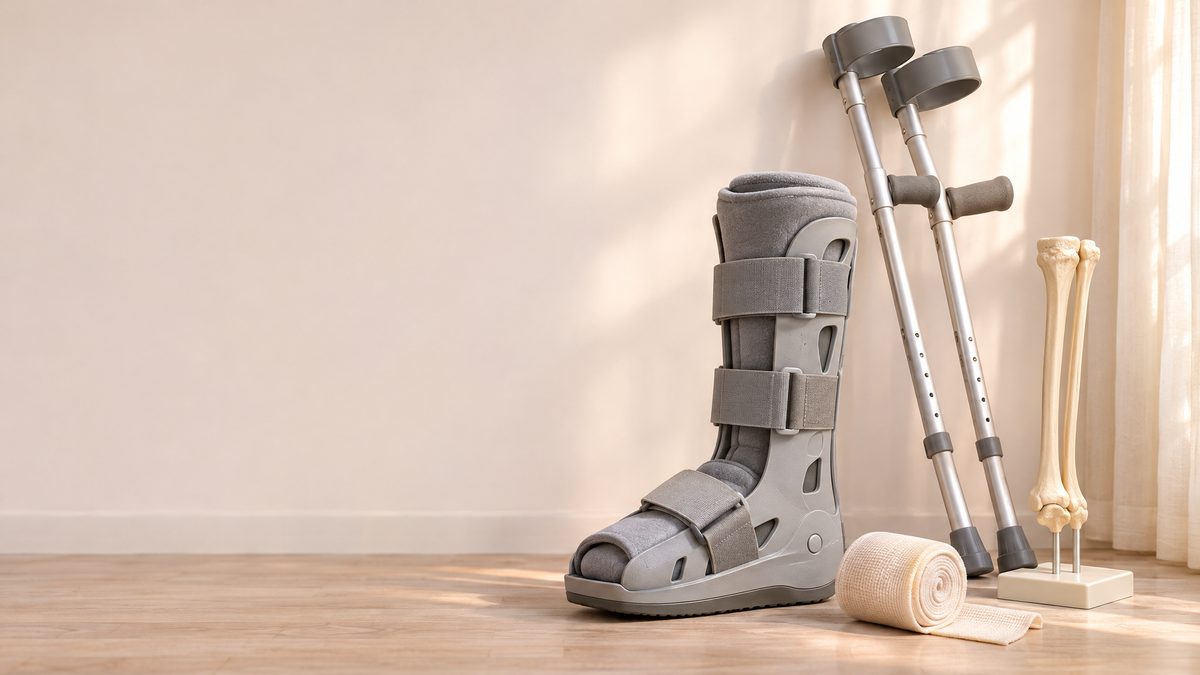
Fractured Fibula Recovery Time: By Break Location, Week by Week
Foot Care Guide from ASG Foot & Ankle
The short answer
Fractured fibula recovery time for a stable break is about 6 weeks for the bone and 6 to 12 weeks for everyday activity. A break above the ankle joint, or one near the knee caused by a twisted ankle, often needs surgery and takes 3 to 4 months or longer. Some swelling can last 3 to 12 months.
- Tip, below the ankle joint6 to 8 weeksWeber A
- Mid shaft6 to 12 weeksAnkle not hurt
- Top, near the knee6 to 12 weeksAnkle not hurt
- At the ankle joint line8 to 12 weeksWeber B, stable
- Above the ankle joint3 to 4 months or moreWeber C, general ankle fracture range
- Top, with a twisted ankle3 to 4 months or moreMaisonneuve, general ankle fracture range
ASG Foot & Ankle patient education. Updated November 25, 2026. General information, not a diagnosis.
Go to the emergency room now if bone shows, the ankle looks out of place, pain keeps building, or the foot turns numb, cold or pale. A foot that drops needs to be seen the same day. See all the warning signs. The weeks below assume the break has been X-rayed.
If the ankle also came out of joint, use fractured fibula and dislocated ankle recovery. For what hairline and stable mean on a report, see minor ankle fracture recovery time.
Find Your Break
Match your X-ray report to a number, then find it in the strips below.
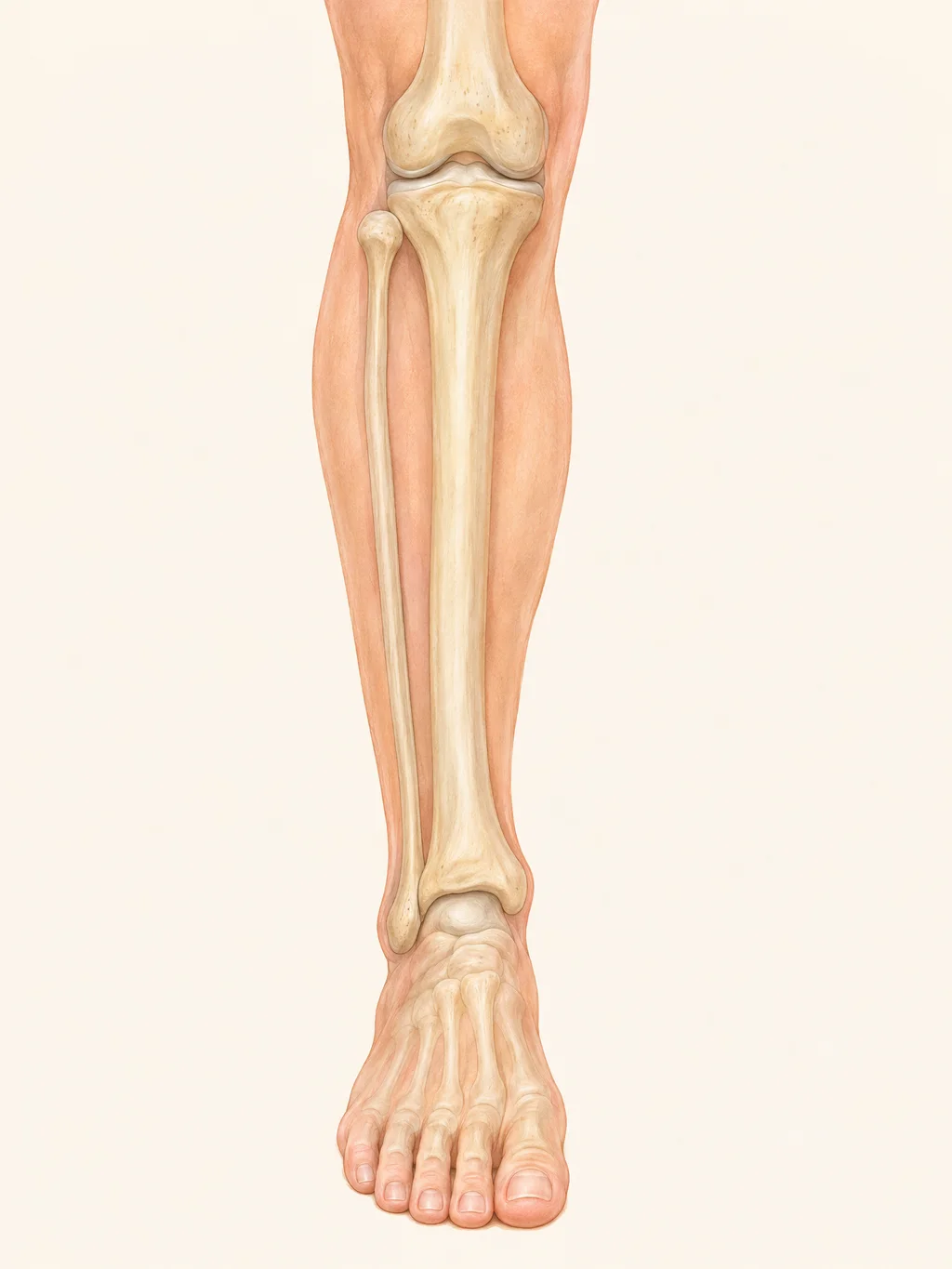 Illustration
- 1Tip, below the joint. Weber A, or tip of the lateral malleolus.
- 2At the joint line. Weber B, level with the syndesmosis, the ligaments that tie the two leg bones together.
- 3Above the joint. Weber C, above the syndesmosis.
- 4Mid shaft. Fibular shaft or diaphysis.
- 5Top, near the knee. Proximal fibula, fibular head or neck.
Compare the five zones, week by week
Strips run from the injury to week 24. Dark is the usual stretch. Pale is extra weeks or, for sport, from then on. Empty means no set weeks, or past week 24. Zone 5 appears twice, because an ankle injury changes the plan.
Tip, below the joint
Weber A. Usually no surgery.
- Bone healingAbout 6 weeks
- Boot or brace4 to 6 weeks, if given one
- Walking in shoesWhen comfortable
- SportRunning after week 6
Times from (Sussex NHS)
At the joint line
Weber B, stable joint. An unstable joint usually needs surgery.
- Bone healingAbout 6 weeks
- Boot or brace6 weeks
- Walking in shoes6 to 8 weeks
- SportFrom week 8 to 12
Times from (York NHS) (NLG NHS)
Above the joint
Weber C. Often needs surgery.
- Bone healing10 to 12 weeks or more
- Boot or brace6 weeks or more
- Walking in shoesAfter week 6, if cleared
- Sport3 months or later
Times from (AAOS) (Whittington NHS)
Mid shaft
Isolated break, ankle not hurt. Usually no surgery.
- Bone healingAbout 6 weeks
- Boot or brace2 to 6 weeks, for comfort
- Walking in shoes2 to 6 weeks
- SportOften week 10 or later
Times from (York NHS) (NFL study)
Top, near the knee
Head or neck of the fibula, ankle not hurt. Usually no surgery.
- Bone healing6 to 8 weeks
- Boot or brace2 to 6 weeks, for comfort
- Walking in shoes2 to 6 weeks
- SportAfter 8 weeks
Times from (St Helens NHS)
Top, with a twisted ankle
Maisonneuve fracture. Usually surgery. Get the ankle checked.
- Bone healing10 to 12 weeks or more
- Boot or braceSet by your surgeon
- Walking in shoes8 to 14 weeks after surgery
- SportAbout 7.5 months after surgery
Times from (AAOS) (Puddu 2023)
Get Help Now If
- Bone shows, the leg looks out of place or will not move, or pain is severe: emergency room. (Cleveland Clinic)
- Pain keeps building, the lower leg or cast feels tight, or the foot tingles or turns numb, cold or pale: emergency room at once. Loosen any bandage. Pressure in the leg can need urgent surgery. (AAOS)
- New chest pain or shortness of breath: call 911, because a leg clot can reach the lungs. A painful, swollen calf alone: same-day call. (NHS)
- The foot drops, drags or will not lift: be seen the same day, in the emergency room if needed. (MedlinePlus)
- The ankle was twisted and the outer leg is sore near the knee: stay off it and get the whole lower leg X-rayed the same day. (Taweel 2013)
- The ankle gives way, changes shape, or hurts much more after a step: stay off it and call the same day.
- Diabetes, poor circulation or numb feet, and the boot rubs or the skin changes color: call the same day. (Sussex NHS)
Can You Walk on a Broken Fibula?
Some people can, because the shin bone carries most of the load. Do not force it, and go to the emergency room if you think the leg is broken (Cleveland Clinic).
Near the ankle, being able to stand does not show that the joint is stable. A standing X-ray tests that, and weight too early can shift the pieces (AAOS).
Not X-rayed yet? Be seen the same day. Signs are in the broken or sprained ankle check.
Broken Fibula at the Ankle: Zones 1, 2 and 3
Tip of the fibula (Weber A)
Usually treated without surgery (Cleveland Clinic). Walk as much as is comfortable. A boot is only for comfort, and running and jumping wait 6 weeks (Sussex NHS).
At the joint line (Weber B)
The plan depends on whether the joint is stable. An unstable one usually needs surgery (AAOS). A stable one usually gets a boot for walking through week 6, with weight as comfort allows, then 2 weeks of weaning off it (York NHS). Sport usually returns at 8 to 12 weeks (NLG NHS).
Above the joint (Weber C)
Sources disagree here. One review recommends surgery (Krause 2022), and it is needed if the syndesmosis is torn as well as the bone (AAOS). A London hospital also has a boot plan, with a standing X-ray near week 2 in case the break moves and needs an operation. Impact sport waits 3 months, and mild swelling can last 6 to 12 months (Whittington NHS).
The 3 to 4 months in the chart is the range for ankle fractures in general. Torn ligaments can take longer (AAOS).
Plates and screws are covered in broken ankle surgery recovery. If only the ligaments tore, see high ankle sprain recovery.
Broken Fibula in the Middle or Near the Knee: Zones 4 and 5
Mid shaft
An isolated break here usually needs no surgery (Cleveland Clinic). Walk as comfort allows. The boot is for symptoms rather than healing, and everyday activity restarts between weeks 6 and 12 (York NHS). If the ankle was twisted too, have it checked before using these times.
Head or neck, near the knee
Walk as comfort allows, try to drop the crutches after 2 to 3 weeks, and go back to sport after 8 weeks if able (St Helens NHS). Everyday activity restarts between weeks 6 and 12 (York NHS). Have the knee examined too if it hurts or feels loose.
A break here can also injure the common peroneal nerve. The signs are a foot that drops or drags and numbness on top of the foot. It can take several months to improve, and severe damage can be permanent (MedlinePlus).
Why a Twisted Ankle Means Checking the Top of the Leg
In a Maisonneuve fracture, a violent ankle twist tears ligaments, leaves the ankle unstable and breaks the fibula up near the knee. Most people feel ankle pain and very little pain at the break (Taweel 2013).
One report describes 5 people whose break was missed despite ankle X-rays. All 5 needed surgery. Its authors want the top of the fibula checked after every ankle injury.
Surgery is usually needed (AAOS). In a study of 13 people after surgery, full-weight walking came at 8 to 14 weeks and sport at about 7.5 months (Puddu 2023). Weight rules differ, so follow yours.
Broken Fibula Recovery Time Without Surgery, Week by Week
For a stable break. Zone 3 and Maisonneuve breaks run later.
- Weeks 1 and 2Shaft or top: walk as comfort allows, with crutches (York NHS). Joint line: boot for all walking, and usually a standing X-ray near week 2, in case the break moves (York NHS).
- Weeks 2 to 6Shaft or top: start leaving the boot off, first around the house (York NHS) (St Helens NHS). Joint line: the boot stays on for walking.
- Weeks 6 to 8Tip, shaft and top breaks should be healed or close (Sussex NHS) (York NHS) (St Helens NHS). Joint line: start leaving the boot off (York NHS).
- Weeks 8 to 12 and onEveryday activity returns. Heavy jobs may still hurt, and some swelling can last 3 to 6 months (York NHS).
How Long to Walk Normally After a Broken Fibula
Usual weeks for walking out of the boot, or with full weight after surgery (York NHS) (York NHS) (Puddu 2023):
An even walk takes longer. A limp can last several months after an ankle fracture (AAOS).
Back to Driving, Work and Football
Driving: out of the boot, and able to make an emergency stop without pain (Whittington NHS). For a right ankle, probably 9 to 12 weeks (AAOS). More in can you drive with a walking boot.
Work: desk jobs once the pain settles, later for jobs on your feet (NLG NHS).
Running and football: NFL players with an isolated break of the lower fibula or shaft missed 72 days on average when no surgery was reported, and 117 days with surgery. Of 197, 176 returned to play (Werner 2017). Get clearance before contact sport, even if walking feels easy.
Broken Tibia and Fibula Recovery Time
The weeks above do not apply when both bones break. A broken tibial shaft usually needs 4 to 6 months to heal fully, and longer if the skin broke or the bone is in several pieces (AAOS).
When a Fibula Fracture Is Slow to Heal
Most joint-line breaks heal well, but a small number may not join, called a nonunion (NLG NHS).
Call the clinic if pain and swelling are still significant at 6 weeks, or you cannot leave the boot off. Smoking slows healing and can stop it (York NHS).
With diabetes, tell the clinic before you use a boot. You may need a special one (Whittington NHS). With numb feet, pain is a poor guide, so ask how much weight is safe.
The bottom line
- A stable fibula break heals in about 6 weeks, with everyday activity back by 6 to 12 weeks.
- A break above the joint, or near the knee after an ankle twist, often needs surgery and takes 3 to 4 months or longer.
- Walking does not prove the ankle is stable. After a twist, have the leg checked up to the knee.
Frequently Asked Questions
How long does a fractured fibula take to heal?
Hospital leaflets give about 6 weeks for a stable break, and Cleveland Clinic gives 6 to 8 weeks for most fibula fractures. For ankle fractures in general, the American Academy of Orthopaedic Surgeons puts early healing at 6 weeks or more and full healing at 10 to 12.
Can you walk on a broken fibula after 4 weeks?
Often yes, if it has been X-rayed and is stable. Isolated shaft and top breaks usually come out of the boot between weeks 2 and 6. A stable joint-line break stays in the boot for walking until week 6. Above the joint, with a Maisonneuve fracture, or after surgery, wait until the clinic says so.
What should my leg feel like 10 weeks after a broken fibula?
A stable break should be healed, with everyday activity returning, on the hospital plans used here. Soreness after long walks or heavy jobs still fits. Call the clinic now if pain is still significant or you cannot leave the boot off. A break above the joint or a Maisonneuve fracture runs slower.
Is recovery time different for a right fibula fracture?
The sources used here do not give different healing times for right and left. Driving does change. The American Academy of Orthopaedic Surgeons says people with a right ankle fracture can probably drive at 9 to 12 weeks, once out of the boot and able to stop hard without pain.
What are the key symptoms of a fractured fibula?
Cleveland Clinic lists pain, tenderness, swelling, bruising, a bump or odd shape, and being unable to move the leg. You may still be able to stand on it. After an ankle twist, soreness just below the knee counts too. If you think the leg is broken, go to the emergency room.
Sources and further reading
- York and Scarborough Teaching Hospitals NHS: stable Weber B fracture plan
- York and Scarborough Teaching Hospitals NHS: mid fibula fracture plan
- York and Scarborough Teaching Hospitals NHS: top of the fibula fracture plan
- St Helens and Knowsley NHS: proximal fibula fracture
- University Hospitals Sussex NHS: Weber A fracture
- Northern Lincolnshire and Goole NHS: minimally displaced Weber B fracture
- Whittington Health NHS: Weber C fracture
- AAOS OrthoInfo: Ankle fractures
- AAOS OrthoInfo: Tibia shaft fractures
- AAOS OrthoInfo: Compartment syndrome
- Cleveland Clinic: Fibula fracture
- MedlinePlus: Common peroneal nerve dysfunction
- NHS: Deep vein thrombosis
- Krause and Seidel 2022: Operative and nonoperative treatment of malleolar fractures
- Werner 2017: Distal fibula fractures in NFL athletes
- Taweel 2013: Missed Maisonneuve fractures
- Puddu 2023: Recovery after Maisonneuve fracture surgery
General patient education. Your examination and individual treatment instructions take priority.
See a Podiatrist Near You
ASG Foot & Ankle has offices in Homewood, South Chicago Heights and Mokena. Our board-certified podiatrists accept most insurance. Find the office closest to you:
Not Sure Which Break You Have?
ASG Foot & Ankle can examine the ankle, X-ray it, and tell you whether the joint is stable.