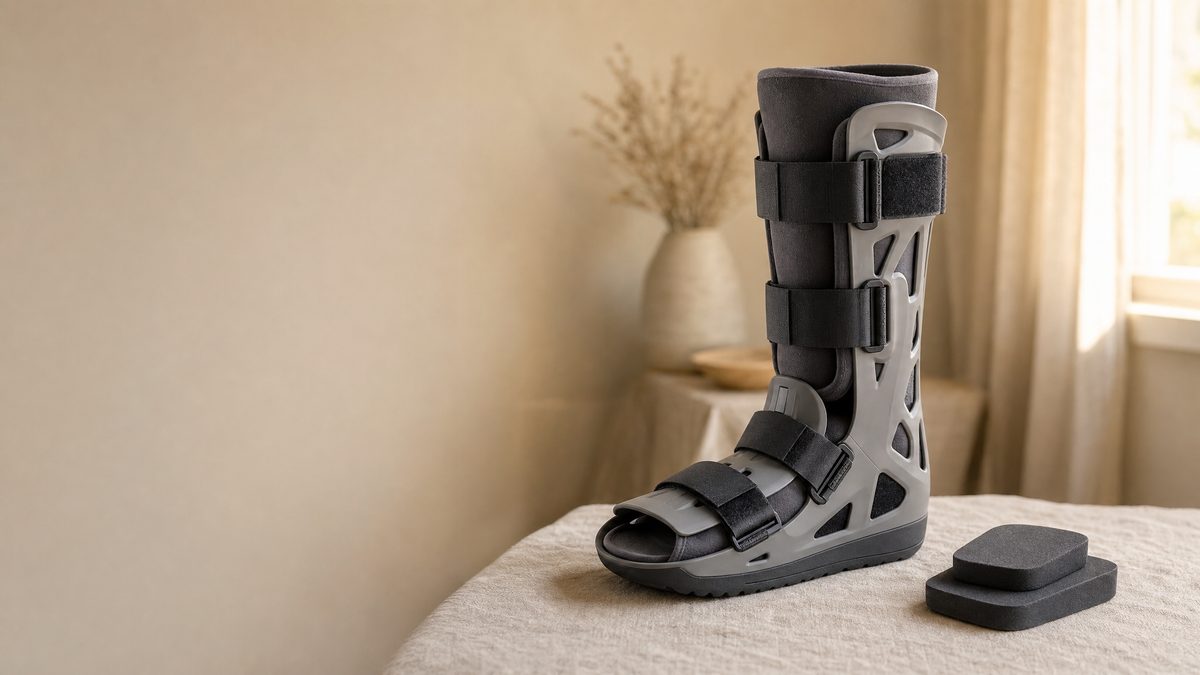
Achilles Rupture Recovery: Month by Month
Walking at two months, running at five, sport at nine to twelve. The riskiest stretch is the one where your leg already feels fine.
Almost everyone describes an Achilles rupture the same way. A push-off, a pop, and the absolute certainty that somebody behind you kicked you in the back of the leg. People turn around to look. Then, oddly, the pain settles fairly quickly, which is exactly why so many ruptures get dismissed as a bad calf strain for a week or two before anyone takes a proper look.
What follows is one of the longest recoveries in foot and ankle medicine, and the shape of it surprises people. The tendon heals reasonably fast. The calf muscle behind it takes a year or more, and the most dangerous phase is not the painful early weeks but the comfortable stretch around months two and three. This guide from the podiatrists at ASG Foot & Ankle covers the timeline phase by phase, the surgical versus non-surgical decision, and what the boot protocol is actually doing.
Medically reviewed by Dr. Timothy Horak and Julia Shauger, board-certified podiatric specialists serving Homewood, South Chicago Heights & Mokena. Last reviewed August 2026.
The short answer
Out of the boot and walking normally at 8 to 12 weeks. Jogging around 5 to 6 months. Cutting and jumping sport at 9 to 12 months. Calf strength keeps improving into the second year and often never fully matches the other side. Surgical and non-surgical timelines are broadly similar with modern protocols. And the highest re-rupture risk sits between weeks 6 and 12, when the leg feels good and the tendon is not yet ready.
Get Seen Urgently If
Suspected rupture is time-sensitive. The tendon ends retract with every day that passes, and a delayed diagnosis meaningfully worsens the outcome and pushes you toward more complex surgery:
- •A pop or snap at the back of the ankle and the sensation of being kicked
- •You cannot rise onto your toes on that leg, or push off when walking
- •A palpable dip or gap in the tendon a few centimeters above the heel bone
- •Squeezing the calf does not make the foot point downward
And separately, during recovery, seek same-day care for:
- •A calf that becomes hot, hard, swollen, or newly painful, which can indicate a blood clot
- •Chest pain or breathlessness at any point after the injury
- •Fever, spreading redness, or discharge from a surgical wound
- •A second pop, or sudden loss of push-off after you had regained it
The Recovery, Phase by Phase
Immobilized, Toes Pointed
- Boot or cast holding the foot pointed down to bring the tendon ends together
- Non weight bearing or touch weight bearing, depending on the protocol
- Swelling and bruising in the calf and ankle are expected at this stage
- Blood clot prevention matters here; a calf that becomes hot, hard, or newly painful needs urgent review
Wedges Come Out, Weight Goes On
- Heel wedges are removed one at a time, easing the foot back toward neutral
- Progressive weight bearing in the boot, usually reaching full weight by week 4 to 6
- Gentle active movement begins; scar and swelling management if there was surgery
- The leg starts feeling deceptively normal, which is the hazard of the next phase
The Highest-Risk Window
- Transition out of the boot into a normal shoe, often with a temporary heel lift
- Most re-ruptures happen in this stretch, precisely because it feels fine
- Double-leg heel raises begin, progressing toward single leg by the end of it
- No stairs two at a time, no sudden push-off, no walking the dog off-lead
Strength Rebuilding
- Walking is normal and comfortable; the limp usually resolves in this window
- Single-leg heel raise is the key milestone, and it takes most people months to achieve
- Calf will look visibly smaller than the other side; this is expected
- Cycling and swimming usually cleared well before running
Return to Running
- Jogging typically resumes around month 5 to 6, guided by strength not the calendar
- Progression runs straight-line first, then change of direction much later
- Plyometrics and hopping introduced gradually once single-leg strength allows
- Tendon may feel thickened and stiff in the mornings, which is normal remodeling
Sport and the Long Tail
- Cutting and jumping sport usually cleared at 9 to 12 months, not before
- Calf strength continues improving measurably into the second year
- A 10 to 20% strength deficit versus the other leg is common even at 2 years
- Ongoing heel raise work is the single highest-value thing you can keep doing
Surgery or Not: What Actually Differs
This used to be a straightforward recommendation and it no longer is. Functional rehabilitation protocols, which load the tendon early in a wedged boot rather than locking it in a cast for weeks, have brought non-surgical outcomes much closer to surgical ones.
| Factor | Surgical repair | Non-surgical (functional rehab) |
|---|---|---|
| Re-rupture risk | Lower, roughly 2 to 5% | Somewhat higher, gap much narrowed by modern protocols |
| Wound and infection risk | Real, and the main downside of operating here | Essentially none |
| Overall timeline | Broadly similar | Broadly similar |
| Favored when | Large gap, delayed presentation, re-rupture, high-demand athlete | Ends appose well, presents early, diabetes or vascular disease, lower demand |
| Protocol adherence | Important | Critical; the protocol is the treatment |
One factor tips the decision more than most people realize: how early you present. A rupture seen within a few days, where ultrasound shows the ends sitting close together with the foot pointed, has good non-surgical options. The same rupture seen at three weeks, with the ends retracted and a gap filled with scar, often does not. This is the practical reason not to wait it out as a calf strain.
Weeks 6 to 12: The Part Nobody Warns You About Enough
By week six you are weight bearing, mostly out of pain, and the boot has started to feel like an inconvenience rather than a necessity. This is precisely the point at which the healing tendon is transitioning from soft, disorganized repair tissue to properly aligned collagen, and it is mechanically at its most vulnerable relative to what you now feel able to do.
The great majority of re-ruptures happen in this window, and the mechanism is almost always mundane rather than athletic. Stepping off a curb awkwardly. Taking the stairs two at a time. Nipping to the bathroom at night without the boot. A dog pulling unexpectedly on the lead.
The practical rule for this stretch: no sudden push-off, no unplanned movement, and the boot stays on whenever your feet are on the floor until you are told otherwise. Compliance in the painful first fortnight is easy and everyone manages it. Compliance here is what actually determines the outcome.
Why Your Calf Stays Smaller Than the Other One
At around month four or five, most people notice their injured calf is visibly thinner than the other side and assume something has gone wrong. It has not. Two things are happening, and only one of them is trainable.
The first is straightforward disuse. Weeks in a boot with limited loading shrink muscle quickly, and it rebuilds with work. The second is structural: a healed Achilles is very often slightly longer than the original. Even a small amount of extra length changes the mechanics, leaving the calf muscle working at a less efficient position no matter how much you train it.
That is why strength deficits of 10 to 20 percent versus the uninjured side are commonly still measurable at one to two years. In practice it matters far less than the number suggests, and most people return to what they did before. The work that closes the gap most is heel raises done both with the knee straight and with the knee bent, the latter targeting the deeper soleus muscle that most programs neglect.
Completely tore the ligament? What a grade 3 tear means, the week-by-week timeline, and when surgery comes up. Grade 3 Ankle Sprain Recovery Time →
Pain above the ankle, not below the bony bump? That is a high ankle sprain, and it runs two to three times longer. High Ankle Sprain Recovery Timeline →
Not sure if it was the Achilles or the ligaments? Pain on the side of the ankle rather than the back points elsewhere. Ankle Sprain Recovery Timeline →
Heel pain without a sudden injury? Gradual onset heel pain is usually a different problem entirely. Plantar Fasciitis Healing Timeline →
Ongoing pain at the back of the heel? Several conditions affect this area without a rupture. Heel Pain Conditions →
Frequently Asked Questions
How long does it take to recover from an Achilles tendon rupture?
The headline numbers are roughly the same whether you have surgery or not. Most people are out of the boot and walking in a normal shoe at 8 to 12 weeks, back to jogging somewhere around 5 to 6 months, and cleared for cutting or jumping sport at 9 to 12 months. Full recovery of calf strength takes the longest of all and often continues improving through the second year, with many people retaining a measurable deficit compared to the other side even at that point. The tendon is structurally sound long before the muscle behind it works properly again, and that mismatch is why the timeline extends so far past the point where the leg feels basically fine.
Do you need surgery for a ruptured Achilles tendon?
Often not. Modern functional rehabilitation protocols, which use a boot with heel wedges and early controlled loading rather than a rigid cast, have narrowed the gap between surgical and non-surgical outcomes substantially. Re-rupture rates that used to strongly favor surgery are now much closer when a good accelerated protocol is followed, and non-surgical management avoids wound complications and infection, which are the main risks of operating in this area. Surgery is still favored in certain situations: a large gap between the tendon ends, a delayed presentation where the ends have already retracted, a re-rupture, or a high-demand athlete where the small remaining difference in strength and re-rupture risk matters. This is a genuine shared decision, and the right answer depends on your age, activity, health, and how the tendon ends sit on ultrasound.
How do I know if I ruptured my Achilles?
The classic account is unmistakable once you have heard it: a sudden sharp pain at the back of the ankle during a push-off, often with an audible pop or snap, and a distinct feeling of having been kicked or hit in the back of the leg by someone who was not there. People frequently turn around to look. After that initial pain, it often settles surprisingly quickly, which is precisely why ruptures get missed and assumed to be a bad sprain or a calf strain. The reliable clinical signs are an inability to push off or rise onto the toes on that leg, a palpable gap in the tendon a few centimeters above the heel bone, and a negative calf squeeze test where squeezing the calf fails to make the foot point downward. Any suspicion of this needs same-day or next-day assessment, because delayed treatment makes the tendon ends retract and materially worsens the outcome.
Why does the boot have wedges under the heel?
The wedges hold your foot pointed downward, which brings the two torn tendon ends closer together and takes tension off the repair while it knits. Starting in that position lets healing happen without the ends being pulled apart every time you move. The wedges are then removed one at a time over several weeks, gradually bringing your foot back toward neutral and progressively lengthening and loading the healing tendon. This staged removal is the core of the protocol and it is not arbitrary. Removing wedges early, or walking around the house without the boot because it feels fine, applies load the tendon is not ready for. Most re-ruptures happen between weeks 6 and 12, and a large share of them are people who felt good and took the boot off ahead of schedule.
Will my calf ever be the same size again?
For many people, not entirely, and this is worth knowing early so it does not come as a shock at month six. Calf circumference and strength deficits are extremely common after Achilles rupture and can persist for years, with studies routinely reporting strength differences of 10 to 20 percent between the injured and uninjured leg at one to two years. The tendon often heals slightly longer than it was originally, which mechanically disadvantages the calf muscle no matter how hard you train it. That said, the size difference matters far less for function than most people expect, and dedicated heel raise work, particularly with the knee bent to target the deeper soleus muscle, continues producing real gains well into the second year. Most people return to their prior activities. Some never fully close the strength gap on testing.
What is the risk of re-rupturing the Achilles tendon?
Broadly in the range of 2 to 5 percent after surgical repair and somewhat higher after non-surgical management, though modern functional rehabilitation protocols have narrowed that difference considerably compared to older studies that used rigid casting. The critical detail is when it happens: the great majority of re-ruptures occur between roughly 6 and 12 weeks after the original injury. That window is exactly when the tendon feels reasonably good, the boot feels unnecessary, and the healing tissue is at its most vulnerable transition point. Following the protocol precisely during that specific stretch, rather than during the painful early weeks when everyone complies anyway, is what actually protects you.
Achilles sore for months, no pop?
Rest feels right and makes it worse. Why a degenerating tendon needs load, not time off.
Achilles Tendonitis Recovery →Bump on the back of your heel?
The bone is not the problem. The bursa caught between it and your shoe is, and that is fixable.
Haglund's Deformity, the Pump Bump →See a Podiatrist Near You
ASG Foot & Ankle has offices in Homewood, South Chicago Heights and Mokena. Our board-certified podiatrists accept most insurance. Find the office closest to you:
Sudden Pain at the Back of the Ankle?
A suspected Achilles rupture is genuinely time-sensitive. Seen in the first days, the tendon ends still sit together and every treatment option is open. Seen at three weeks, many are not. Our board-certified podiatrists can assess and image it quickly.