Broken Heel Recovery Time: Calcaneus Fracture, Week by Week
How long the heel bone takes, how long you stay off it, what surgery changes, and the long-term problems worth knowing about early.
Broken heel recovery time depends on how badly the heel bone, the calcaneus, was broken and whether the break runs into the joint just below the ankle. Most heel fractures come from landing hard on the feet from a ladder, scaffolding or a roof, or from a car crash, and about 3 in 4 run into that joint. The bone usually takes 3 to 4 months to heal; getting back to normal often takes much longer.
This guide covers sudden heel fractures from an injury. Heel pain that built up over weeks of walking or running, with no fall, is more likely a stress fracture, covered in stress fracture healing time.
ASG Foot & Ankle patient education. Updated October 27, 2026. General information, not a diagnosis.
The short answer
Broken heel recovery time is about 3 to 4 months for the bone to heal after a significant calcaneus fracture, with or without surgery, usually with no weight on the foot for the first 6 weeks and partial weight for about 6 more. A small crack that has not shifted can heal in 6 to 12 weeks in a walking boot. Full recovery takes longer: pain and swelling often last 3 to 6 months even after a minor fracture, improvement after a displaced fracture tends to level off around 18 months, and a severe fracture can take 1 to 2 years.
Get It Seen Urgently If
Go to an emergency room the same day, or call 911, if:
- •You landed on your heels from a height or were in a car crash, and the heel is painful, swollen, bruised or misshapen, or will not take your weight
- •Bone is showing, or there is a wound over the heel
- •The skin at the back of the heel is stretched tight, pale or blistering over a bony lump
- •Pain is far worse than expected and keeps climbing despite raising the foot and taking painkillers, the foot feels very tight, or there is new tingling, burning or numbness
- •Your back hurts after the fall, even if the heel is the main problem
- •After surgery, the wound turns red, hot or oozing, starts to open, or you feel feverish
- •One calf becomes painful and swollen; call 911 if you are also short of breath or have chest pain
With diabetes or neuropathy, have any heel injury checked promptly, even one that hardly hurts.
Types of Heel Fracture and How Long Each Takes
The calcaneus is the largest bone in the back half of the foot, the block of bone you land on. Its top forms the subtalar joint with the ankle bone above it, the joint that moves the heel side to side and keeps you balanced on uneven ground. Heel fractures are uncommon, about 1 to 2% of all fractures, but most break into that joint (intra-articular); about 1 in 4 stay outside it (extra-articular).
| Type | What it means | Usual treatment | Typical recovery |
|---|---|---|---|
| Small crack, still in line | Cracked, but the bone has kept its shape | Walking boot for at least 6 weeks; weight as your clinic advises | About 6 to 12 weeks to heal; pain and swelling for 3 to 6 months |
| Displaced, into the joint | The most common type: the joint surface under the ankle is broken and pushed out of place | Surgery, or a splint with early gentle movement; no weight for about 6 weeks, then partial weight | Bone about 3 to 4 months; improvement often levels off around 18 months |
| Outside the joint (extra-articular) | About 1 in 4 heel fractures; the joint surface is spared | No surgery if the heel keeps its shape; surgery if badly displaced | Depends on how far the bone moved |
| Avulsion fracture | Uncommon: the Achilles tendon pulls a piece of bone off the back of the heel | Often early surgery, especially if the piece presses on the skin | Set by the repair |
| Open fracture | Bone through the skin, or a wound that reaches the bone | Urgent wound cleaning and surgery | Longer; infection risk shapes the plan |
Pain higher up, at the ankle bones, belongs in the ankle fracture recovery timeline, and a break in the long bones of the forefoot in broken foot recovery time.
Fell From a Height? Get Your Back Checked Too
The force that breaks a heel travels up the leg. A review of heel fractures puts spine injuries in the middle and lower back at about 1 in 10, and about 1 in 10 people have also broken the other heel; hip fractures can happen in the same fall. Tell the emergency team about any back pain, even if the heel hurts far more, and mention it if both heels are sore.
Broken Heel Recovery Time, Week by Week
The usual course for the typical heel fracture from a fall: a displaced break into the joint, treated with or without surgery. Your own surgeon's instructions come first.
Swelling Down, Plan Made
- A padded splint, the foot raised above hip level, ice wrapped in a cloth, and no weight on the heel
- A CT scan often shows how badly the joint surface is broken, which guides the decision on surgery
- Open surgery usually waits for the swelling to settle, often into the second week; operating in the first 3 days risks the wound breaking down
- Minimally invasive surgery can be done sooner, at about 2 to 3 days
No Weight, Keep the Ankle Moving
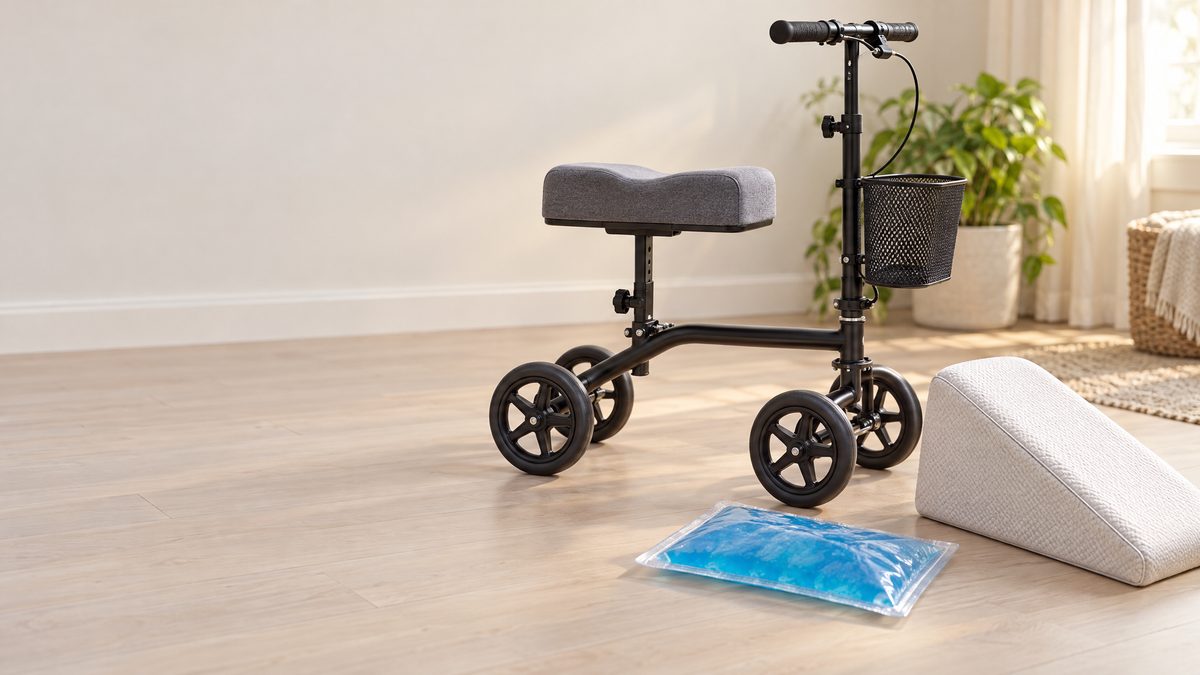
- Crutches, a walker or a knee scooter, with no weight through the heel
- Gentle ankle and foot movements several times a day once your team allows, to limit stiffness and help circulation
- After surgery, report wound redness, oozing or any opening promptly
Partial Weight
- Partial weight on the foot starts somewhere between 6 and 10 weeks
- The UK Heel Fracture Trial used 6 weeks of partial weight, with or without surgery
- Physical therapy helps with movement and getting back to walking
Full Weight, Bone Healed
- Most people wait about 3 months before putting full weight on the heel
- The bone usually takes 3 to 4 months to heal, with or without surgery
- After a less severe fracture, normal activities can resume about 3 to 4 months after surgery
Back Toward Work
- One study of non-surgical treatment reported light duty by about 4 months and the previous job by about 6
- Long walks, standing all day and uneven ground are usually still hard
The Long Tail
- Improvement continues slowly, often leveling off around 18 months
- A severe fracture can take 1 to 2 years to recover fully; most people in the UK trial still felt some effects at 2 years
A small crack that has not moved
Minor heel fractures are usually managed in a walking boot. NHS fracture clinic plans run like this:
| Weeks since injury | What usually happens |
|---|---|
| 0 to 6 | Boot whenever standing or walking; off in bed and at rest. Weight as comfort allows with crutches, or touch-down only if your clinic says so. Ankle exercises 3 to 4 times a day. |
| 6 to 8 | Wean out of the boot and crutches, around the house first, keeping the boot for longer walks outdoors. Add stretches, balance work and heel raises. |
| 8 to 12 | Largely healed. Normal activities come back as pain allows, though long walks can still bring discomfort and swelling. No running or jumping until about 3 months. |
| 12 onward | Still improving; mild discomfort and evening swelling can last 6 to 12 months. Significant pain or stiffness is a reason for review. |
When it is not on schedule
A heel that still aches at 3 months is normal. Get back in touch if pain is getting worse rather than better, the heel looks more misshapen, the wound changes, or you cannot follow the exercise plan. If you smoke, stop now: NHS fracture clinics warn that smoking prolongs fracture healing and in extreme cases can stop it altogether.
Can You Walk on a Broken Heel?
Sometimes, which is part of the problem. Some minor heel fractures still let you walk with a limp, so walking does not rule out a break. Many make it hard or impossible to put weight on the heel, and many are kept completely off the ground for weeks. Do not try to walk it off before an X-ray.
How long before you can walk after a heel fracture?
| Fracture | First weeks | Full weight |
|---|---|---|
| Small crack, still in line | In a boot, weight as comfort allows or touch-down only, with crutches | Weaning out of the boot from about 6 to 8 weeks |
| Displaced, no surgery | No weight for about 6 weeks, then partial weight | Around 3 months |
| After surgery | No weight for about 6 weeks; partial weight from 6 to 10 weeks | Most people at about 3 months |
Why not sooner
Loading a healing heel too early can loosen or break the plates and screws and let the bone collapse. With neuropathy, pain is a poor guide, so stick to the plan rather than letting comfort decide.
When you do walk
Walk as normally as you can within the weight you are allowed, crutches taking the rest, with a supportive, firm-soled shoe on the other foot so the thicker boot sole does not throw you off balance.
Calcaneus Fracture Surgery: Who Needs It and What Recovery Looks Like
Many heel fractures heal without an operation. A surgeon is usually involved when:
The joint surface is out of place
The break runs into the joint under the ankle and has shifted, the usual reason a surgeon is involved.
The heel has lost its shape
Most heel fractures leave the bone wider and shorter, and surgery is the only way to rebuild the normal shape.
The skin is threatened
A fragment at the back of the heel, pulled up by the calf muscles, presses on the skin. Severe displacement there is a surgical emergency.
An open fracture
Bone through the skin, or a wound reaching it. Needs immediate cleaning and surgery.
What the operations involve
- Screws through small incisions, holding large pieces back in place; possible within a few days of the injury.
- A plate and screws through a larger incision on the outer heel, once the swelling has settled.
- Fusion of the subtalar joint for the most shattered fractures, where the joint is unlikely to recover. It trades side-to-side heel movement for less pain.
Surgery or not: what the trials found
For displaced fractures into the joint, the evidence is mixed. In the UK Heel Fracture Trial of 151 people, pain and function at 2 years were about the same with or without surgery, but complications or repeat operations affected 23% of the surgery group against 4% without. Wound infection, the most common problem, hit 19% after surgery and no one treated without it.
An earlier multicenter trial of 424 patients also found similar results overall, but some groups did better with surgery, including women, younger patients, people with lighter workloads, and those not on workers' compensation. The choice depends on the fracture, your health, your job and your skin.
Wound Healing After Heel Surgery: Smoking and Diabetes
A fresh heel fracture leaves the skin badly swollen and sometimes blistered, which is why open surgery waits and why wound healing is the biggest worry afterward. Pooling ten studies of open fixation, a 2015 review found wound problems in about 21% of operated heels, about half of them major: deep infection, bone infection, removal of the metalwork, or tissue moved to cover the wound.
Diabetes
The strongest risk factor in that review, with roughly ten times the odds of a wound problem.
Smoking
Slows bone and wound healing, showed a trend toward more wound problems, and adds to other risks.
A more shattered fracture
More severe fractures had about three times the odds of wound trouble.
Poor circulation raises the risk too. Stop smoking before the operation, tell the team about diabetes or circulation problems, keep the foot raised, and keep every wound check. Infection can mean more surgery and, rarely, amputation, so report a red, hot, oozing or opening wound the same day. What to look for is in signs of an infected foot wound.
Physical Therapy and Exercises
Stiffness is one of the main long-term problems, so movement starts early; it also helps circulation and lowers the risk of a blood clot. NHS clinics start these from day one for a minor fracture; after a displaced fracture or surgery, start when your team says so.
Early stage, 3 to 4 times a day
- 1Point the foot up and down, 10 times
- 2Turn the sole in and then out, keeping the leg still, 10 times
- 3Slow circles with the foot, each direction, 10 times
Within comfort. No need to push into pain.
Once weight is allowed
- 1Calf stretch with a towel around the foot, 30 seconds, 3 times
- 2Stand on the injured leg holding a counter, building up to 30 seconds
- 3Heel raises holding on for support, 10 times
Only if they do not increase the pain.
Physical therapy helps restore movement and walking once the bone allows. After a severe fracture, full movement is rarely regained, so the realistic goal is a heel that is comfortable on the ground you walk on every day.
Going Back to Work, Driving and Sport
A seated job
Often possible once you can get there safely on crutches and keep the foot raised under the desk.
A job on your feet
Light duty by about 4 months and the previous job by about 6 in one study. In the UK trial about 85% were working at 2 years, most in lighter work; many people in heavy manual jobs cannot go back to them.
Driving
NHS fracture clinics advise waiting until you are out of the boot, can walk comfortably, and can do an emergency stop without pain, tested somewhere safe first.
Sport
Even after a minor fracture, avoid running, jumping and dancing for about 3 months. After a displaced fracture, grass and hills can stay difficult long term.
Right foot or left, automatic or manual: see when you can drive after foot surgery or injury.
Long-Term Problems After a Broken Heel
Heel fractures often leave lasting effects, especially when the joint was shattered; in the UK trial, most people were still affected 2 years later. What tends to linger:
Arthritis below the ankle
Wear of the subtalar joint. After the most shattered fractures, rates as high as 71% have been reported.
Stiffness
After a severe fracture, full foot and ankle movement is rarely regained, which shows most on slopes and uneven ground.
A wider, shorter heel
A heel that heals wider and shorter can make shoes rub and irritate the tendons around it.
Pain, swelling and a limp
Pain when walking, especially on uneven ground, and a heel that stays a little puffy compared with the other side.
Shoe problems
Heel pads, heel lifts, heel cups and shoes with extra depth can ease skin and tendon irritation.
Plates and screws
Rarely noticed, but sometimes removed later.
When arthritis pain persists, fusing the subtalar joint usually eases the pain but permanently limits side-to-side heel movement. Swelling in both feet, or without an injury, has other causes covered in swollen feet and ankles, and first-step morning heel pain with no injury points to the plantar fasciitis healing timeline.
Diabetes, Neuropathy and a Broken Heel
- •The boot. Tell the fracture clinic you have diabetes, especially with any skin problems; a specialist diabetic boot may be needed.
- •The wound. After open surgery, diabetes carried about ten times the odds of a wound complication, which weighs heavily in the surgery decision.
- •The warning signs. With neuropathy, a broken heel can hurt far less than it should, and a rubbing boot may go unnoticed.
Check the skin of both feet daily, including under the boot, and get seen promptly if the foot becomes swollen and warmer than the other one. More in Charcot foot recovery and diabetic foot and wound care.
Heel pain built up over weeks, with no fall? Stress Fracture Healing Time →
Broke a bone further forward in the foot? Broken Foot Recovery Time →
The ankle bones broke instead? Ankle Fracture Recovery Timeline →
Pain at the back of the heel after a pop or snap? Achilles Tendon Rupture Recovery →
Wondering when you can drive? Driving After Foot Surgery →
Frequently Asked Questions
How long does a broken heel take to heal?
The bone usually takes about 3 to 4 months to heal after a significant heel fracture, with or without surgery, and a small crack that has not shifted can heal in 6 to 12 weeks in a boot. Recovery takes longer than bone healing: pain and swelling often last 3 to 6 months, and after a severe fracture full recovery can take 1 to 2 years.
Can you walk on a broken heel?
Sometimes, but not before an X-ray. Some minor heel fractures still allow walking with a limp, so walking does not rule out a break. A small crack that has not moved is often treated in a boot with weight as comfort allows. A displaced fracture usually means no weight for about 6 weeks, then partial weight for about 6 more.
How long after calcaneus fracture surgery can you walk?
Usually not on the full foot for about 3 months. Partial weight typically starts 6 to 10 weeks after surgery; in a large UK trial, people kept all weight off for 6 weeks, then took partial weight for 6. Putting weight through the heel too early can loosen or break the plates and screws, or let the bone collapse.
Does a broken heel need surgery?
Not always. Small cracks that have not moved heal without it. Surgery is considered when the joint surface or the shape of the heel is badly out of place, the skin is threatened, or bone has come through the skin. Two large trials of displaced fractures into the joint found similar overall results with or without surgery, so the decision is an individual one.
What are the long-term problems after a broken heel?
Stiffness, pain on uneven ground, and arthritis in the joint just below the ankle are the most common. The heel can heal wider and shorter, so shoes rub and nearby tendons get irritated. Heel pads, lifts, heel cups or extra-depth shoes help, and a fusion operation is an option if arthritis pain persists.
When can I go back to work after a broken heel?
It depends on the job. Seated work is often possible once you can get there safely and keep the foot raised. One study of non-surgical treatment reported light duty by about 4 months and the previous job by about 6. In a large UK trial, about 85% were working at 2 years, most in less physically demanding jobs.
Is it normal for a broken heel to still be swollen after 6 months?
It can be. NHS fracture clinics say pain and swelling often last 3 to 6 months even after a minor heel fracture, with mild discomfort for up to 6 to 12 months, usually worst at the end of the day. Swelling that is getting worse, feels hot, or comes with new pain needs review.
Sources and further reading
- AAOS OrthoInfo: Calcaneus (heel bone) fractures
- Orthopaedic Trauma Association: Calcaneus fracture (broken heel bone)
- Razik A, Harris M, Trompeter A. Calcaneal fractures: where are we now? Strategies in Trauma and Limb Reconstruction (2018)
- Griffin D et al. UK Heel Fracture Trial: operative versus non-operative treatment for displaced intra-articular calcaneal fractures. BMJ (2014)
- Buckley R et al. Operative compared with nonoperative treatment of displaced intra-articular calcaneal fractures. Journal of Bone and Joint Surgery (2002)
- Zhang W et al. Risk factors for wound complications of closed calcaneal fractures after surgery: a systematic review and meta-analysis (2015)
- Whittington Health NHS Trust: Calcaneal fracture, virtual fracture clinic leaflet (2022)
- Mersey and West Lancashire Teaching Hospitals NHS Trust: Calcaneus (heel) fracture
- AAOS OrthoInfo: Compartment syndrome
- NHS: Deep vein thrombosis (DVT)
General patient education. Your examination and individual treatment instructions take priority.
See a Podiatrist Near You
ASG Foot & Ankle has offices in Homewood, South Chicago Heights and Mokena. Our board-certified podiatrists accept most insurance. Find the office closest to you:
Hurt Your Heel and Not Sure It Is Broken?
ASG Foot & Ankle can examine and X-ray the heel, arrange further imaging or a surgical opinion when the fracture needs one, and help with the skin, wound and footwear problems that can follow, with extra care when diabetes or neuropathy is part of the picture.