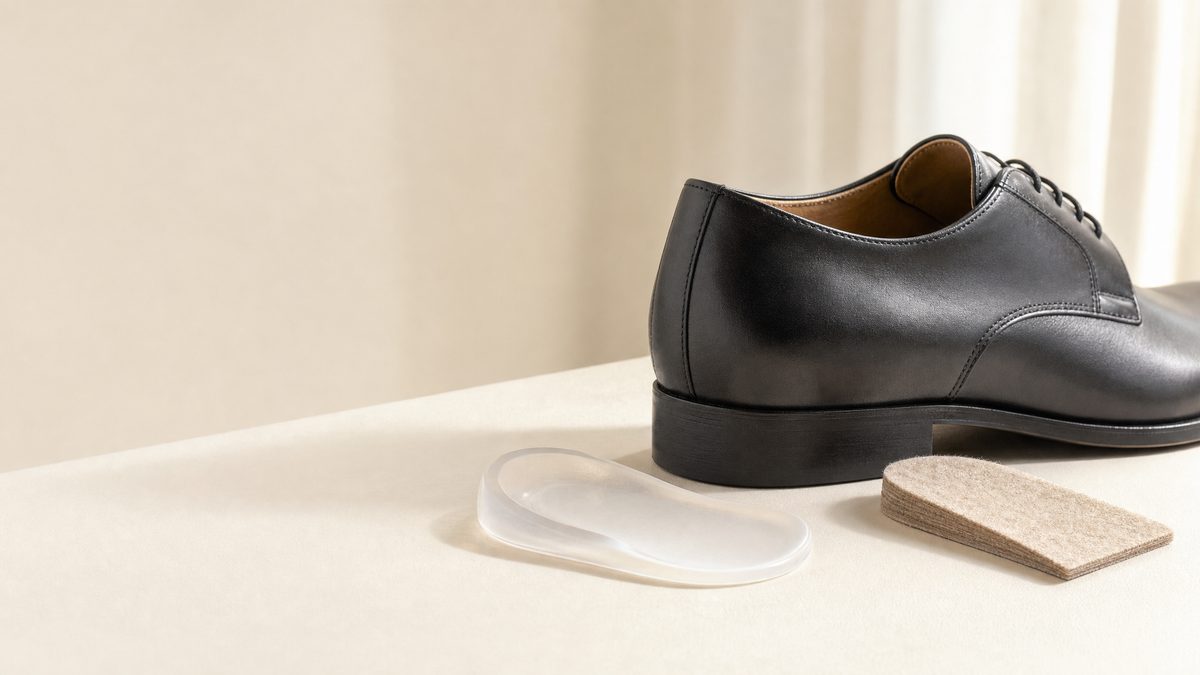
Haglund's Deformity: The Pump Bump
The bump is bone and it is not going anywhere. The pain is soft tissue caught between that bone and your shoe, and that part is very fixable.
The most useful thing to understand about a pump bump is that the bump itself is usually innocent. Plenty of people have a prominent upper back corner on the heel bone and never think about it. What makes it hurt is the small bursa sitting between that bone and the Achilles tendon, which becomes inflamed when a shoe presses the two together repeatedly.
That is why the condition has such a distinctive pattern: agony in one pair of shoes, completely fine in another, and mysteriously better on holiday. It is also why the treatment that works best is not medical at all. Most of the improvement comes from changing what touches the back of your heel, which is unglamorous advice for a problem people usually arrive expecting to need surgery for.
Medically reviewed by Dr. Timothy Horak and Julia Shauger, board-certified podiatric specialists serving Homewood, South Chicago Heights & Mokena. Last reviewed August 2026.
The short answer
A bony prominence at the back of the heel that hurts when a rigid shoe back compresses the bursa against it. The bump does not shrink with treatment, but the pain usually resolves with soft or open backed shoes, a heel lift, and padding. Steroid injections are used cautiously here because the Achilles insertion is right there. Surgery works but is bigger than it sounds: 6 to 8 weeks in a boot, normal shoes around 3 months, sport at 6 to 12 months.
The Treatment Ladder
Change What Touches It
- Soft or open backed shoes; nothing with a rigid moulded heel counter
- A heel lift in both shoes moves the contact point and slackens the Achilles
- Silicone heel sleeve or a horseshoe shaped pad to spread the pressure
- This alone resolves the pain for a large share of people
Settle the Bursa
- Ice after activity, 15 minutes, and a short course of anti inflammatories in a flare
- Reduce hill running and speed work, which load the insertion hardest
- Calf stretching, gently, since aggressive stretching can aggravate the insertion
- Give it weeks, not days; an inflamed bursa settles slowly
Load the Tendon Properly
- Where the Achilles insertion is involved, a loading program is the real treatment
- Calf raises on flat ground, not off a step, since the drop compresses the insertion
- Expect a 3 to 6 month program, sometimes longer
- Shockwave therapy is a reasonable next step for stubborn insertional pain
Surgery, If It Comes To It
- Removes the bony prominence and the bursa; the tendon is often detached and reattached
- Boot or cast 6 to 8 weeks, frequently non weight bearing at first
- Normal shoes around 3 months, sport at 6 months to a year
- Good results overall, but this is not a minor bump shaving procedure
Point At Where It Hurts
Three different heel problems get called heel spurs, and the location tells you which one you have. They are treated differently, and they overlap often enough that a proper look is worthwhile.
| Where | Likely problem | Signature |
|---|---|---|
| Underneath the heel | Plantar fasciitis | Worst on the first steps in the morning |
| Back of the heel, where shoes rub | Haglund's and bursitis | Shoe dependent; red and swollen over the bump |
| Back of the heel, in the tendon | Insertional Achilles tendinopathy | Morning stiffness, pain with activity, worse on hills |
| 2 to 6cm up the cord | Midportion Achilles tendinopathy | Thickened tender cord, responds to heel drops |
| Sides of the heel, all over | Possible calcaneal stress fracture | Pain squeezing the heel from both sides; needs imaging |
The Counterintuitive Part: Flat Shoes Make It Worse
People with a painful heel bump often assume the answer is flatter, more natural footwear, and then find that barefoot walking and zero drop shoes hurt more. The mechanism is geometry. Dropping the heel closer to the ground rotates the heel bone so the prominence points more directly backward into whatever is behind it, and it simultaneously puts the Achilles under more stretch across the same spot.
Raising the heel does the opposite on both counts, which is why a modest heel lift is one of the most reliably useful interventions here, and why a completely flat dress shoe with a stiff back is close to the worst possible combination.
The same logic explains why aggressive calf stretching can backfire in insertional heel pain. Stretching a tight calf sounds obviously right, but forcing the ankle into deep dorsiflexion compresses the Achilles insertion against the very bone that is already irritating it. Gentle stretching is fine. Hanging a heel off a step, which is standard advice for pain higher up the tendon, is usually the wrong exercise for pain at the heel.
Pain in the cord rather than at the bone? Achilles Tendonitis: Why Rest Makes It Worse →
Pain underneath the heel first thing in the morning? How Long Does Plantar Fasciitis Take to Heal? →
Considering an injection? What a cortisone shot does and does not do in the foot. Cortisone Shot in the Foot: What to Expect After →
Frequently Asked Questions
What is Haglund's deformity?
Haglund's deformity is an enlargement of the bony prominence at the upper back corner of the heel bone, where the Achilles tendon attaches. Many people have one and never know, because a bump on its own is not a problem. It becomes symptomatic when the back of a shoe presses on it, compressing the small fluid filled bursa that sits between the bone and the tendon. That bursa becomes inflamed, and the result is a red, swollen, tender lump that hurts in some shoes and is fine in others. The name pump bump comes from the classic scenario, rigid backed dress pumps, but stiff heeled dress shoes, ski and skate boots, and firm running shoe heel counters all produce the same thing. The two anatomical features that make someone prone to it are a high arched foot, which tilts the heel bone so the prominence points further back, and a tight calf.
How do I get rid of the bump on the back of my heel?
The honest answer is that you generally do not get rid of the bump without surgery, and you usually do not need to. The bump is bone; it does not shrink with treatment. What can be eliminated is the pain, because the pain comes from the soft tissue caught between the bone and the shoe. So the whole conservative approach is about removing that compression: shoes with a soft or open back, a heel lift to shift the pressure point off the prominence, silicone heel sleeves or a horseshoe pad to redistribute contact, and calf stretching to reduce the tendon tension pulling across the area. Ice after activity and a short course of anti inflammatories help settle a flare. Most people who do all of that consistently become comfortable and simply live with a bump that no longer hurts, which is a perfectly good outcome.
What shoes should I wear with a pump bump?
The single feature that matters is what the back of the shoe is made of and where it sits. Look for a soft, flexible, unstructured heel counter, or a shoe with no back at all such as a mule or a backless clog for around the house. Avoid anything with a rigid moulded plastic counter, and be careful with new running shoes, which increasingly have firm heel counters and heel tabs that sit exactly on the sore spot. A small heel lift in both shoes is often transformative, because raising the heel changes which part of the prominence meets the shoe and simultaneously slackens the Achilles. Contrary to instinct, completely flat shoes and barefoot walking often aggravate it. If a favourite pair is otherwise ideal, a shoe repairer can sometimes stretch or soften the counter, and cutting a small notch in the collar is a last resort that people do report helping.
Should I get a cortisone shot for Haglund's deformity?
This is one of the areas where podiatrists are deliberately cautious. A steroid injection into the retrocalcaneal bursa can settle a stubborn flare, and it is sometimes used, but the injection sits immediately adjacent to the Achilles insertion, and steroid weakens tendon tissue. Injection into or around a degenerative Achilles insertion is associated with rupture, which is a far worse problem than the one being treated. So if an injection is offered it should be placed carefully, ideally under ultrasound guidance, into the bursa rather than the tendon, and it should not be repeated casually. Most specialists would exhaust footwear modification, heel lifts, padding, calf stretching, and a period of activity modification first, and would consider shockwave therapy, which has reasonable evidence for insertional heel problems, before reaching for repeated injections.
What is recovery like after Haglund's surgery?
Longer than most people expect, and that expectation gap is the main source of unhappiness with an otherwise successful operation. The surgery removes the bony prominence and the inflamed bursa, and when the Achilles insertion is degenerate it often has to be partially detached to reach the bone and then reattached with anchors. That detachment is what governs the timeline. Expect a cast or boot for roughly six to eight weeks, often non weight bearing at first if the tendon was reattached, then a graduated return to weight bearing and shoes, with physical therapy through months two to four. Most people are comfortable in normal shoes somewhere around three months and back to running or sport at six months to a year. Swelling and tenderness at the back of the heel persisting for six months is normal rather than a complication. The results are generally good, but this is a bigger operation than removing a bump sounds.
Is a pump bump the same as a heel spur?
No, and confusing them sends people down the wrong treatment path. A Haglund's deformity is a prominence at the back of the heel bone, and it hurts where shoes press. The classic heel spur people are told about on x-rays is at the bottom of the heel bone where the plantar fascia attaches, and that pain is felt underneath the heel, worst on the first steps in the morning, which is plantar fasciitis. There is also a third entity, an insertional Achilles spur, which forms within the tendon attachment at the back and often coexists with Haglund's. The practical way to sort them out is to point at where it hurts: underneath the heel is a plantar fascia problem, the back of the heel where a shoe rubs is Haglund's and its bursa, and the back of the heel with pain during and after activity and marked morning stiffness is insertional Achilles tendinopathy. They are treated quite differently, and they frequently overlap.
See a Podiatrist Near You
ASG Foot & Ankle has offices in Homewood, South Chicago Heights and Mokena. Our board-certified podiatrists accept most insurance. Find the office closest to you:
Heel Bump That Rules Out Half Your Shoes?
ASG Foot & Ankle sorts out which heel structure is actually causing the pain, fits the padding and orthotics that offload it, and operates when conservative care has genuinely run its course, across Homewood, South Chicago Heights, and Mokena.