Hallux Rigidus: Big Toe Arthritis, Stage by Stage
Why the big toe stiffens and grows a bump on top, how it is graded, and what helps, from stiff shoes to surgery.
Hallux rigidus is the medical name for a stiff, arthritic big toe joint: the joint at the ball of the foot that bends every time you push off to take a step. The cartilage wears thin, bone spurs build up on top of the joint, and the big toe slowly loses its upward bend.
It is the most common arthritis in the foot, affecting about 1 in 40 adults over 50, and usually starts between the ages of 30 and 60. It is easy to confuse with a bunion, but it is a different problem with a different treatment plan.
ASG Foot & Ankle patient education. Updated October 23, 2026. General information, not a diagnosis.
The short answer
Hallux rigidus is arthritis of the joint at the base of the big toe: the cartilage wears, a bone spur forms on top, and the toe stiffens, hurting most when you push off, squat or climb stairs. It is graded 0 to 4 by how far the toe still bends and what a standing X-ray shows. Stiff-soled or rocker-sole shoes and a rigid insert come first, and in one review of 772 patients, 55% were managed without surgery. If that fails, a cheilectomy (removing the spurs) suits milder grades, with a roomy shoe by about 2 to 3 weeks, while a fusion is the most reliable fix for advanced arthritis, with about 6 weeks in a special shoe and up to a year to feel fully normal.
Get It Seen Promptly If
- •The joint turns hot, red and swollen over hours, especially with a fever or feeling unwell. Same day: this can be gout or a joint infection
- •You have diabetes, neuropathy or poor circulation and see a blister, sore or break in the skin over the bump or under the big toe
- •Numbness or tingling on top of the toe, which can mean a spur is pressing on a nerve
- •Pain is changing how you walk, or an old big toe injury is getting stiffer, not better
- •After surgery: spreading redness, discharge, fever, or calf pain and swelling. Call your surgical team the same day
What Is Hallux Rigidus?
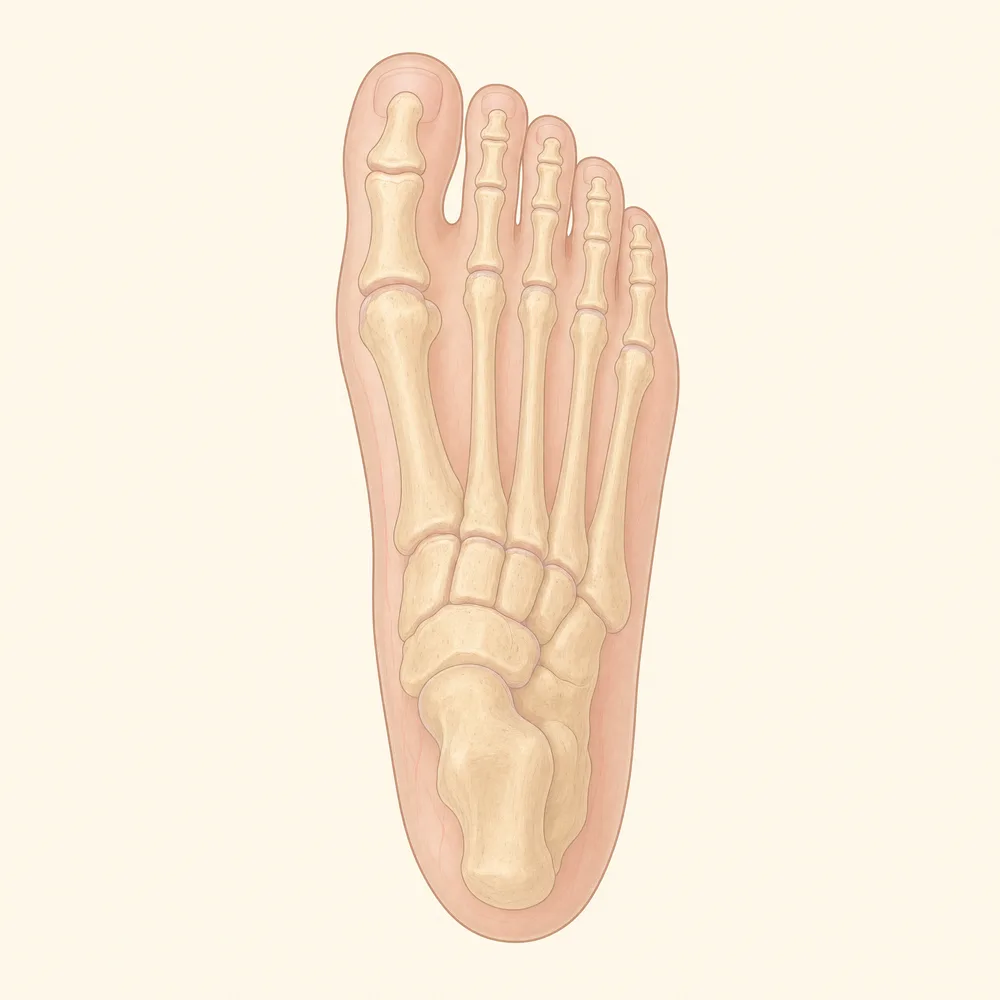
Hallux rigidus means “stiff big toe.” It is osteoarthritis of the first metatarsophalangeal (MTP) joint, where the first long bone of the foot meets the big toe. The cartilage wears away, bone spurs build up around the edges, mostly on top, and the spurs block the toe from bending upward. It is not a bunion, although the two can occur together.
A healthy big toe bends upward about 65 degrees or more each time your heel lifts. When it cannot, the spur on top gets pinched at the end of every step, which is why the pain sits on top of the joint and peaks at push-off.
After bunions, it is the second most common problem of the big toe joint. Women are affected more often, and X-ray signs of wear here appear in 20 to 48% of adults over 40, many with no symptoms. For other arthritis in the feet, see foot arthritis treatment.
 Illustration
Hallux Limitus vs Hallux Rigidus
Hallux limitus: limited
The big toe still bends upward, just less than it should. Foot and ankle surgeons generally use the term for the earlier stage.
Hallux rigidus: stiff
Upward bending is severely reduced or almost gone, and the joint is arthritic. The advanced stage is sometimes described as a frozen joint.
Functional hallux limitus
Some clinicians use the term for a toe that moves normally when you sit but jams once it is loaded during walking. It matters in diabetes: in a study of 60 people with diabetic neuropathy and a previous foot ulcer, it was linked with a much higher chance of a new ulcer under the big toe.
Hallux Rigidus Symptoms
- Pain on top of the big toe joint, worst at push-off as the heel lifts
- A big toe that will not bend upward as far as the other one
- A hard bump on top of the joint (a bone spur), sometimes red
- Shoes pressing on the bump; sometimes numbness on top of the toe where the spur presses on a small nerve
- Pain squatting, climbing stairs, running or doing push-ups, which all bend the toe upward
- Swelling around the joint, often worse in cold, damp weather
- Aching on the outer edge of the foot or under the smaller toes, from walking on the outside of the foot
- In advanced cases: pain at rest, a limp, and knee, hip or back aches from the change in how you walk
The bump on top is the clue that separates it from a bunion, whose bump sits on the inner side of the joint.
What Causes Big Toe Arthritis?
Wear and tear, often with no clear trigger
Most cases develop gradually without an obvious cause. It runs in families: it is often in both feet, and up to two thirds of people with it have a family history.
A past injury to the toe
Stubbing the toe hard, a turf toe sprain, or a fracture into the joint can damage the cartilage and lead to arthritis later.
Foot shape and mechanics
Flat feet and rolling in at the ankle, longer-than-usual toe bones, the shape of the first metatarsal head, and a bunion have all been linked to it.
Heavy use of the joint
Athletes, people on their feet all day, and work with a lot of squatting or stooping.
Inflammatory joint disease
Gout, rheumatoid arthritis and other inflammatory conditions can damage the joint.
In a major study of the condition, shoe wear and a tight Achilles tendon did not appear to contribute: tight or high-heeled shoes can make a stiff toe hurt more, but are not thought to cause the arthritis. If an injury started it, see turf toe recovery or broken big toe healing time.
Hallux Rigidus Grades (Coughlin and Shurnas)
The most widely used scale, from Coughlin and Shurnas, combines how far the big toe bends upward, what the standing X-ray shows, and when it hurts. Movement lost is compared with a normal toe, usually your other one.
| Grade | Upward bend | Movement lost | X-ray | How it feels |
|---|---|---|---|---|
| 0 | 40 to 60° | 10 to 20% | Normal | Stiffness and some loss of movement, but no pain |
| 1 | 30 to 40° | 20 to 50% | A spur on top; joint space only slightly narrowed | Mild or occasional pain at the very end of the bend |
| 2 | 10 to 30° | 50 to 75% | Spurs on top and sides, mild to moderate narrowing | Moderate to severe pain and stiffness, just before the end of the bend |
| 3 | 10° or less | 75 to 100% | Marked narrowing, small bone cysts, changes in the sesamoid bones under the joint | Nearly constant pain at the ends of the movement, but not in the middle |
| 4 | 10° or less | 75 to 100% | As grade 3 | As grade 3, plus pain in the middle of the movement |
Grades 0 to 2
Shoes and inserts first; a cheilectomy does best here.
Grade 3
A cheilectomy is less predictable; fusion often follows.
Grade 4
Fusion, or in selected cases an implant.
Not every surgeon uses the same scale, and how well it matches what is found inside the joint has been questioned. How much the toe limits you matters more than the number on paper.
How Hallux Rigidus Is Diagnosed
The diagnosis usually rests on an examination and standing X-rays. Early diagnosis makes treatment easier.
Examination
The clinician feels for spurs and compares how far each big toe bends. Pain when the joint is pressed together and moved through the middle of its range suggests wear across the whole joint, not just on top.
Standing X-rays
Front, side and angled views taken while you stand show joint space narrowing, spurs and a flattened metatarsal head. They set the grade.
Checking the toe under load
A toe can bend normally while you sit but jam once your weight is on it. Checking it standing and walking catches this.
Extra tests, only sometimes
An injection into the joint can confirm the pain comes from it; a uric acid blood test helps if gout is possible. CT or MRI is rarely needed.
Hallux Rigidus vs Bunion vs Gout
All three hurt at the same joint. Where the bump is, and how fast the pain arrived, usually tell them apart.
| Feature | Hallux rigidus | Bunion (hallux valgus) | Gout |
|---|---|---|---|
| What it is | Arthritis: worn cartilage and bone spurs in the big toe joint | A change in alignment: the big toe leans toward the second toe | Uric acid crystals in the joint set off sudden inflammation |
| The bump | On top of the joint | On the inner side of the joint | No spur; the skin over the joint turns hot, swollen and red |
| How it starts | Gradually, over months to years | Gradually, over years | Suddenly, with severe pain |
| Typical pain | On top of the joint, at push-off, squatting and on stairs | Over the bump, worse in narrow shoes | The whole joint, in attacks that usually last 1 to 2 weeks untreated |
| Key test | Standing X-rays show narrowing and spurs | Standing X-rays measure the toe and metatarsal angles | Blood test for uric acid, sometimes fluid drawn from the joint |
They can overlap. Gout and other inflammatory arthritis can damage the joint and lead to hallux rigidus, and a bunion and big toe arthritis can occur in the same foot. They are treated differently: see our guide to bunions (hallux valgus), and for a hot, sudden attack, gout in the big toe. Bunion operations realign the bone and have their own bunion surgery recovery timeline.
Hallux Rigidus Treatment Without Surgery
The aim: stop the sore joint bending with every step and calm the inflammation. The steps are usually combined.
Shoes That Stop the Toe Bending
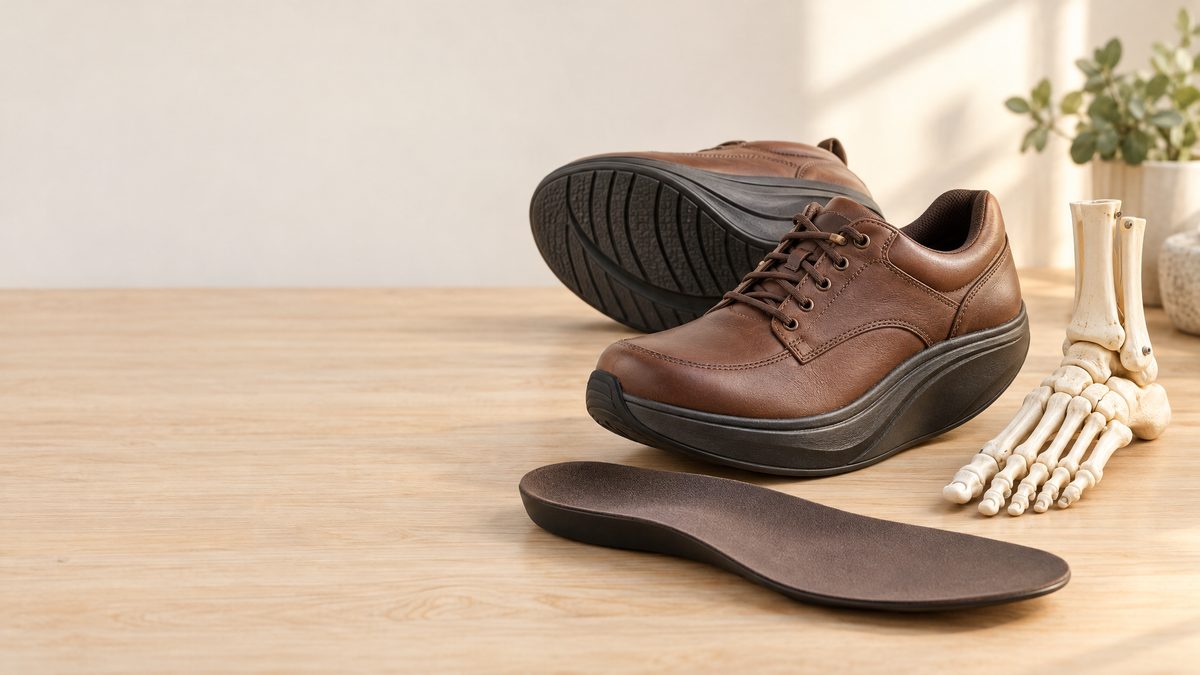
- A stiff sole that does not flex at the ball of the foot, like a sturdy walking shoe or boot. Soft, flexible shoes let the sore joint bend with every step
- A rocker sole, curved underneath, lets the foot roll through the step instead of bending at the toe
- A high, wide toe box so nothing presses on the spur, and low heels
A Rigid Insert
- A full-length carbon fiber plate under the insole stiffens a shoe you already own
- A Morton's extension is a rigid insert that reaches under the big toe only, which some younger or more active people tolerate better
- Plates are usually paired with a cushioned insole and can be hard to fit into dress shoes
Change How You Load the Toe
- Ease off running, jumping and other activities that bend the big toe up hard
- Keep exercising in ways that do not flare it; keeping the joint moving may help slow it down
Anti-Inflammatories and Ice
- Anti-inflammatory tablets or gel for short spells, if safe for you; not more than 10 days in a row without checking with a clinician, and extra care with heart or kidney problems
- An ice pack wrapped in a towel, never straight on the skin
An Injection
- A steroid injection into the joint can ease pain for several months, and works best in milder arthritis
- It does not cure the arthritis or improve movement; risks include infection, skin thinning or lightening, and a short flare of pain
- Hyaluronic acid (gel) injections are not FDA approved for the big toe joint
Choosing between a ready-made plate and a custom device? See custom orthotics vs store insoles. Having an injection? Read what to expect after a cortisone shot in the foot first, especially if you have diabetes, since it covers the effect on blood sugar.
How well does this work?
In a review of 772 patients, conservative care was successful for 55%. It cannot regrow cartilage or remove a spur, so the realistic goal is comfortable walking, not a toe that bends like new. Some specialists see needing injections to get by as a sign the arthritis has progressed and surgery is worth discussing.
Hallux Rigidus Surgery: Options and Honest Outcomes
Surgery is considered when pain still limits daily life after a fair trial of the steps above. The choice depends on the grade, your age and activity, and whether keeping movement or reliable pain relief matters more. See also when foot surgery is actually needed.
Cheilectomy: Removing the Spurs
The surgeon removes the bone spurs and up to about a third of the joint surface on top, where the arthritis is worst, so the toe can bend without pinching. It can be done open or through very small incisions.
Best suited to: Grades 1 and 2, and some grade 3, when pain comes mainly at the end of the upward bend and the X-ray still shows reasonable joint space.
What the evidence says
- A 2024 review of 16 studies (1,133 patients) found pain scores fell by about 73% and range of motion improved from about 41 to 62 degrees
- Complications occurred in 11%, most often ongoing pain, and 7.4% needed another operation
- Within 10 years, 7 to 9% are converted to a fusion; in one study of grade 3 joints, 56% eventually needed one
Fusion (Arthrodesis)
The worn joint surfaces are removed and the two bones are held with screws, a plate or both until they grow into one solid bone: knitted in about 6 weeks, fully healed at around 4 months on average. The metalwork usually stays in.
Best suited to: Advanced arthritis (grades 3 and 4), a failed cheilectomy, or a joint that is also deformed or unstable, as with rheumatoid arthritis.
What the evidence says
- The most reliable way to relieve pain in severe hallux rigidus; one NHS service quotes a success rate of about 80%
- That service lists wound infection (7%), a sensitive scar (5%), numbness (5%), metalwork problems (5%) and bone infection (1%); smokers are about 5 times more likely to have bones that fail to join
- Afterward, 92% returned to hiking, 80% to golf and 75% to jogging and tennis in one study
Joint Replacement and Implants
Options that try to keep some movement in an advanced joint: a total replacement (both sides of the joint), a partial replacement (one side), or a synthetic, cartilage-like implant that caps the worn metatarsal head.
Best suited to: Selected people with advanced arthritis who still have some movement and good bone; total replacement mainly suits older people with lower demands on the foot.
What the evidence says
- In studies of metal implants, 5.5 to 24.1% needed revision within 5 years; at about 15 years, fusion patients reported less pain and fewer revisions
- In a randomized trial, a synthetic hydrogel implant matched fusion for pain, function and revision rates at 2 years, with more movement; long-term results are not yet available
- Implants can loosen, and the bone lost can make a later fusion harder
Less common options: re-angling the toe bone alongside a cheilectomy (osteotomy); removing the base of the toe bone in older, less active people, which relieves pain but left a cocked-up toe in 41% in one study; and a tissue spacer in the joint, with mixed results.
| At a glance | Cheilectomy | Fusion | Replacement or implant |
|---|---|---|---|
| Usual grades | 1 to 2, some 3 | 3 to 4, or a failed cheilectomy | 3 to 4, selected patients |
| Movement afterward | Kept, with a modest gain | None at that joint | Some kept |
| Special shoe | About 2 weeks | About 6 weeks | About 2 weeks |
Diabetes, smoking, rheumatoid arthritis, steroid tablets and blood thinners all raise the risks of foot surgery. Stopping smoking at least 8 weeks before a fusion and for up to 4 months afterward gives the bones the best chance of joining.
Hallux Rigidus Surgery Recovery: Cheilectomy and Fusion
Typical timelines drawn from NHS patient leaflets. Hospitals differ, and your surgeon's instructions take priority.
Cheilectomy recovery
| When | What usually happens |
|---|---|
| Days 1 to 3 | Foot up, walking limited to bathroom trips, weight allowed in a stiff post-op shoe or sandal |
| Weeks 1 to 2 | Short walks in the post-op shoe; dressing kept dry |
| Week 2 | Stitches out. Roomy lace-up shoe or trainer, and toe exercises begin |
| Week 3 | Driving, if you can do an emergency stop |
| Weeks 3 to 4 | Back to work, later if your job keeps you on your feet |
| About week 4 | Gym and sport restart gradually |
| 6 to 12 months | Swelling very slight by 6 months; healing complete at 12 |
Move the toe early
Once the wound has healed, move the big toe up and down with your hands, then progress to heel raises: one NHS program builds to 4 to 6 sessions a day of 3 to 4 sets of 10 to 20. Starting late lets scar tissue stiffen the toe again.
Big toe fusion recovery
| When | What usually happens |
|---|---|
| Days 1 to 14 | Foot raised above hip level as much as possible; very limited walking, on the heel, in a special shoe |
| Week 2 | Wound check and dressing change |
| Weeks 2 to 3 | Desk work with the foot raised; driving only if it was the left foot and the car is automatic |
| Week 6 | X-ray. If the bones have knitted, move from the special shoe into a roomy everyday shoe |
| Weeks 6 to 8 | Driving after right foot surgery; many jobs resume |
| Months 3 to 4 | Swimming, cycling and most activities; physical jobs can take up to 4 months |
| Months 4 to 6 | Swelling settles. Running and jumping usually take longer than 6 months |
| 12 months | Back to normal for most people |
Swelling is the slow part
The wound heals in a couple of weeks; the swelling takes months. After a fusion, many people walk on the outer edge of the foot at first and ache under the smaller toes, which eases as the bone heals. For the return to the wheel, see driving after foot surgery.
When to See Someone About a Stiff Big Toe
Book a routine visit if:
- Big toe pain or stiffness keeps coming back with walking, work or sport
- A bump on top of the joint is rubbing in your shoes
- Stiff shoes and an insert have not made walking comfortable
- You are unsure whether it is arthritis, a bunion or gout
Diabetes, neuropathy or poor circulation
Do not wait for pain, because reduced feeling can hide a problem. A big toe that cannot bend changes where pressure falls, and a spur rubs inside the shoe. Check the skin over the bump and under the big toe daily, and get any blister or sore seen promptly. See diabetic foot and wound care, and for footwear, diabetic shoes and Medicare coverage.
Bump on the inner side of the joint instead? That is a bunion. Bunions (Hallux Valgus) →
Sudden, red, hot big toe? Gout in the Big Toe →
Big toe bent back during sport? Turf Toe Recovery →
Weighing up an operation? When Is Foot Surgery Needed? →
Frequently Asked Questions
What is the difference between hallux limitus and hallux rigidus?
Both describe a big toe joint that will not bend upward properly. Hallux limitus means the movement is limited but still there, usually the earlier stage. Hallux rigidus means the joint is badly stiffened by arthritis, with bone spurs and little upward bend left. Functional hallux limitus is a toe that moves normally when you sit but jams when you walk.
What causes a bone spur on top of the big toe joint?
It is usually a sign of hallux rigidus. As the cartilage wears, extra bone builds up around the edges of the joint, mostly on top. The spur blocks the toe from bending upward, rubs inside shoes, and can press on a small nerve, causing numbness. A standing X-ray confirms it, and a cheilectomy can remove it if shoes and inserts do not help.
Can hallux rigidus be fixed without surgery?
The joint damage cannot be reversed, but many people control the pain without an operation: in one review of 772 patients, 55% were managed without surgery. Stiff or rocker soles, a rigid insert, anti-inflammatories and sometimes an injection are the usual tools. Over many years the joint can stiffen completely and hurt less. Surgery is usually the only permanent fix.
What shoes are best for hallux rigidus?
Look for a stiff sole that does not bend at the ball of the foot, a rocker sole that lets the foot roll through each step, and a deep, roomy toe box. Flat walking shoes or boots often work well. Avoid high heels and soft, flexible shoes. A carbon fiber plate or Morton's extension insert can stiffen a shoe you already own.
How long is recovery after a cheilectomy?
Most people walk from the first day in a stiff post-op shoe. Stitches come out at about 2 weeks, when you move into a roomy lace-up shoe and start toe exercises. One NHS leaflet allows driving from about 3 weeks, work at 3 to 4 weeks and the gym from about 4 weeks. Swelling is slight by 6 months; healing is complete at about a year.
How long does it take to recover from big toe fusion?
Expect about 6 weeks in a special shoe while the bones knit, walking on the heel, then normal shoes once an X-ray shows healing. Desk work is often possible after 2 to 3 weeks with the foot raised, driving at about 6 to 8 weeks, and most activities at 3 to 4 months. Swelling can last 4 to 6 months, and feeling fully normal can take a year.
Can you walk normally after a big toe fusion?
Most people walk comfortably once the fusion has healed, because the painful joint no longer moves. The small joint near the nail still bends. In one study, 92% of people returned to hiking, 80% to golf and 75% to jogging and tennis. High heels are harder, and walking does not fully match the other foot.
Sources and further reading
- ACFAS FootHealthFacts: Hallux rigidus
- AAOS OrthoInfo: Stiff big toe (hallux rigidus)
- Cleveland Clinic: Hallux rigidus
- NHS: Gout
- University Hospitals Coventry and Warwickshire NHS Trust: 1st metatarsophalangeal joint osteoarthritis (2023)
- NHS Lothian: Fusion of the 1st MTP joint, patient information (2023)
- Kent Community Health NHS Foundation Trust: Cheilectomy
- Anderson MR, Ho BS, Baumhauer JF. Current concepts review: hallux rigidus. Foot & Ankle Orthopaedics (2023)
- Arceri A et al. Cheilectomy for hallux rigidus: a systematic review and meta-analysis. J Clin Med (2024)
- Molines-Barroso RJ et al. Predictors of diabetic foot reulceration beneath the hallux. J Diabetes Res (2019)
General patient education. Your examination and individual treatment instructions take priority.
See a Podiatrist Near You
ASG Foot & Ankle has offices in Homewood, South Chicago Heights and Mokena. Our board-certified podiatrists accept most insurance. Find the office closest to you:
Stiff, Sore Big Toe?
A painful big toe joint is easier to manage once the cause and grade are clear. ASG Foot & Ankle can examine the joint, take standing X-rays, fit the right shoe or insert, and talk through injections or surgery if simpler steps are not enough.