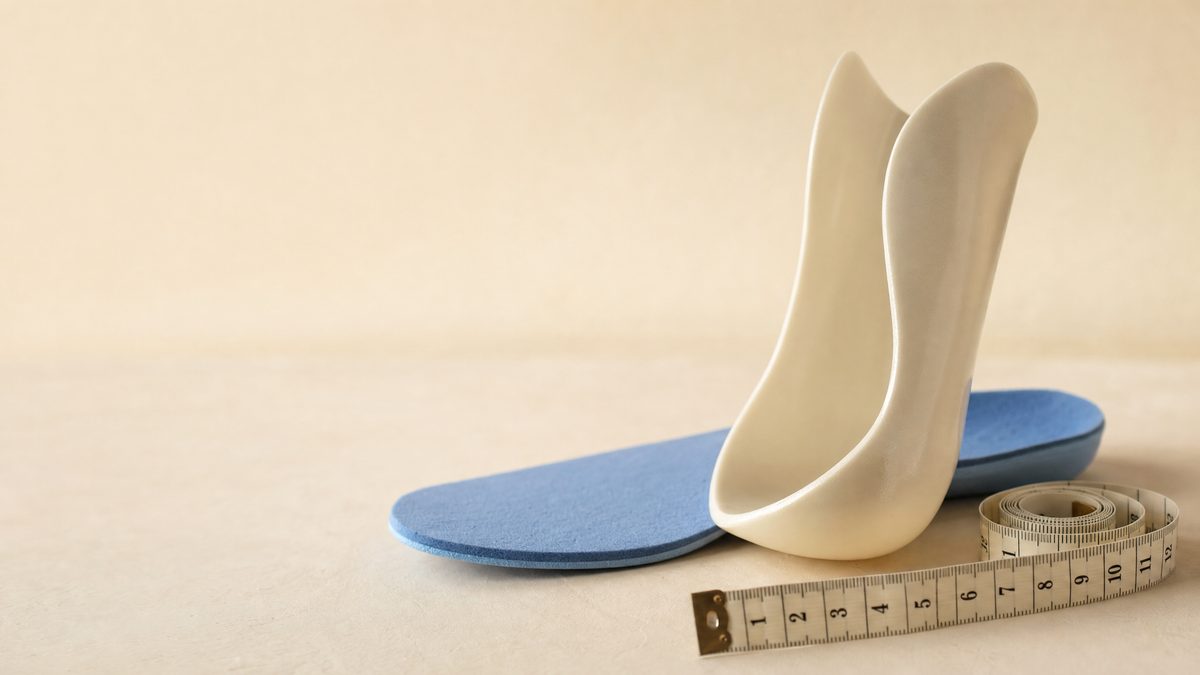
Custom Orthotics vs Store Insoles: Which Do You Need?
Insoles do three completely different jobs. Buying the wrong category is the reason so many people conclude that orthotics do not work for them.
It would be convenient for a podiatry practice to tell you that everybody needs custom orthotics. Most people do not. A large share of the foot pain that walks through the door is solved perfectly well by a forty dollar insole and a better shoe, and telling somebody otherwise is a good way to sell a device that does not outperform the cheap one.
What is also true is that there is a category of problem where a generic shape cannot possibly work, and in those cases custom is not a luxury version of the same thing. It is a different intervention. This guide draws that line clearly, gives realistic costs, and covers the four reasons custom orthotics fail when someone does get them.
Medically reviewed by Dr. Timothy Horak and Julia Shauger, board-certified podiatric specialists serving Homewood, South Chicago Heights & Mokena. Last reviewed August 2026.
The short answer
If you need cushioning, buy an over-the-counter insole and keep your money. If you need mechanical control, a semi-custom device is a fair first try and custom is the step up when it is not enough. If you need pressure taken off one specific spot on a foot that has ulcerated, has a pre-ulcerative callus, or is deformed, that is the case where only custom will do, because the relief has to be exactly where your pressure point is.
The Three Jobs an Insole Can Do
Nearly every argument about orthotics comes from people comparing devices that were built for different jobs. Work out which job you need done and the decision becomes simple.
Cushioning
- Absorbs impact and spreads load over a larger area
- The right answer for standing on hard floors, general foot fatigue, thinning fat pads
- A good over-the-counter insole does this job as well as anything
- Custom manufacture adds nothing here. Do not pay for it
Mechanical control
- Changes how the foot moves through a step rather than just padding it
- Relevant for excessive pronation, an unstable first ray, posterior tibial tendon problems
- Semi-custom devices manage mild cases. Real control needs geometry matched to your foot
- The shoe matters as much as the device. A soft flexible shoe cancels most of the effect
Targeted offloading
- Takes pressure off one specific square inch of a foot that cannot tolerate it
- For healed ulcers, pre-ulcerative callus, Charcot deformity, post-amputation feet
- Generic shapes cannot do this. The relief has to sit exactly where your pressure point is
- This is the case where custom is not a preference, it is the treatment
What Each Option Costs
| Type | Typical cost | Good at | Limitations | When to pick it |
|---|---|---|---|---|
| Over-the-counter insole | $20 to $60 | Cushioning, mild arch support, replacing a worn factory insole | Cannot control significant mechanics or offload a specific point | Start here for general aching, standing all day, or a first attempt |
| Semi-custom or heat-moldable | $60 to $150 | A prefabricated shell with some adaptation to your arch | Still a stock shape underneath. Moulding changes the top, not the mechanics | Reasonable middle step when an OTC insole helped but not enough |
| Prescription custom orthotic | $300 to $600 | Geometry built from your foot, with a prescription aimed at your diagnosis | Only as good as the cast and the diagnosis behind it. Coverage is inconsistent | Specific mechanical faults, feet at risk, or repeated failure of the simpler options |
On coverage, call your insurer before your appointment rather than after. Traditional Medicare does not cover custom orthotics as a general foot-pain benefit, with the main exceptions being inserts under the diabetic therapeutic shoe benefit and devices supplied as part of a covered brace. Commercial plans vary from full coverage every few years to outright exclusion, and a flexible spending or health savings account will normally cover them regardless.
A Custom Orthotic Is Only as Good as the Cast
This is the thing that does not come up in the sales conversation. A custom orthotic is a faithful copy of the position your foot was held in when it was cast or scanned. If that position was wrong, the laboratory will reproduce the error precisely, in an expensive material, and you will wear it every day.
That is why a well-chosen off-the-shelf insole genuinely can outperform a poorly prescribed custom device, and why the assessment matters more than the manufacturing technology. What should happen before anyone takes an impression is a look at how you walk, an examination of joint range and muscle function, a look at the wear pattern on your existing shoes, and a clear statement of what the device is supposed to change.
If you are offered custom orthotics without anyone watching you walk, ask why.
The Four Reasons They Fail
1. Wrong diagnosis
The pain was never mechanical. Nerve pain, inflammatory arthritis and stress fractures do not respond to a change in foot position, and no device will fix a problem it was not aimed at.
2. Wrong shoe
An orthotic needs a removable insole, enough depth, and a firm heel counter to push against. Dropped into a soft flexible shoe, most of its effect disappears. This is the most common single cause.
3. Abandoned too early
Orthotics change how your foot loads, and aching in new places for the first week or two is expected. Build up an hour or two a day. Most devices that end up in a drawer were discarded during the adjustment period.
4. Never adjusted
A prescription device is meant to be tuned after you have worn it. Posting can be changed, edges ground back, padding added. If it still hurts at three or four weeks, take it back rather than giving up on it.
A Sensible Order to Try Things
- Fix the shoe first. Worn-out, too narrow, or too flexible defeats everything that goes inside it. Check the wear on the sole and the state of the heel counter
- Try a good over-the-counter insole for four to six weeks. Match it to the job: cushioning for fatigue, a firmer supportive one for arch pain
- If it helped but not enough, a semi-custom device is a reasonable middle step before spending several hundred dollars
- If it did nothing, stop buying insoles and get the diagnosis checked. Three failed insoles is information, and it usually means the problem is not the one you assumed
- Go straight to a proper assessment if you have diabetes, a healed ulcer, a pre-ulcerative callus, a Charcot foot, or a partial amputation. That is the offloading category and trial and error is not appropriate
Heel pain that is worst on the first steps of the morning? That has its own treatment order. Plantar Fasciitis Healing Timeline →
Diabetic and looking at inserts? There is a specific Medicare benefit that covers them. Diabetic Shoes and Medicare →
Callus building over the ball of the foot? Callus is a pressure map, and it tells you where a device needs to relieve. Painful Callus Relief →
Bunion, and wondering whether an insole will straighten it? It will not, but it may still be worth having. Do Bunion Correctors Work? →
Arch collapsing or a foot that has changed shape? Adult flat foot is progressive and worth catching early. Flat Foot Reconstruction →
Frequently Asked Questions
Are custom orthotics worth the money?
For the right problem, clearly yes. For the wrong problem, they are an expensive version of something that costs forty dollars. The distinction is what job the device has to do. If you need cushioning because you stand on concrete all day, a good over-the-counter insole does that job and a custom device does not do it better. If you need mechanical control of a foot that is collapsing or an unstable first ray, or you need pressure taken off one specific spot on a foot that has already ulcerated, then the geometry has to match your foot and a generic shape cannot deliver it. Research comparing custom to prefabricated devices for common conditions such as plantar fasciitis often finds similar outcomes, which is not evidence that custom orthotics do not work. It is evidence that most trial participants had a problem a prefabricated insole could solve.
How much do custom orthotics cost and does insurance cover them?
Prescription custom orthotics commonly run somewhere in the range of three to six hundred dollars a pair, varying with materials, the complexity of the prescription and your region. Coverage is inconsistent and it is the part people are most often surprised by. Traditional Medicare does not cover custom orthotics as a general foot-pain benefit, and the two main exceptions are inserts supplied as part of the therapeutic shoe benefit for people with diabetes and devices supplied as an integral part of a covered brace. Commercial plans vary enormously: some cover a pair every few years, some cover them only for specific diagnoses, and many exclude them outright. Because of that variation, call the number on your insurance card and ask specifically about the orthotic billing codes before your appointment rather than after. A flexible spending or health savings account will usually cover them regardless.
Why did my custom orthotics not help?
There are four common reasons and only one of them is that orthotics do not work. The first is a diagnosis mismatch, meaning the pain was never mechanical and a device was never going to change it. The second is the casting: a custom orthotic is a copy of the position your foot was held in when it was scanned or cast, so if that position was wrong the device faithfully reproduces the error. The third is the shoe, since an orthotic needs a removable insole and enough depth and heel counter to work with, and putting a controlling device into a soft flexible shoe cancels most of its effect. The fourth is the break-in, because orthotics change how your foot loads and a period of aching for the first week or two is normal, so people frequently abandon them at exactly the point they were starting to work. Any orthotic that still hurts after three or four weeks should be taken back and adjusted rather than left in a drawer.
Are the scanning kiosks in stores accurate?
They are reasonable at doing what they actually do, which is measuring your arch height and pressure distribution while you stand on a plate and then recommending one of a limited number of prefabricated shapes. That is a legitimate way to pick a decent off-the-shelf insole and better than guessing from a shelf. What they are not is custom orthotic manufacture. The device you get is still one of a small set of stock shapes, the measurement is taken standing still rather than during the loading and unloading of gait, and there is no clinical assessment of why your foot hurts. So a kiosk is a fine way to choose a forty dollar insole and not a substitute for an examination if you have a specific diagnosis, a foot at risk, or a problem that has already failed a couple of attempts.
How long do orthotics last?
It depends on which layer you mean. The rigid or semi-rigid shell of a prescription orthotic is durable and commonly lasts several years, often five or more, in an adult of stable weight. The soft top covers and cushioning layers wear out much sooner, typically in one to two years, and they can usually be refurbished for far less than the cost of a new pair, which is worth asking about rather than replacing the whole device. Over-the-counter insoles are a different story: the foams used compress permanently and most are done within six to twelve months of daily use, sooner if you are on your feet all day. The practical test for any insole is to take it out and look at it from the side. If the arch has flattened, the heel has a permanent crater, or it no longer springs back when you press it, it has stopped doing anything useful.
Do children need orthotics for flat feet?
Usually not. Flat feet are normal in young children, the arch typically develops through to around age eight to ten, and a flexible flat foot that is not painful and does not limit activity is a variation rather than a problem. Treating it preventively has not been shown to change the shape of the adult foot. What does warrant assessment is a flat foot that is painful, one that is rigid and does not form an arch when the child stands on tiptoe, a foot that is noticeably different from the other side, a child who avoids activity or tires far more quickly than peers, or a family history of significant foot problems. In those cases an orthotic can genuinely help symptoms and function. The routine bracing of every flat-footed child is not supported by the evidence, and it is a common source of unnecessary expense.
See a Podiatrist Near You
ASG Foot & Ankle has offices in Homewood, South Chicago Heights and Mokena. Our board-certified podiatrists accept most insurance. Find the office closest to you:
Find Out Which One You Actually Need
We will watch you walk, look at the wear on your shoes, and tell you honestly whether a drugstore insole will do the job. If it will, that is what we will say. If your foot needs something a stock shape cannot deliver, we will explain exactly what the device is meant to change.