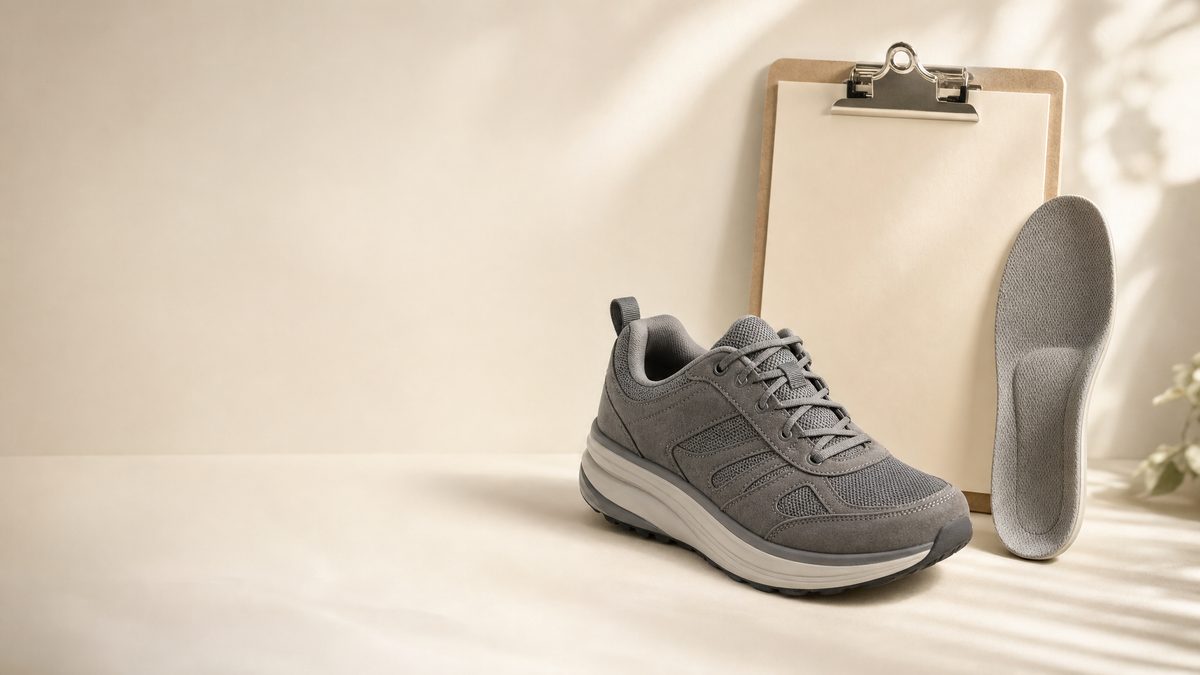
Diabetic Shoes and Medicare: Who Qualifies
The benefit is real, it resets every January, and most people who qualify have never used it. The claims that get denied usually fail on a chart note, not on eligibility.
Medicare almost never pays for shoes. Therapeutic footwear for people with diabetes is the exception, written into law specifically because a well-fitted shoe with the right insert is one of the few things that measurably reduces the chance of a foot ulcer in someone at high risk.
The benefit is also underused, and the two reasons are simple. Plenty of people have never been told it exists, and plenty of claims that should succeed get denied for paperwork reasons that could have been sorted out with one phone call beforehand. This guide covers who qualifies, exactly what you get each year, the three signatures the claim depends on, and how to make the shoes actually worth having.
Medically reviewed by Dr. Timothy Horak and Julia Shauger, board-certified podiatric specialists serving Homewood, South Chicago Heights & Mokena. Last reviewed August 2026.
The short answer
If you have diabetes, are under a plan of care for it, and have at least one qualifying foot condition, Medicare Part B covers either one pair of custom-molded shoes plus two extra pairs of inserts, or one pair of extra-depth shoes plus three pairs of inserts, per calendar year. Medicare pays 80 percent after the deductible. The catch is that your diabetes doctor, not the foot specialist, has to certify it and have it documented in their notes.
Medicare rules and amounts change. Treat this as an orientation and confirm the current specifics with Medicare or your supplier before you order.
Diabetes Alone Does Not Qualify You
This is the part that surprises people. The benefit is aimed at feet that are already at elevated risk, so alongside the diabetes and the plan of care you need at least one of the following documented:
- A previous amputation of the foot or part of the foot
- A history of a foot ulcer that has healed
- A history of a pre-ulcerative callus
- Peripheral neuropathy with evidence of callus formation
- A foot deformity, such as a bunion, hammertoes or a Charcot foot
- Poor circulation in either foot
Two of these are worth reading twice, because people rule themselves out unnecessarily. A healed ulcer from years ago still counts as a history of ulceration. And a pre-ulcerative callus, meaning a callus with bruising or breakdown developing underneath it, is a qualifying condition in its own right even though nothing has broken through yet. If you have been managing a recurring callus over a bony prominence, you may well qualify and not know it.
What You Get Each Year
| Package | Shoes | Inserts | Who it is for |
|---|---|---|---|
| Extra-depth | 1 pair | 3 additional pairs | Most people. A manufactured shoe with room for a thick insert |
| Custom-molded | 1 pair (inserts included) | 2 additional pairs | Feet a manufactured shoe cannot safely fit, with documentation |
You pick one package, not both. In some circumstances a shoe modification such as a rocker sole or a wedge can be supplied instead of a pair of inserts. And the whole allowance resets in January, which is the single most useful thing on this page: worn-out shoes from last year do not have to be lived with.
The Four Steps, and the One That Fails
The Certifying Physician
- This is the doctor managing your diabetes, usually primary care or endocrinology
- They certify that you have diabetes, are under a comprehensive plan of care, and need therapeutic footwear
- Their own chart notes must document the diabetes management and your qualifying foot condition
- This is the step that most often derails a claim, and it is fixable in advance
The Prescription
- A qualified practitioner, commonly the podiatrist, writes the order
- The order specifies which package you are getting and any modifications
- The foot examination documenting the qualifying condition happens here
- Custom-molded shoes need a documented reason an extra-depth shoe will not do
Fitting and Dispensing
- The supplier measures, fits and dispenses the shoes and inserts
- Fit is checked in person. Never accept footwear mailed out on sizes alone
- Inserts are made or selected to offload your specific pressure areas
- Ask for the wear-in schedule and the skin-checking instructions in writing
The Follow-Up Nobody Books
- Check your skin daily for the first two weeks, especially if you have neuropathy
- Any redness that is still visible 20 minutes after taking the shoes off means the fit is wrong
- Inserts flatten over months. That is why the benefit includes extra pairs
- Diarize next January. The allowance resets each calendar year
The Insert Matters More Than the Shoe
The shoe gets the attention because it is the visible part, but the protective work is mostly done by what is inside it. A diabetic ulcer forms where pressure concentrates on one small area, typically under a metatarsal head or over a deformity, and repeats thousands of times a day on a foot that cannot feel it happening. What prevents that is a total-contact insert that spreads the load across the whole sole so no single point takes it.
That is also why inserts wear out. The materials that make them effective compress over months of use, and a flattened insert offloads nothing. The reason the benefit includes multiple pairs is that they are consumable, not spares.
If your inserts have been in daily use for six months or more, feel firm rather than yielding, or show a permanent impression of your foot, they have stopped doing the job you got them for.
Making Them Worth Having
Do
- Get fitted in person, in the afternoon when your feet are at their largest
- Break them in gradually, an hour or two a day for the first week
- Check your skin every time you take them off in the first two weeks
- Look inside the shoe with your hand before every wear, for stones and folded liners
- Wear them for the walking you actually do, not just to appointments
- Ask your diabetes doctor to record your foot findings in their notes before ordering
Do not
- Accept shoes shipped to you on sizes alone with no fitting
- Force a thick insert into a regular shoe. That causes pressure on the top of the toes
- Ignore redness that is still visible 20 minutes after the shoes come off
- Keep wearing inserts that have gone flat and hard
- Respond to unsolicited phone calls offering free diabetic shoes. That is a known fraud pattern
- Assume you do not qualify because your ulcer healed years ago. A history counts
Have a callus over a pressure point? That is often the qualifying condition, and it can also be an ulcer forming underneath. When a Callus Is Really a Pressure Sore →
Numbness or burning in your feet? Neuropathy with callus formation is on the qualifying list. Diabetic Neuropathy and Burning Feet →
Already have an open ulcer? Shoes are prevention. An active ulcer needs offloading of a different order. Total Contact Casting and Offloading →
Foot suddenly warm and swollen? Read this before you put it down to a new shoe. Charcot Foot →
Wondering about orthotics rather than shoes? Different product, different rules. Custom Orthotics vs Store Insoles →
Frequently Asked Questions
Does Medicare cover diabetic shoes?
Yes. Therapeutic footwear for people with diabetes is a specific Medicare Part B benefit, created by legislation commonly called the Therapeutic Shoe Bill, and it is one of the few times Medicare pays for footwear at all. Having diabetes on its own is not enough. You must be under a comprehensive plan of care for your diabetes and you must also have at least one qualifying foot problem from a defined list, which includes a previous amputation of the foot or part of it, a history of foot ulceration, a history of a pre-ulcerative callus, peripheral neuropathy with callus formation, a foot deformity, or poor circulation. Because it is a Part B benefit, Medicare pays 80 percent of the approved amount once your annual deductible is met and you or a secondary insurer are responsible for the remaining 20 percent. Coverage rules do change, so confirm current specifics with Medicare or your supplier before ordering.
How many pairs of diabetic shoes does Medicare cover per year?
The benefit resets each calendar year and you choose one of two packages rather than combining them. The first is one pair of custom-molded shoes, which includes the inserts made with them, plus two additional pairs of inserts. The second, which is what most people receive, is one pair of extra-depth shoes plus three pairs of inserts. Custom-molded shoes are reserved for feet that cannot be accommodated by an off-the-shelf extra-depth shoe, typically because of a significant deformity, and that has to be documented rather than simply requested. In some circumstances shoe modifications, such as a rocker sole or a wedge, can be provided in place of a pair of inserts. The practical point people miss is that the allowance is annual: if you qualified last year and your shoes are worn out, you are very likely eligible again this year.
Why do diabetic shoe claims get denied?
Overwhelmingly because of documentation rather than because the patient did not qualify, and that is a frustrating way to be denied. The benefit requires a specific chain of signatures. The physician who manages your diabetes, meaning your primary care doctor or endocrinologist rather than the foot specialist, has to certify that you have diabetes, are under a comprehensive plan of care, and need therapeutic footwear. A qualified practitioner then writes the prescription, and a supplier dispenses and fits the shoes. On top of that, the certifying physician's own medical records have to show the diabetes management and the qualifying foot condition in their notes. If the note in the primary care chart never mentions the neuropathy or the deformity, the claim can be denied even though the patient plainly qualifies. This is why a good supplier chases the chart notes before ordering rather than after the denial.
What is the difference between extra-depth and custom-molded shoes?
An extra-depth shoe is a manufactured shoe built with additional volume, usually around a quarter of an inch more depth than a standard shoe, so that a thick protective insert can go in without cramping the foot. It also has a wider toe box, a seamless interior so nothing rubs, and a firm heel counter. It comes in standard sizes and widths and is what the large majority of people need. A custom-molded shoe is built from a physical or digital model of your individual foot, and it exists for feet that no manufactured shoe fits safely, for example after a partial amputation, with a Charcot deformity, or with severe rigid deformity. Custom-molded shoes are considerably more expensive and Medicare expects documentation of why an extra-depth shoe would not work. Neither is better in the abstract. The right one is the least complicated shoe that safely fits your foot.
Do diabetic shoes actually prevent ulcers?
The honest answer is that footwear alone is not a force field, and studies of therapeutic shoes give mixed results when they are handed out broadly to everyone with diabetes. Where the evidence is much stronger is in people at genuinely high risk, meaning those who have already had an ulcer or an amputation, and where the footwear is properly fitted and actually worn. Two details drive most of the benefit. The first is that the insert has to redistribute pressure away from the specific high-pressure area on your foot, which is why the insert matters more than the shoe. The second is adherence: shoes sitting in a closet prevent nothing, and studies that measure wear time consistently find that people who wear them most have the fewest ulcers. So the realistic framing is that therapeutic footwear meaningfully reduces risk in high-risk feet when it fits, offloads the right spot, and gets worn daily.
Can I use my own shoes with the Medicare inserts?
Usually not safely, and it defeats much of the point. A protective diabetic insert is substantially thicker than a standard sock liner, so putting one into an ordinary shoe raises your foot in the shoe and reduces the room above your toes, which increases pressure on the top of the toes and can create exactly the kind of rub the insert was meant to prevent. That is the whole reason extra-depth shoes exist. If you have a favorite pair you want to keep using, bring them to your fitting so they can be assessed, because in some cases the existing insole can be removed to create room and the shoe checked for adequate depth and a seamless lining. What you should not do is force a thick insert into a snug shoe and assume you are protected, because that combination causes ulcers rather than preventing them.
See a Podiatrist Near You
ASG Foot & Ankle has offices in Homewood, South Chicago Heights and Mokena. Our board-certified podiatrists accept most insurance. Find the office closest to you:
Find Out If You Qualify This Year
We examine the foot, document the qualifying condition properly, and coordinate the certification with the doctor managing your diabetes so the claim does not fail on a missing chart note. If you qualified in a previous year, the allowance has almost certainly reset.