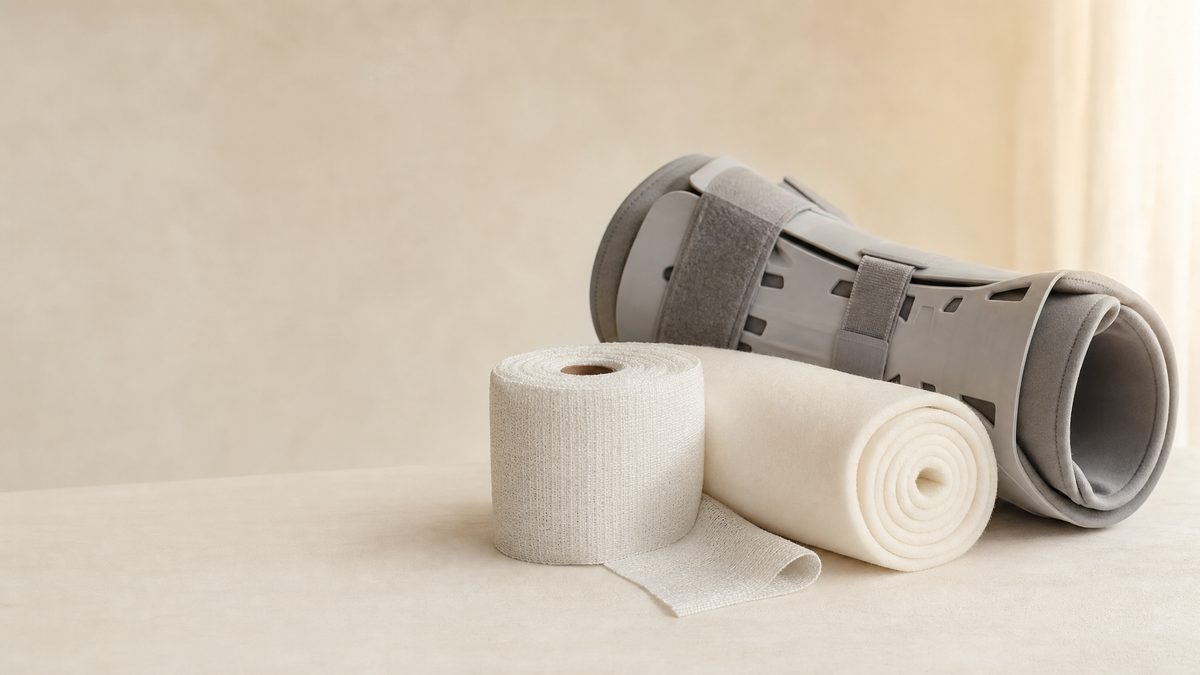
Offloading a Foot Ulcer: Why the Cast Still Wins
The device that heals a diabetic foot ulcer fastest is not the most comfortable one. It is the one you cannot take off.
Almost every conversation about a foot ulcer that will not close is a conversation about dressings, antibiotics, or grafts. The thing that decides the outcome is usually none of those. It is pressure. A plantar diabetic ulcer is a mechanical injury being renewed every day by walking, and no dressing invented can outpace a wound that is being re-injured a few thousand times between appointments.
That is the entire logic of offloading, and it explains a result that surprises people: the treatment with the best evidence for healing a diabetic foot ulcer is a cast. Not a drug, not a graft, not a machine. This guide covers what a total contact cast is, how the alternatives actually compare once real life is accounted for, what wearing one is like, and when casting is the wrong choice.
Medically reviewed by Julia Shauger and Dr. Timothy Horak, board-certified podiatric specialists serving Homewood, South Chicago Heights & Mokena. Last reviewed August 2026.
The short answer
A total contact cast cuts pressure at the ulcer by roughly 80 to 90 percent and closes most uncomplicated plantar ulcers in 6 to 8 weeks. A removable boot offloads nearly as well while worn, and that is the problem: most patients take most of their daily steps out of it. Wrapping a removable walker shut recovers most of the difference. Casting is avoided with active infection, poor circulation, heavy drainage, or a high fall risk.
Call Before Your Next Appointment If
- •The cast feels tight, or you notice new numbness, tingling, or colour change in your toes
- •You feel a rubbing or burning spot anywhere inside the cast
- •Drainage strikes through the cast, or the cast starts to smell
- •The cast got wet inside, or has cracked, softened, or become loose
- •Fever, chills, or blood sugars running unexplainedly high
- •You fall, or you feel unsteady enough that a fall seems likely
Never cut a cast off at home, and never push anything inside it to scratch. Both are how a second wound gets created on skin that cannot feel it happening.
The Devices, Ranked by What Actually Happens
Total contact cast
- Reduces pressure at the ulcer by roughly 80 to 90 percent
- Cannot be removed, so protection is continuous, which is the entire point
- Changed weekly with wound inspection and debridement at each change
- Not used with active infection, poor circulation, heavy drainage, or high fall risk
Removable walker wrapped shut
- A cam walker made irremovable with a layer of cohesive bandage or cast tape
- Called an instant total contact cast; performs close to a full cast in studies
- Faster to apply, easier to remove if the wound needs urgent inspection
- The usual choice when casting expertise or time is limited
Removable cast walker
- Offloads well while worn, which is the catch
- Activity monitoring shows most daily steps happen outside the device
- Reasonable when the wound needs daily dressing changes or inspection
- Every unprotected trip to the bathroom counts against the wound
Surgical shoe or half shoe
- Modest pressure reduction, easy to wear, easy to take off
- Reasonable for a forefoot ulcer in someone who cannot tolerate a boot
- Often paired with felted foam padding around the wound
- Should not be the whole plan for a plantar ulcer that is not closing
Felted foam and padding
- Adhesive foam with an aperture cut around the ulcer, redistributing load to the rim
- Cheap, tolerable, and it stays on between visits, which is its real advantage
- Replaced at each visit as it compresses
- A supplement to a device, not a substitute for one
The Bathroom Trip Problem
The single most useful thing to understand about offloading is that a wound does not average. It does not care that you wore the boot for 95 percent of the day. The fragile layer of new tissue on the wound bed is sheared off by the loaded steps, and a dozen barefoot steps to the bathroom at night are loaded steps.
This is why patients who are genuinely doing everything right still show up with an ulcer that has not moved in six weeks. Nobody is lying. The boot came off for the shower, for bed, to check the dog, to get the mail. In monitored studies, people in removable walkers took only a minority of their daily steps inside the device, and most had no idea the gap was that large.
It is also why the fix is a design change rather than a lecture. Making the device irremovable removes the decision, and removing the decision is what produces the healing rates. If a cast genuinely is not workable for your situation, say so, and the plan can be built around a wrapped walker plus felted foam instead. What does not work is agreeing to a boot in the room and negotiating with it at home.
Living in a Cast: The Practical Version
| Situation | What to do |
|---|---|
| Showering | A proper waterproof cast cover, and buy two. Keep the leg out of the direct stream. |
| Driving | Not with a cast on the right foot. Left foot casts, check with your clinician and insurer. |
| Sleeping | Pillow under the calf, not under the heel. First two nights are the worst. |
| Uneven leg length | Ask for a levelling shoe on the other foot. It protects your back, hip, and the other foot. |
| Itching inside | Never insert anything. Cool air on the cast edge, and mention it at the next change. |
| Stairs and balance | Use a rail and take them one at a time. Tell your clinician if you have fallen before. |
Specialized Wound Care at ASG Foot & Ankle
Our board-certified podiatrists treat slow-healing wounds, diabetic foot ulcers, and post-surgical wounds at our three clinics in Homewood, South Chicago Heights, and Mokena.
Once the ulcer has healed, what keeps it closed? Diabetic Shoes and Medicare →
Ulcer stalled even with offloading? What a skin substitute graft adds, and when it is the wrong tool. Skin Substitute Graft for a Foot Ulcer →
Foot suddenly swollen, warm, and red without a wound? That is a different emergency. Charcot Foot: Stages and Recovery →
Wound keeps closing and reopening? Why a Foot Wound Keeps Reopening →
Frequently Asked Questions
What is a total contact cast?
A total contact cast is a lightweight fiberglass cast, moulded closely to the whole lower leg and foot, applied specifically to take weight off an ulcer on the bottom of the foot. The name describes the mechanism: because the cast is in contact with the entire surface of the leg and foot, body weight is spread across all of it rather than concentrated on the one spot where the ulcer sits. Pressure at the ulcer typically drops by around 80 to 90 percent. It is changed weekly, or sooner if it loosens as swelling settles, and at each change the wound is inspected and debrided before a fresh cast goes on. The critical feature is not the material. It is that you cannot remove it, which is exactly why it works.
Why is a cast better than a removable boot?
Mechanically it is not, by much. A good removable cast walker offloads an ulcer nearly as well as a total contact cast while it is being worn. The gap is entirely behavioral, and it is large. Studies that put activity monitors on both the device and the patient found that people wearing removable walkers took only a minority of their daily steps in the device. The rest happened barefoot or in a slipper, crossing a bedroom at 2am, showering, answering the door. A wound needs continuous protection, not part time protection, and a few dozen unprotected steps a day is enough to keep shearing new tissue off the wound bed. This is why the standard compromise exists: a removable walker wrapped in a layer of cohesive bandage or cast tape, called an instant total contact cast, which restores the one feature that matters.
How long will I be in a total contact cast?
Most uncomplicated plantar diabetic ulcers close in roughly 6 to 8 weeks of consistent casting, with weekly cast changes throughout. Larger, deeper, or longer standing ulcers take longer, and an ulcer that has been open for a year does not close in a month. There is a useful early signal: the wound should be measurably smaller at the two to four week mark. If a properly applied cast has produced no measurable change in a month, the problem is not pressure, and the workup turns to circulation, infection, bone involvement, or the diagnosis itself. After closure, casting is not simply stopped. Patients are usually transitioned into a walker and then into prescription footwear, because the new skin over a healed ulcer is fragile for months and the pressure that made the ulcer is still there.
Can I shower with a total contact cast?
You can shower, but the cast has to stay completely dry, which means a proper waterproof cast cover rather than a bin bag and hope. A wet cast is a genuine problem: damp padding against insensate skin macerates it and can create a second wound under the cast, which nobody will see until the next change. Practical advice from clinic: get two covers so a torn one never means a skipped shower, shower with the leg out of the stream rather than under it, and if water does get in, call rather than trying to dry it with a hairdryer. Sleeping is the other adjustment. Most people find a pillow under the calf helps, and the first two nights are the worst of it.
Who should not have a total contact cast?
Casting is not the right answer for everyone, and applying one in the wrong situation causes harm. It is generally avoided when there is active infection or significant drainage that needs daily inspection, when there is poor arterial circulation such as severe peripheral artery disease, when the ulcer is deep or probes to bone, and when there is heavy exudate. It is also a poor fit for people with significant balance problems or a fall history, for those who cannot manage the cast at home, and it is used cautiously in people with very fragile skin. Application skill matters too: a badly moulded cast can create new pressure points on a foot that cannot feel them. This is a treatment that belongs with a clinician who applies them regularly.
What happens if I keep walking on my foot ulcer?
The wound stays open, and the reasons are worth understanding because they explain why every other treatment underperforms without offloading. Each step drives pressure through the ulcer and shears the newly forming tissue sideways off the wound bed, so the healing that happened overnight is undone by mid morning. Repeated loading also keeps the wound in a chronic inflammatory state rather than letting it progress to rebuilding, and it drives the callus rim that walls the edges off from closing inward. In diabetes the trap is that the foot does not hurt, so nothing warns you. The most expensive misunderstanding in diabetic foot care is that an ulcer which does not hurt is not urgent. Painlessness is the cause of the problem, not evidence against it.
See a Podiatrist Near You
ASG Foot & Ankle has offices in Homewood, South Chicago Heights and Mokena. Our board-certified podiatrists accept most insurance. Find the office closest to you:
Ulcer Not Closing? Check the Pressure First.
ASG Foot & Ankle offloads, debrides, and manages diabetic foot ulcers across Homewood, South Chicago Heights, and Mokena, with circulation testing and advanced wound therapies when the wound needs more. Most insurance accepted, no referral required.