Painful Callus on Your Foot? Why It Hurts and How to Relieve It
Callus tissue has no nerve endings, so a callus cannot actually hurt. The pain is coming from something underneath it. Here is how to work out which of the five.
Here is the fact that reframes the whole problem: a callus is compacted dead skin. It has no nerve endings and no blood supply. That is why your podiatrist can pare one down with a scalpel blade while you sit there and feel nothing at all, and why the shavings come off like candle wax.
So when a callus hurts, the callus is not what is hurting. Something beneath it is, and the useful question is not how to get rid of the thick skin but which of a short list of things is going on underneath. This guide from the podiatrists at ASG Foot & Ankle walks through the five usual causes, the simple tests that separate them, what genuinely relieves the pressure at home, and the two products that do more harm than good.
Medically reviewed by Dr. Timothy Horak and Julia Shauger, board-certified podiatric specialists serving Homewood, South Chicago Heights & Mokena. Last reviewed August 2026.
The short answer
A callus hurts when it has grown thick and hard enough to stop acting as padding and start acting as a pressure point, driving force into the living tissue underneath with every step. Most of the time, thinning it and offloading the spot fixes it. But four other things can hide under a callus and cause the same complaint: a corn core, a plantar wart, bleeding or an ulcer beneath the cap, or a structural problem in the bone, joint, or nerve below. A dark stain inside the callus is the one finding that should not wait.
The Five Reasons a Callus Hurts
These are ordered roughly by how often we see them. Read the tell line first, since that is usually enough to narrow it down.
The callus itself has become the pebble
The tell: Deep, bruise-like ache directly under the thickest part. Worse barefoot on hard floors, worse late in the day.
This is the most common answer by far. A thin callus spreads load and protects you. Past a certain thickness the plaque is harder than the tissue around it, so instead of cushioning the step it transmits and concentrates it, pressing into the dermis like a stone taped under your foot. Nothing is wrong underneath yet. Thinning the callus and offloading the spot usually resolves it within days.
There is a corn with a core inside it
The tell: A sharp, pinpoint, almost electrical pain in one small spot rather than a broad ache. Often a visible hard center.
A corn is a callus with a dense cone-shaped plug of keratin at its center, and that plug points downward into living tissue. Filing the surface gives an hour of relief and then the pain returns, because the core is still there. Corns show up on the tops and sides of toes, between toes, and under a prominent metatarsal head. The core has to be lifted out to give lasting relief, which is a quick in-office procedure.
It is a plantar wart, not a callus
The tell: Hurts more when pinched from the sides than when pressed straight down. Skin lines detour around it. Tiny black dots.
Plantar warts are viral and they build a callus-like cap over themselves, so they are mistaken for calluses constantly. The squeeze test is the giveaway, and so are the fine parallel skin lines: they run straight through a callus but stop at a wart's border. The black pinpoints people call seeds are clotted capillaries. This one matters because filing and padding will not clear a wart and it can spread to other spots on the foot.
There is bleeding or a sore under the cap
The tell: Dark red, brown, or black staining within the callus. Sometimes a soft, boggy feel, moisture, or a faint odor.
Blood in a callus means pressure has already damaged small vessels in the tissue below, and it is treated in wound care as a pre-ulcerative sign. A hard callus cap can seal over an ulcer that is actively forming underneath, so the surface looks intact while the damage is real. This is the one on the list that should not wait, particularly with diabetes, neuropathy, or poor circulation.
The real problem is deeper than the skin
The tell: Pain persists even right after the callus is pared flat. May feel like walking on a marble, or burning between toes.
Sometimes the callus is a symptom and something structural is the cause: an inflamed joint capsule under a metatarsal head, a thinning fat pad that no longer cushions the ball of the foot, a nerve irritated between the metatarsals, or a hammertoe or bunion driving abnormal pressure. The callus formed because that spot is overloaded. Treating only the skin leaves the load exactly where it was, which is why it comes back.
The Squeeze Test: Callus or Wart?
This is the single most useful thing you can do at home, it takes about five seconds, and it changes what the right treatment is.
Press straight down
Push into the spot with your thumb, the way walking would load it. If this is the more painful direction, a callus or a corn is the likely answer.
Now pinch from the sides
Squeeze the spot laterally between finger and thumb. If this hurts noticeably more than pressing down, that points to a plantar wart.
Two more clues worth checking
- Skin lines. The fine parallel ridges on your sole are like a fingerprint. They run straight through a callus. They stop at the edge of a wart and travel around it.
- Black pinpoints. The small dark specks people call seeds are clotted capillaries feeding a wart. A callus is a uniform yellow or tan throughout, with no dots.
What Actually Relieves the Pain at Home
Two things have to happen: reduce the thickness, and take the load off the spot. Most people do the first and skip the second, which is why the pain returns within a week.
Soak, briefly
Ten minutes in plain warm water softens the plaque. No need for salts or vinegar; water is doing the work.
File a thin layer
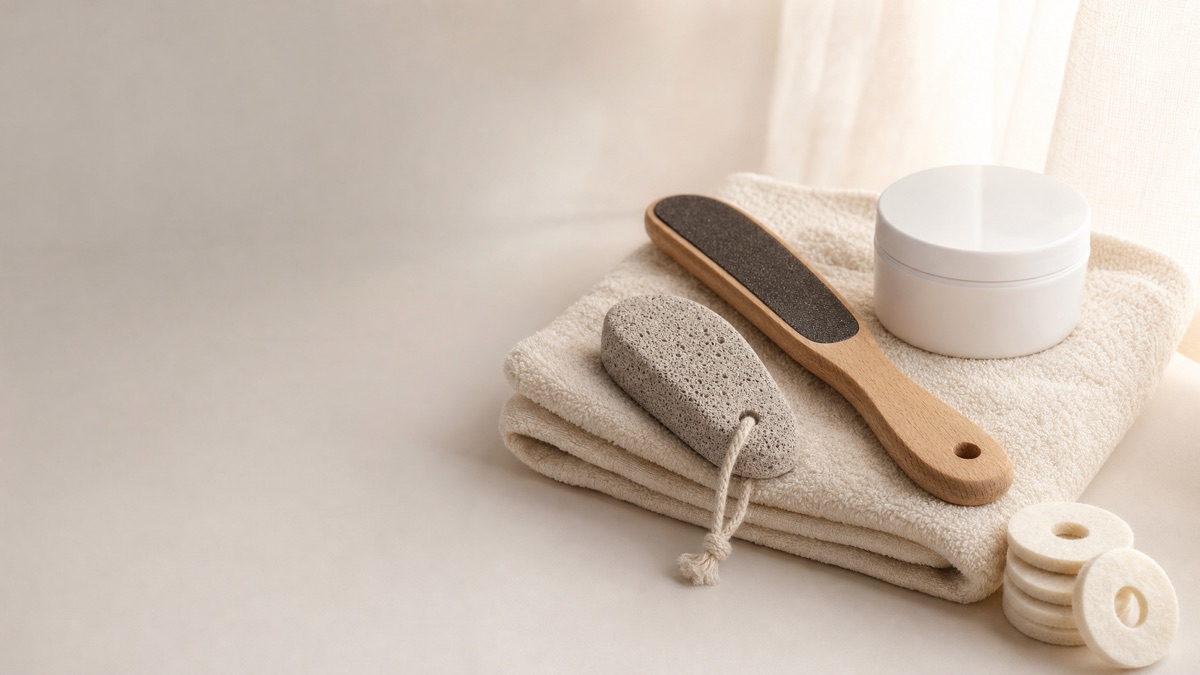
Pumice stone or foot file, light pressure, one thin layer. Trying to clear it in one go is how people wound themselves.
Moisturize daily
A urea or lactic acid cream keeps the remaining skin pliable so it cracks and thickens less.
Offload the spot
A pad around the callus, not on it. For the ball of the foot, a metatarsal pad placed just behind it.
On the offloading step, the detail that matters is the word around. A pad placed directly on top of a painful callus adds height to a spot that is already taking too much pressure and usually makes it worse. What works is a horseshoe or donut shape that surrounds the callus so the surrounding skin carries the load instead, or, for a callus under the ball of the foot, a metatarsal pad sitting just behind the sore area so weight transfers back off the metatarsal head.
Footwear does more than any product on this list. A wider toe box, a cushioned sole, and a shoe that is not gripping the foot at the pressure point will outperform every cream in the drugstore. If the same callus keeps rebuilding in the same place despite all of this, that is the signal for a custom orthotic, which redistributes pressure across the whole foot rather than padding one spot.
Two Things to Skip, and Why
Medicated corn and callus pads
These deliver salicylic acid, which dissolves keratin. The acid cannot distinguish thickened skin from healthy skin, so it keeps working outward into the normal tissue at the edges of the pad. The common result is a chemical burn or an open sore where there was previously only thick skin. If you have diabetes, neuropathy, or reduced circulation, avoid them entirely.
Razor blades and callus shavers
The drugstore shaver looks like a safe tool and is not. There is no reliable way to feel where dead tissue ends and living dermis begins, especially working upside down on your own foot, and a slip converts a painful callus into an open wound in a spot that takes your full body weight with every step.
Ordinary Callus Pain vs. Something That Needs Looking At
Ordinary, treat at home
- •Broad, dull ache under a thick yellow or tan plaque
- •Worse barefoot on hard floors, better in cushioned shoes
- •Improves noticeably after soaking and filing a layer off
- •Uniform color with no dark staining or moisture
- •Skin lines run through it and it is not tender to a side squeeze
See a podiatrist
- •Any dark red, brown, or black discoloration within the callus
- •Drainage, moisture, odor, or a soft boggy feel under the cap
- •Spreading redness or warmth around the area
- •Sharp pinpoint pain that returns within hours of filing
- •Pain that changes how you walk, or wakes you at night
Not sure whether the thick skin you are looking at is a callus at all? That is a common and reasonable question, and the answer changes the urgency considerably. Our guide to telling a callus apart from a pressure sore covers that comparison in detail.
If You Have Diabetes, Read This Part
A callus over a bony prominence is the most common starting point for a diabetic foot ulcer, and the reason is mechanical rather than mysterious. The callus concentrates pressure on the tissue below, neuropathy removes the pain signal that would normally make you shift your weight or change shoes, and the hard cap seals over the damage so the surface still looks fine.
- •Do not use blades, shavers, or acid pads on your own feet, ever. A wound you cannot feel is the specific risk.
- •Look at the soles of both feet daily, using a mirror or a phone camera if you cannot see them comfortably.
- •Treat any dark staining inside a callus as a same-week appointment, not something to watch.
- •Have calluses reduced on a routine schedule rather than letting them build, since regular debridement lowers ulcer risk.
Painful or not, a thick callus on a diabetic foot is worth a professional set of eyes. Learn about our diabetic wound care →
Callus on your heel splitting open? Cracked Heels Treatment →
Thinking about having it removed? Here is what the appointment and the days afterward actually involve. Corn & Callus Removal Recovery →
Is it a callus or a pressure sore? Thick skin is not always just thick skin. Callus or Pressure Sore? How to Tell →
Keeps coming back in the same spot? That usually points to a structural pressure problem. Custom Orthotics →
Burning or electric pain rather than a pebble? Pain radiating into two toes with numbness is a nerve problem, not a skin one. Morton's Neuroma Treatment →
Frequently Asked Questions
Why does my callus hurt if it's just dead skin?
The callus itself cannot hurt. Callus tissue is compacted dead skin with no nerve endings and no blood supply, which is why a podiatrist can pare it down with a scalpel and you feel nothing. The pain is coming from what the callus is doing to the living tissue beneath it. Once the plaque gets thick and hard enough, it stops acting like padding and starts acting like a stone taped to the bottom of your foot, concentrating every step onto the sensitive dermis underneath. Pain is the signal that the callus has crossed from protective to harmful, which is why a painful callus is worth treating rather than ignoring.
How can I tell if it's a callus or a plantar wart?
The squeeze test is the quickest check. Press straight down on the spot, then pinch it from the sides. A callus hurts more with direct downward pressure and very little when squeezed. A plantar wart is the opposite: side-to-side pinching is noticeably more painful than pressing down. Two more clues help. Your skin has fine parallel lines like a fingerprint, and those lines run straight through a callus but stop at the edge of a wart and go around it. Warts also often show tiny black dots, which are clotted capillaries, while a callus is a uniform yellow or tan. Warts are viral and need different treatment, so this distinction changes what you should do next.
What does a dark spot or bruise under a callus mean?
It means bleeding has occurred in the tissue under the callus, and it should be examined promptly rather than filed away at home. In wound care this finding has a name, callus hemorrhage, and it is treated as a pre-ulcerative sign: the pressure has already been high enough to damage small blood vessels in the dermis, and skin breakdown is often the next step if nothing changes. Under a thick callus, an ulcer can be forming and draining into the tissue with the hard cap still sealed over the top, so the surface can look deceptively intact. If you have diabetes, neuropathy, or poor circulation, a dark red, brown, or black discoloration under a callus warrants a same-week appointment.
How do I relieve callus pain at home?
Reduce the thickness and take the pressure off it. Soak the foot in plain warm water for about ten minutes to soften the plaque, then use a pumice stone or foot file with light pressure, taking off a thin layer rather than trying to clear it in one session, and follow with a urea or lactic acid moisturizer. The step most people skip is offloading: a felt or foam pad placed around the callus rather than directly on it, or a metatarsal pad just behind a callus on the ball of the foot, redistributes weight away from the spot. Roomier shoes with a wider toe box and a cushioned sole matter more than any cream. What to avoid: razor blades, callus shavers, and medicated corn pads containing salicylic acid.
Why shouldn't I use medicated corn or callus pads?
Those pads work by applying salicylic acid, which dissolves keratin. The problem is that the acid cannot tell thickened skin from healthy skin, so it keeps working outward into the normal tissue at the edges of the pad and can create a chemical burn or an open sore where there was only thick skin before. That is a poor trade even for someone healthy. If you have diabetes, peripheral neuropathy, or reduced circulation, these products should be avoided entirely, because the resulting wound may be painless, unnoticed for days, and slow to heal. A podiatrist can remove the same tissue in a few minutes with no chemical injury to the skin around it.
When should I see a podiatrist about a painful callus?
Go in if the callus is painful enough to change how you walk, if it keeps returning to the same spot within weeks of filing it down, if there is any dark discoloration, drainage, warmth, or redness, or if it hurts more from a side-to-side squeeze than from direct pressure, which suggests a wart rather than a callus. Anyone with diabetes, neuropathy, or peripheral arterial disease should have a painful callus looked at rather than treated at home, since a callus over a bony prominence is the single most common starting point for a diabetic foot ulcer. Recurrence at the identical spot usually means a structural pressure point that padding alone will not solve.
Specialized Wound Care at ASG Foot & Ankle
Our board-certified podiatrists treat slow-healing wounds, diabetic foot ulcers, and post-surgical wounds at our three clinics in Homewood, South Chicago Heights, and Mokena.
See a Podiatrist Near You
ASG Foot & Ankle has offices in Homewood, South Chicago Heights and Mokena. Our board-certified podiatrists accept most insurance. Find the office closest to you:
Tired of Walking on a Painful Callus?
Reducing it takes a few minutes in the office and is far safer than any blade or acid pad. More importantly, we can find out what is underneath and what keeps putting it there. Board-certified podiatrists at three South Chicago suburbs locations.