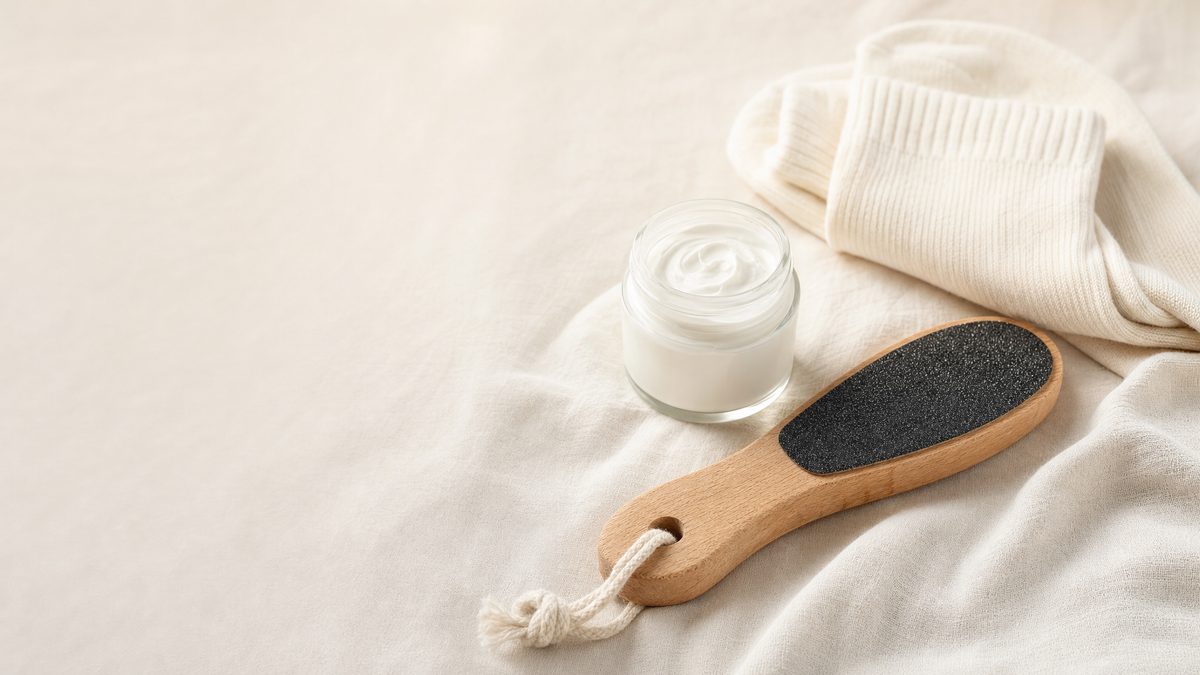
Cracked Heels: Why Moisturizer Alone Never Fixes Them
The crack is not where your skin is driest. It is where a rigid callus meets skin that has to stretch, and no lotion changes that geometry.
Cracked heels get filed under dry skin, and that framing is why so many people spend years cycling through creams that never quite fix it. Dryness is part of it. It is not the reason the crack appears exactly where it does, and it is not the reason it reopens in the same line every summer.
Heel fissures are a mechanical failure. Once you can see the mechanism, the treatment order becomes obvious, and it explains why the expensive cream did not work while a cheap one plus a foot file often does. This guide from the podiatrists at ASG Foot & Ankle covers what is actually happening, the five steps in the order they need to happen, and the point at which a split heel stops being cosmetic.
Medically reviewed by Dr. Timothy Horak and Julia Shauger, board-certified podiatric specialists serving Homewood, South Chicago Heights & Mokena. Last reviewed August 2026.
The short answer
Fissures form at the edge of a callus, because callus cannot stretch and the skin beside it has to. So the order is: thin the callus first, then use a urea cream at 25 to 40 percent rather than ordinary lotion, seal it under petroleum jelly and a sock overnight, and get out of backless shoes, which let the heel pad splay and put maximum tension on exactly that margin. Skip step one and the other steps do very little.
What Is Actually Happening to Your Heel
Under your heel bone sits a specialized fat pad, a set of tough fibrous chambers packed with fat that act as a shock absorber. Every step compresses it, and as it compresses it spreads sideways. The skin wrapped around the outside of the heel has to accommodate that expansion, several thousand times a day.
Skin responds to repeated pressure by thickening. That callus is protective at first, but it is dead, rigid keratin with none of the elasticity of normal skin. So you end up with a plate that cannot stretch bordered by skin that must. All of the strain concentrates on that boundary line, and once it exceeds what the skin can take, it splits. That is why fissures run around the rim of the callus in a curve rather than in the middle of the thickest part.
What makes it worse
- Open-backed shoes, sandals and clogs, which let the pad spread freely
- Standing all day on concrete or tile
- Carrying extra weight, which increases the load through the pad
- Long hot showers and harsh soaps, which strip the skin lipids
- Dry winter air and summer sandals, which is why it is a year-round complaint
Conditions that drive it
- Diabetes, which reduces skin hydration and sweating in the feet
- An underactive thyroid, a classic cause of stubbornly dry, thick heel skin
- Psoriasis and eczema affecting the sole
- Long-standing athlete's foot in its dry, scaly moccasin pattern
- Age, since the fat pad thins and the skin renews more slowly
The Five Steps, In Order
Reduce the Callus
- Nothing else works until the rigid plate around the crack is thinned
- At home: a foot file or pumice on damp skin, a small amount two or three times a week
- Never a bladed shaver at home, and never medicated corn plasters
- Thick, painful, or bleeding fissures should be professionally debrided instead
Soften With a Keratolytic
- Urea at 25 to 40 percent for thick callus, 10 to 20 percent for maintenance
- Ammonium lactate or salicylic acid preparations are reasonable alternatives
- Apply to the callused area, not just into the crack
- Nightly, not occasionally. Two weeks before you judge whether it is working
Seal It In
- Plain petroleum jelly over the top traps the moisture the cream just delivered
- A cotton sock overnight holds it against the skin and off the sheets
- Occlusion roughly doubles what the same cream achieves on its own
- This is the step almost everybody skips
Change the Mechanics
- A closed shoe with a firm heel counter cups the fat pad and limits the splay
- Backless clogs and sandals are the single most common aggravating factor
- An anti-fatigue mat if you stand on a hard floor all day
- Heel cups or a cushioned insole to spread the impact
Maintain It
- Callus rebuilds under the same load that built it the first time
- Weekly filing and nightly cream is the maintenance dose
- Most recurrences are people who stopped once it looked better
- If it keeps returning in the same spot, the pressure pattern needs assessing
Which Cream, and Why
The label price tells you almost nothing. The active ingredient and its concentration tell you everything.
| Ingredient | What it does | Use it for |
|---|---|---|
| Urea 10 to 20% | Draws and holds water into the skin | Daily maintenance once the cracks have closed |
| Urea 25 to 40% | Actively breaks down hardened keratin | Thick callused heels with fissures. The workhorse |
| Ammonium lactate 12% | Exfoliates and hydrates | A good alternative if urea stings |
| Salicylic acid | Dissolves the bonds between dead cells | Thick callus. Avoid with diabetes or neuropathy |
| Petroleum jelly | Seals. Softens nothing on its own | Always as the top layer, never as the only layer |
| Ordinary body lotion | Barely penetrates thick plantar skin | Not the right tool for this job |
If a fissure is open and stinging, hold the acids and the high-strength urea off the crack itself and treat the callus around it. Once the split has closed over, resume across the whole area.
When a Cracked Heel Stops Being Cosmetic
A fissure is a hole in the skin barrier, on a surface that takes your body weight and spends its day inside a sock. Get it looked at rather than managed with cream if:
- •You have diabetes or neuropathy. A heel fissure is a well-recognized entry point for infection, and if you cannot feel it you will not know how deep it has gone
- •The crack bleeds or has a clean edge that opens when you walk. That is through the full thickness of skin
- •There is redness spreading around it, warmth, or any discharge. That is cellulitis until proven otherwise
- •Your circulation is poor, or you have known peripheral arterial disease, because these will not heal on their own
- •It has not improved after a month of proper treatment done consistently
- •The skin is scaly across the whole sole in a moccasin pattern, which suggests a fungal infection needing different treatment
Callus building up elsewhere on the foot? Callus is a pressure map, and it is telling you something. Painful Callus Relief →
Diabetic and noticing thick skin over a pressure point? Callus with a dark center is not callus any more. When a Callus Is Really a Pressure Sore →
Scaly, itchy soles as well as cracked heels? This is commonly missed and treated as dry skin for years. Athlete's Foot or Something Else? →
Heel pain as well as heel cracks? Those are separate problems with separate fixes. Plantar Fasciitis Healing Timeline →
An open area that will not close? Any wound on the foot that stalls deserves a proper look. How Long Should a Foot Wound Take? →
Frequently Asked Questions
Why do my heels crack even though I moisturize every day?
Because dryness is only half the problem and moisturizer only addresses that half. Every time you take a step, the fat pad under your heel flattens and spreads sideways, and the skin around the rim has to stretch to accommodate it. Where the skin is normal it stretches easily. Where a thick callus has built up, it cannot stretch at all, so the tension concentrates on the narrow band of softer skin at the callus edge, and that is precisely where the fissure appears every time. Rubbing lotion onto the surface of a thick callus does very little, because the callus is dead keratin that has become a rigid plate. Until the thickness is reduced, the mechanical stress simply reloads the same margin and the crack reopens. The fix is always both: take the callus down, then keep the skin supple.
What is the best cream for cracked heels?
The active ingredient and its concentration matter far more than the brand or the price. Urea is the workhorse, and the concentration decides what it does: around 10 percent it mainly hydrates, at 20 to 25 percent it starts to break down hardened keratin, and at 40 percent it becomes strongly keratolytic and is what we reach for on genuinely thick heels. Ammonium lactate and salicylic acid work similarly through different routes. Plain petroleum jelly does not soften callus at all, but it is an excellent sealant to lock in whatever you applied underneath. A practical routine that beats most expensive products: soak or shower, apply a 25 to 40 percent urea cream to the thick areas, seal it with petroleum jelly, and wear a cotton sock overnight. Do that nightly for two weeks before you judge it.
Are cracked heels dangerous?
For most people they are painful and unsightly rather than dangerous. For some they are a genuine risk, and the difference is worth knowing. A fissure is a break in the skin barrier, and a deep one that reaches the living tissue underneath and bleeds is an open wound in a location that is under load with every step and is regularly exposed to socks, floors and shoes. In someone with diabetes, neuropathy, or poor arterial circulation, that is a realistic route to a foot infection or an ulcer, and it can progress quickly and painlessly. Cellulitis starting from a heel fissure is something we see. If you fall into any of those groups, a cracked heel is not a cosmetic issue to manage with drugstore cream, it should be assessed and the callus professionally reduced.
Should I use a pumice stone or a callus shaver on my heels?
A pumice stone or foot file used gently on damp skin is fine and helpful, provided you take a little off regularly rather than a lot occasionally. A bladed callus shaver is a different matter and we would advise against it for home use. It is very easy to take a layer too much, and because callus has no sensation you often do not know until you reach living tissue that bleeds. That converts a manageable problem into an open wound. For anyone with diabetes, neuropathy or circulation problems, bladed instruments at home are genuinely dangerous and this includes medicated corn plasters, which contain enough salicylic acid to burn a hole in surrounding healthy skin. Filing little and often, immediately after a shower while the skin is soft, achieves the same result safely.
Do open-back shoes and sandals cause cracked heels?
They contribute more than most people appreciate, and it is one of the most useful things to change. A shoe with no back allows the heel fat pad to splay outward freely when you load it, which puts maximum stretch on the skin at the rim of the heel. A closed shoe with a firm heel counter cups the fat pad and limits that spread, which reduces the tension the skin has to absorb. This is why heel fissures reliably worsen in summer, why they are common in people who wear backless clogs at work, and why the single change of a closed shoe with a supportive counter often improves the problem more than any cream. Standing all day on hard floors adds to it, so a cushioned mat or an insole with a decent heel cup is worth having if your job keeps you standing.
How long do cracked heels take to heal?
Superficial cracks in skin that is dry but not badly callused usually settle within two to three weeks of consistent nightly treatment. Deep fissures through a thick callus rim take longer, commonly four to eight weeks, and they will not resolve at all until the callus itself is reduced, because the crack keeps reopening along the same line every time you walk. If the fissure is deep enough to bleed or is painful with each step, having the callus professionally debrided first will cut that time dramatically, and the fissure often closes within one to two weeks afterward with proper aftercare. What determines whether they stay away is not the treatment but the maintenance, since the callus rebuilds under the same pressure that created it. Ongoing weekly filing and nightly cream is what keeps them closed.
See a Podiatrist Near You
ASG Foot & Ankle has offices in Homewood, South Chicago Heights and Mokena. Our board-certified podiatrists accept most insurance. Find the office closest to you:
Deep Heel Fissures Close Faster With Help
Professionally reducing the callus takes minutes, is painless, and usually turns a fissure that has resisted months of cream into one that closes in a week or two. If you have diabetes or your heel is bleeding, that is the safest way to deal with it.