Do You Need Bunion Surgery?
How we decide, what conservative care can and cannot do, and what recovery really involves
Two questions come up in almost every bunion appointment. Is this going to keep getting worse, and am I going to end up needing surgery. The honest answers are usually yes and probably not, in that order.
Bunions do tend to progress. That does not mean everyone with a bunion needs an operation. Surgery is for pain and function that will not respond to anything else, not for the size of the bump. Here is how we work through that decision with patients at our Homewood, South Chicago Heights and Mokena offices.
Medically reviewed by Dr. Timothy Horak and Julia Shauger, board-certified podiatric specialists serving Homewood, South Chicago Heights & Mokena. Last reviewed July 2026.
What a Bunion Actually Is
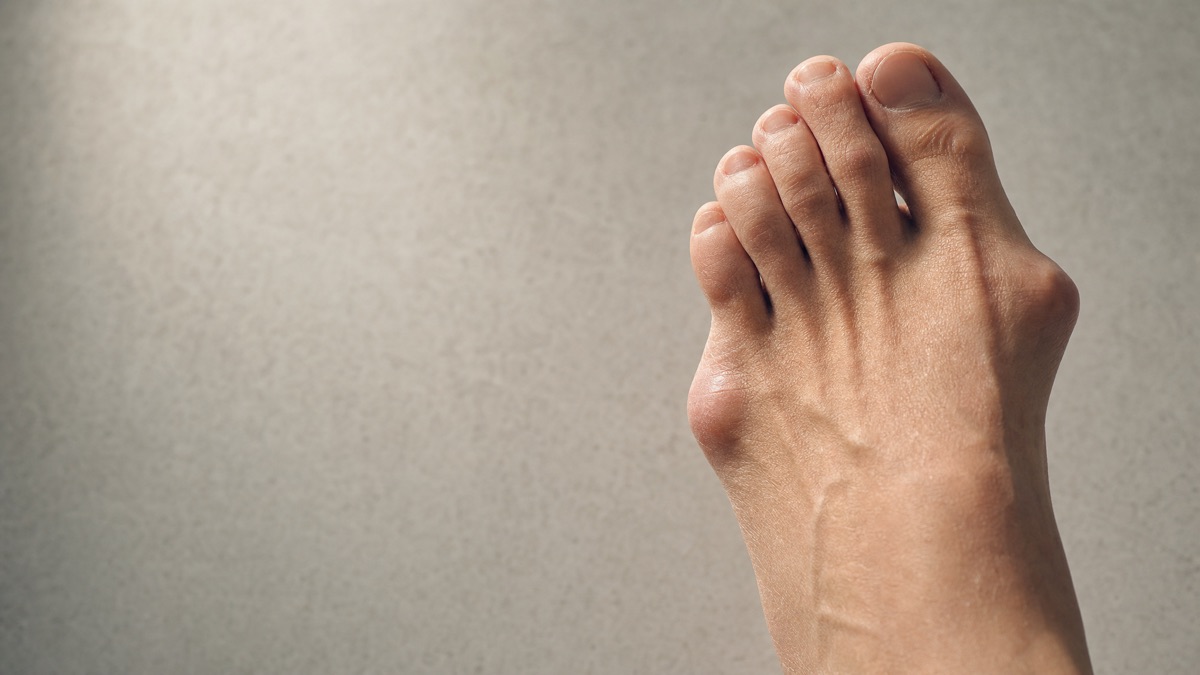
The bump is not a growth. It is the head of the first metatarsal, the long bone behind your big toe, drifting inward while the toe itself leans outward toward the second toe. What you see on the side of the foot is bone that has moved, not bone that has been added. This is worth understanding early, because it explains why nothing you can strap on the outside of the foot will straighten it.
What tends to cause it
- • Inherited foot structure, by far the biggest factor
- • A first metatarsal that sits at a wide angle to begin with
- • Loose ligaments or flat feet that let the forefoot spread
- • Years in narrow or pointed shoes, which accelerate rather than cause it
- • Inflammatory arthritis or an old injury to the joint
What we look at on exam
- • Weight-bearing X-rays to measure the actual angles
- • Whether the big toe joint still moves freely or has stiffened
- • Arthritis inside the joint, which changes the plan entirely
- • The second toe, which often takes over load and starts to buckle
- • How you walk and where the callus pattern sits
Size and pain do not track together. We see large bunions that never hurt and small ones that are miserable. Where the pain is coming from matters more than how the foot looks, because pain over the bump, pain inside the joint and pain under the second toe are three different problems with three different fixes.
What Conservative Care Can and Cannot Do
Let us be clear about the limits first. Nothing short of surgery straightens the toe. Splints, spacers, taping and exercises do not move bone back into alignment, whatever the packaging says. Anyone telling you otherwise is selling something.
What conservative care does is treat the symptoms, and it does that well enough that many people live with a bunion for decades without ever needing an operation. That is the realistic goal: comfortable, functional, and not getting worse quickly.
Shoes, which matter most
A wide, deep toe box takes the pressure directly off the bump. This single change does more for day-to-day bunion pain than everything else on this list combined. Bring your worst-offending pair to your appointment and we will tell you honestly what it is doing to your foot.
Custom orthotics
They will not correct the deformity, but they control the flattening and rolling in of the foot that overloads the big toe joint with every step. Most useful when flat feet are part of the picture.
Padding and spacers
Gel pads over the bump and spacers between the first and second toe reduce friction and rubbing. Purely symptomatic, and worth using because friction is what turns a bunion into a raw, blistered bunion.
Ice, anti-inflammatories, injections
Useful for flare-ups. A cortisone injection into an inflamed joint can settle a bad episode, though we use it sparingly and it is not a long-term plan.
When Surgery Is Worth Considering
Pain you cannot get away from
Not pain in dress shoes. Pain in sensible, wide shoes, on ordinary days, that has not responded to a genuine attempt at conservative care. That is the threshold.
- • It hurts in the shoes you already changed to
- • Standing or walking for normal periods has become difficult
- • The joint aches at rest or wakes you at night
- • Flare-ups are getting closer together
The rest of the foot is giving way
A bunion that has pushed far enough over starts causing problems elsewhere. When the second toe is being crowded into a hammertoe, or callus is building under the ball of the foot because load has shifted off the big toe, waiting usually means a bigger operation later.
- • The big toe is overlapping or underlapping the second toe
- • A hammertoe is forming next to it
- • Painful callus is building under the second and third metatarsal heads
- • Your gait has changed to avoid pushing off the big toe
Conservative care was actually tried
We want to see a real attempt over several months, not a week of a different shoe. That means proper footwear worn consistently, orthotics if they were indicated, and padding used as directed. If all of that has been done and the foot still hurts, the conversation changes.
And there are two reasons we would not operate even if the above is true: a bunion that does not hurt, and a foot with circulation poor enough that healing would be a real risk. In the second case we test circulation before making any surgical decision.
The Procedure Is Chosen From Your X-Rays
There is no single bunion operation. There are many, and which one is right depends on how wide the angle between the bones is, whether the joint has arthritis in it, how flexible the deformity is, and your age and activity level. Be cautious with any surgeon who offers the same procedure to everyone, and with marketing that presents one technique as right for all feet.
Minimally invasive techniques
Small incisions with the bone cut and repositioned under X-ray guidance, held with screws. Less soft tissue disruption and smaller scars, and suitable for many mild to moderate bunions.
- • Incisions of a few millimeters rather than an open exposure
- • Often done under local anesthetic with sedation
- • Less wound-related discomfort early on
- • Not appropriate for every deformity, particularly severe ones
Open procedures
Direct exposure of the joint, which allows correction of severe deformity and work further back along the metatarsal or at the joint behind it when the angle demands it.
- • Needed for wide angles and rigid deformities
- • Allows arthritic joints to be addressed at the same time
- • Usually involves screws or plates holding the bone
- • Longer period before you are back in a normal shoe
What to Realistically Expect
We will not give you a recovery timeline before we have seen your X-rays, because the procedure determines the timeline and the procedure comes from the X-rays. Broadly, expect several weeks in a surgical shoe or boot, a return to roomy normal shoes somewhere around the second or third month, and a longer tail after that.
The part patients are least prepared for is swelling. A foot that has had bone cut and fixed commonly stays swollen at the end of the day for six months or more, and that is normal rather than a sign something went wrong. Plan for it, particularly if you are on your feet at work.
Bunion surgery is done to relieve pain and restore function. It is not cosmetic surgery, and we will not promise you a foot that fits into a narrow shoe afterward. Recurrence is possible, especially with severe original deformity or a return to the shoes that made it worse.
All surgery carries risk. For bunion surgery that includes infection, nerve irritation, stiffness in the big toe joint, slow bone healing, and hardware that occasionally needs removing later. We will go through the ones that apply to your specific procedure before you decide anything.
Common Questions
Can a bunion be corrected without surgery?
The bump itself cannot be straightened without surgery. A bunion is a change in bone alignment, and no splint, spacer, exercise or orthotic moves bone back into position. Conservative care targets the symptoms, and for many people it controls the pain well enough that surgery never becomes necessary.
How long is recovery from bunion surgery?
It depends which procedure your foot needs. Typically several weeks in a surgical shoe or boot, back into normal shoes around the second or third month, and swelling at the end of the day for six months or more. Procedures that cut and fix bone take longer than soft tissue work.
Do bunions come back after surgery?
Recurrence is possible, particularly when the original deformity was severe, when the underlying foot mechanics are not addressed, or when patients return to narrow shoes. That is part of why we look at the whole foot rather than just the bump when planning surgery.
Should I have bunion surgery if my bunion does not hurt?
Generally no. Bunion surgery is done for pain and function, not appearance. A bunion that does not hurt and does not stop you doing anything is usually best left alone and monitored. Operating on a comfortable foot means accepting real surgical risk and a long recovery for a cosmetic result.
Related Reading
Tempted to try a splint or corrector first? Do Bunion Correctors Work? →
See a Podiatrist Near You
ASG Foot & Ankle has offices in Homewood, South Chicago Heights and Mokena. Our board-certified podiatrists accept most insurance. Find the office closest to you:
Find Out Where Your Bunion Actually Stands
A weight-bearing X-ray and an exam will tell you whether this is something to manage or something to plan for. We see patients at three offices in Homewood, South Chicago Heights and Mokena, and most major insurance is accepted.