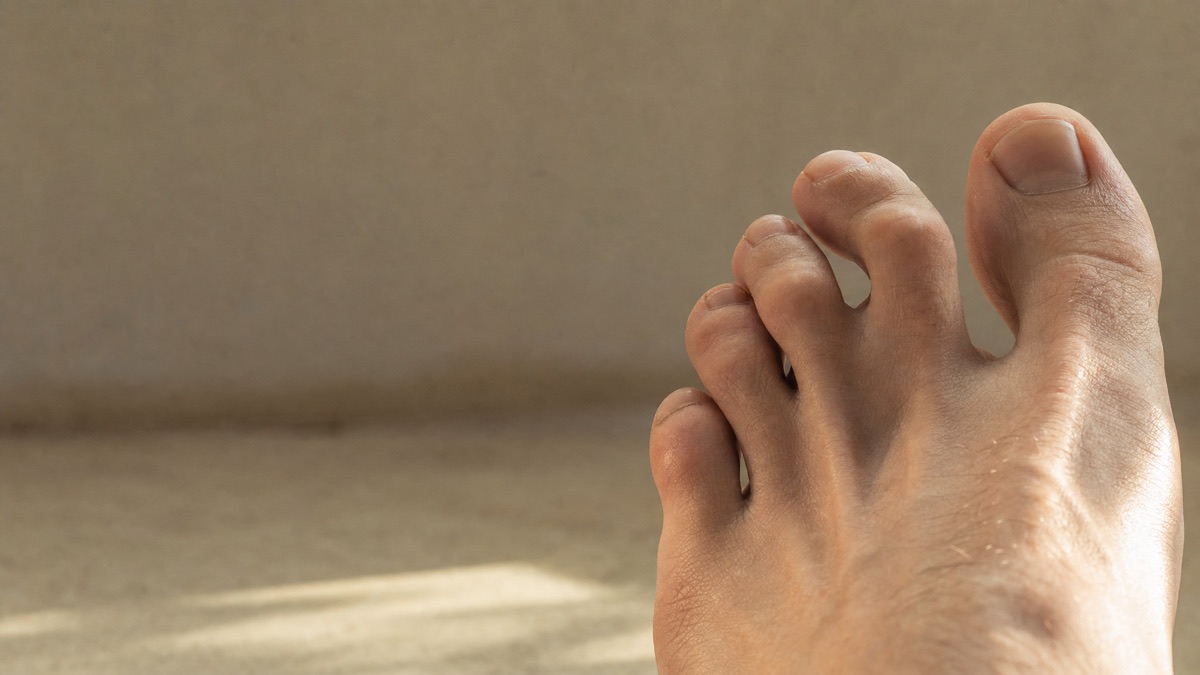
Treating Painful Toe Deformities
Bunions, hammertoes, claw toes and mallet toes, at our Homewood, Mokena and South Chicago Heights offices
Toes rarely change shape overnight. Most people describe it the same way: the bump got a little bigger over a few years, the second toe started sitting on top of the big toe, shoes that were fine last winter now rub, and there is a corn on the knuckle that keeps coming back after they shave it down.
The honest starting point is this. Nothing you wear on the outside of your foot moves bone. What padding, splints and better shoes can do is take the pressure off, settle the pain, and often keep you comfortable for years. What they cannot do is straighten the toe. Knowing that difference early saves people a lot of money on gadgets that were never going to work.
Medically reviewed by Dr. Timothy Horak and Julia Shauger, board-certified podiatric specialists serving Homewood, South Chicago Heights & Mokena. Last reviewed July 2026.
The Four We See Most
Bunion (hallux valgus)
The big toe drifts toward the second toe and the joint at its base pushes outward, which is the bump you see. The bump is not a growth. It is the end of the first metatarsal becoming prominent as the alignment shifts.
What patients notice:
- • Aching at the joint after a day on your feet
- • Redness where the bump meets the shoe
- • The big toe leaning into or under the second toe
- • Nothing in the closet fitting across the front
Hammertoe
The toe buckles upward at the middle joint so the knuckle rises into the top of the shoe. Most often it is the second toe, and it often turns up alongside a bunion, because the big toe is no longer carrying its share of the load.
What patients notice:
- • A corn on the top of the bent knuckle
- • Pain only in shoes, not barefoot
- • The toe becoming harder to straighten by hand over time
- • Callus building under the ball of the foot
Claw toe
The toe bends at both small joints and the base joint pulls up, so the toe curls under like a claw and the metatarsal head gets driven down into the ball of the foot. Claw toes are worth taking seriously because they often point to a nerve problem behind them.
What patients notice:
- • Thick callus under the ball of the foot
- • A feeling of walking on a stone
- • Toes that no longer touch the ground
- • Trouble with balance in bare feet
Mallet toe
Only the last joint, the one nearest the nail, bends down. The tip of the toe ends up pressing into the insole, so the corn forms on the very end of the toe and often under the nail rather than on top.
What patients notice:
- • A painful corn at the tip of the toe
- • Nail thickening or bruising from the pressure
- • The toe looking shortened
- • Pain that is worse in a shoe with a shallow toe box
Why Toes Change Shape
Shoes get most of the blame, and they deserve some of it, but they are usually not the whole story. The structure you inherited decides whether the pressure a shoe applies has anywhere to go. Two people can wear the same narrow shoe for thirty years and only one ends up with a bunion.
Inherited foot structure
A flexible first ray, a flat or high arch, a long second toe, or loose ligaments generally. This is why bunions run in families and why they can show up in teenagers who have never worn a heel.
Footwear and load
Narrow toe boxes and heels push the forefoot forward and squeeze it. They rarely create a deformity from nothing, but they speed one up and make it hurt sooner. Long shifts standing on concrete do the same thing.
Nerve, joint and injury
Diabetic neuropathy, rheumatoid and other inflammatory arthritis, an old fracture, or a tight calf that overloads the forefoot with every step. Claw toes in particular often trace back to a nerve issue that needs its own workup.
What Happens at Your Visit
The main question we are answering is not what the toe looks like. It is whether the joint still moves. A toe you can straighten with your hand is treated very differently from one that has stiffened in place, and the plan follows from that single finding.
Examination
- • Whether each affected toe is still flexible or now fixed
- • Where the callus and corns sit, which shows where the load goes
- • Calf flexibility, which is commonly overlooked
- • Circulation and sensation, especially if you have diabetes
- • Watching you walk, and looking at your current shoes
Imaging when indicated
- • Weight-bearing X-rays, since a foot lying on a table hides the true angle
- • Assessment of arthritis in the joint itself
- • Further workup if an inflammatory or nerve cause is suspected
How We Treat It
First: take the pressure off
This is where most people should start, and for a good number of patients it is where treatment ends. Be clear about what it does. It manages the symptoms and protects the skin. It does not realign the toe, and no splint sold online does either.
Protecting the sore spots
- • Professional trimming of corns and callus rather than blade kits at home
- • Silicone sleeves and crest pads to lift pressure off a knuckle or tip
- • Toe splints and taping while a toe is still flexible
- • Never use medicated corn plasters, particularly with diabetes
Changing the load
- • A deep, wide toe box, which usually means changing shoes entirely
- • Custom orthotics to offload the ball of the foot
- • A metatarsal pad placed behind, not under, the painful spot
- • Daily calf stretching if the calf is tight
Then: settling an inflamed joint
Anti-inflammatory medication, ice after long days, and occasionally a corticosteroid injection into an inflamed joint or bursa. Injections are used sparingly around the small toe joints. Repeated steroid in that area can thin the fat pad and weaken the surrounding soft tissue, which leaves you worse off than you started.
Last: surgery, when the pain justifies it
Surgery is the only thing that changes the alignment. It is worth considering when pain limits what you can do, when the deformity is pushing neighboring toes out of position, or when the skin over a prominence keeps breaking down. It is not worth doing for appearance on a foot that does not hurt.
- • Bunion correction by cutting and realigning the bone, or by stabilizing the joint behind it
- • Hammertoe correction, either a tendon release while the toe is flexible or a fusion once it is fixed
- • Removing bone at the base of a claw toe to let it sit down again
- • Smaller incision techniques in selected cases, chosen on the anatomy rather than by default
What to Realistically Expect
We will not promise you a result before examining your foot and looking at weight-bearing X-rays. What we will tell you honestly is that conservative care controls symptoms rather than fixing shape, and that plenty of people manage well for years on padding, orthotics and the right shoes.
If you do have surgery, the part that surprises people is not the pain, it is the swelling. The forefoot holds fluid for a long time, so shoes stay tight for months after the bone has healed. Expect weeks in a surgical shoe or boot and a gradual return to normal footwear, and expect your surgeon to give you a timeline built on your specific procedure rather than an average.
Deformities can also come back, particularly when the underlying structure or a tight calf was never addressed. That is why we spend time on shoes, orthotics and stretching even for patients who are heading toward an operation.
What Genuinely Helps Day to Day
Shoes
- Roughly a thumb width beyond the longest toe, measured standing
- Depth over the toes, not just width across the ball
- Keep pointed toes and higher heels for short stretches, not workdays
- Get measured again after any foot surgery or significant swelling
Habits
- Stretch your calves daily, since a tight calf loads the forefoot with every step
- Have callus and corns trimmed properly instead of cutting them yourself
- Come in early while a toe is still flexible, when there are more options
- If you have diabetes, treat any open skin over a toe as urgent
Common Questions
Can a bunion go away without surgery?
No. A bunion is a change in the position of the bones at the base of the big toe, and nothing worn on the outside of the foot moves bone. Splints, spacers and wider shoes can reduce pain and slow the irritation, and for many people that is enough to live with comfortably, but the deformity itself stays. Only surgery realigns the joint.
Are hammertoes reversible?
It depends on whether the toe is still flexible. Early on you can straighten the toe with your hand, and at that stage taping, toe splints, better shoes and calf stretching can hold the position and control symptoms. Once the joint stiffens and the toe will not straighten passively, it is fixed, and only surgery changes the shape.
How long is recovery after bunion or hammertoe surgery?
It depends on the procedure. Many patients spend several weeks in a surgical shoe or boot, then move back into a roomy athletic shoe. Swelling in the forefoot is stubborn and commonly takes months to fully settle, which surprises people more than the pain does. Your surgeon should give you a timeline based on the specific procedure and your bone quality rather than a general number.
Should I have surgery on a bunion that does not hurt?
Generally no. A bunion that does not hurt, does not rub open, and does not stop you wearing reasonable shoes does not need an operation. Surgery is a reasonable option when pain limits what you do, when the second toe is being pushed out of position, or when the skin over the bump keeps breaking down. Appearance alone is a poor reason to operate on a foot you have to walk on.
Related Reading
See a Podiatrist Near You
ASG Foot & Ankle has offices in Homewood, South Chicago Heights and Mokena. Our board-certified podiatrists accept most insurance. Find the office closest to you:
Get the Toe Looked At
If a toe is changing shape, rubbing in every shoe you own, or building callus that keeps returning, it is worth having it examined while the joint is still flexible. We see patients at three offices in Homewood, Mokena and South Chicago Heights, and most major insurance is accepted.