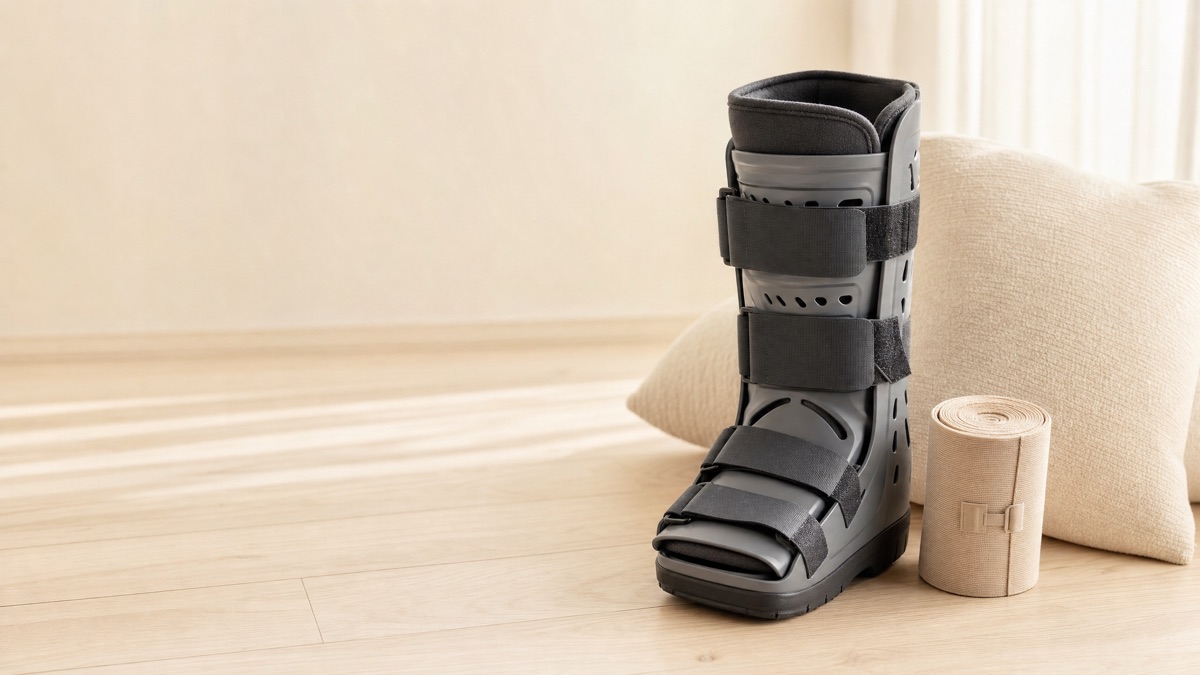
Bunion Surgery Recovery: A Week-by-Week Timeline
When you walk, when the boot comes off, when you can drive, and the one thing nobody warns you about: how long the swelling really lasts.
Almost everyone recovering from bunion surgery hits the same moment somewhere around week five: the foot still looks swollen and strange, it does not fit in a normal shoe, and the six-week number they remember from the pre-op conversation is nearly up. That moment produces a lot of unnecessary worry, and it comes down to two different timelines getting collapsed into one.
Bone healing takes about six weeks. Looking and feeling finished takes six to twelve months. Both are normal. This guide from the foot and ankle surgeons at ASG walks through what actually happens week by week, why the procedure you had sets your timeline more than anything else, when driving, work, shoes and exercise realistically come back, and which symptoms are worth a phone call.
Medically reviewed by Dr. Timothy Horak and Julia Shauger, board-certified podiatric specialists serving Homewood, South Chicago Heights & Mokena. Last reviewed August 2026.
The short answer
Expect 6 to 12 weeks to be walking normally in a regular shoe and back to ordinary life, and 6 to 12 months for the swelling to fully resolve and the foot to reach its final appearance. The bone typically knits around week 6, confirmed by x-ray rather than by how the foot feels. Everything else on your timeline, especially how soon you put weight on it, is dictated by which procedure you had.
First: Your Procedure Sets Your Timeline
"Bunion surgery" is not one operation. It is a family of them, and the difference between them is where the bone is cut and how it is held. That determines how early you can safely stand on it, which then drives everything else. If you are comparing your progress against a friend's, check that you had the same operation first.
Distal osteotomy
The bone is cut near the head of the metatarsal, close to the toe, and shifted over. A long-established approach for mild to moderate bunions.
- Often protected weight-bearing early in a surgical shoe
- Bone healing around 6 weeks
- Smaller correction capacity than a base procedure
Lapidus / 3D correction
Work is done at the unstable joint at the base of the metatarsal, addressing the root cause rather than the bump. Handles larger deformities.
- Traditional Lapidus: historically 6 to 8 weeks off the foot
- Modern fixation constructs allow much earlier walking in a boot
- Lower recurrence rate in appropriately selected patients
Minimally invasive
The bone is cut through very small incisions using specialized instruments, with less soft tissue disruption.
- Usually walking in a post-op shoe within days
- Smaller scars and often less early swelling
- Bone still needs the same 6 weeks to heal
Soft tissue only
Tightening and releasing the structures around the joint without cutting bone. Used selectively and rarely on its own in adults.
- Fastest return to weight-bearing
- No bone healing period to wait out
- Higher recurrence when the deformity is structural
If you are still deciding whether to have surgery at all, or which approach fits your deformity, our Lapiplasty 3D bunion correction page covers the procedure side, and our bunion treatment overview covers the conservative options that come first.
The Recovery, Week by Week
Elevation Is the Whole Job
- The nerve block wears off in the first 12 to 24 hours and this is the peak pain window
- Foot stays above heart level almost continuously; this does more for pain than extra medication
- The surgical dressing stays exactly as applied and dry, since it is also holding the toe in its corrected position
- Throbbing whenever the foot hangs down is expected and is a pressure effect, not a complication
First Follow-Up and Sutures
- First post-op visit: dressing changed, incision inspected, often the first x-ray to confirm alignment
- Sutures usually come out around day 10 to 14
- Weight-bearing status is confirmed here, whether that is a boot, a surgical shoe, or staying off it
- Desk-based work is realistic for many people in this window if the foot can stay elevated
Bone Healing in the Boot
- The osteotomy or fusion site is knitting; this is the phase you cannot rush no matter how good the foot feels
- Feeling fine is not clearance. Bone healing is confirmed on x-ray, not by comfort
- Gentle range-of-motion work on the big toe joint often begins, guided by your surgeon
- Swelling is at its most dramatic and can make the foot look worse than it did before surgery
Out of the Boot
- Repeat x-ray typically confirms bone healing and the boot or surgical shoe is discontinued
- Transition into a wide, cushioned athletic shoe, often with the foot still visibly swollen
- Stiffness in the big toe joint is normal here and is what physical therapy addresses
- Walking distance builds gradually; the foot will tell you when it has had enough
Feeling Normal Day to Day
- Most daily activity is unrestricted and the foot is comfortable in a normal athletic shoe
- Low-impact exercise resumes: cycling, swimming, elliptical, walking for fitness
- Running and court sports are usually still being phased in rather than fully released
- Evening swelling remains and is the most common thing patients worry about unnecessarily
The Final Result
- Residual swelling finishes resolving; this is when the foot reaches its true final shape
- Dress shoes and narrower styles typically become comfortable in this window
- Scar softens and fades from pink toward skin tone
- Occasional aching in cold weather or after long days can persist and gradually fades
Where should I be today? Enter your surgery date
Enter the date and get what is normal for today, what is next, and what to watch for.
When Can I Do What?
Typical ranges across common bunion procedures. Your surgeon's instructions override anything in this table, because they know how your bone was cut and fixed.
| Activity | Typical timing | What it depends on |
|---|---|---|
| Shower with the foot protected | 2 to 5 days | Keep the dressing dry with a cover; no submerging |
| Getting the incision wet directly | After sutures are out and the wound is closed | Usually around 2 to 3 weeks |
| Desk or seated work | 1 to 2 weeks | Provided the foot can stay elevated most of the day |
| Driving, left foot surgery | 1 to 2 weeks | Automatic transmission, and off narcotic medication |
| Driving, right foot surgery | 6 to 9 weeks | Must be able to brake hard without hesitation |
| Standing or on-your-feet work | 6 to 12 weeks | Depends heavily on procedure and hours on the foot |
| Wide athletic shoe | 6 to 12 weeks | Once out of the boot and the incision is closed |
| Swimming or cycling | 8 to 12 weeks | After the wound is fully healed and cleared |
| Running and impact sport | 4 to 6 months | Requires confirmed bone healing plus rebuilt strength |
| Narrow or heeled dress shoes | 6 months or later | A swelling limit, not a healing limit |
Why the Swelling Lasts So Much Longer Than You Expect
This is the number one source of post-operative anxiety, and it is worth understanding rather than just enduring. Significant swelling lasts 3 to 6 months. Mild swelling at the end of the day, in hot weather, or after a long walk commonly persists for a full year.
The forefoot is the worst possible place in the body to have to clear fluid from. It sits at the very end of the circulatory and lymphatic return, it is below heart level essentially every waking hour, and gravity is working against drainage the entire time you are upright. Surgery on top of that means cut tissue, disrupted small lymphatic channels, and an inflammatory response that is doing exactly what it should. None of that resolves on the same schedule as bone.
What actually helps
- Elevate above heart level, not just up on a footstool. Toes above the nose is the old line and it is the right idea.
- Wear the compression your surgeon prescribes, for as long as they prescribe it, including after it stops feeling necessary.
- Break up long periods of standing. Swelling accumulates through the day, so several short spells beat one long one.
- Judge your progress in the morning, not the evening. Comparing an evening foot to a morning foot invents problems that are not there.
Normal Recovery vs. Call Your Surgeon
Normal & Expected
- •Swelling that is worse in the evening and better after a night's sleep
- •Bruising spreading into the arch, heel, or toes over the first two weeks
- •Numbness or tingling near the incision that slowly improves over months
- •Stiffness in the big toe joint, especially first thing in the morning
- •Throbbing when the foot hangs down, relieved by elevating it
- •Occasional sharp twinges as nerves recover, becoming less frequent
Call Right Away If…
- •Fever, chills, or drainage that is thick, cloudy, or foul-smelling
- •Redness spreading away from the incision rather than fading
- •Pain that is escalating after the first week instead of easing
- •Calf pain, calf swelling, or shortness of breath, which need urgent assessment for a clot
- •A sudden pop or shift in the toe's position, or a change after a fall
- •The dressing or boot becoming soaked, or the wound opening
One general rule carries most of the weight here: recovery should trend better week over week. Day-to-day fluctuation is ordinary, but a clear reversal in direction, more pain, more redness, more drainage than a few days ago, is what deserves a call rather than a wait-and-see.
Why Two People Recover on Completely Different Schedules
Beyond the procedure itself, the biggest factors are how severe the deformity was to begin with, whether other work was done at the same time such as correcting a hammertoe or a second toe, your age and bone quality, whether you smoke, which affects bone healing considerably, and how much of your day is spent on your feet.
Comparing yourself to someone else's recovery is the least useful thing you can do with the information. Comparing yourself to your own foot two weeks ago is the most useful.
Still weighing up the non-surgical options? Do Bunion Correctors Work? →
Still deciding on surgery? Modern 3D correction addresses the unstable joint rather than shaving the bump. Lapiplasty 3D Bunion Correction →
Want the non-surgical options first? Most bunions are managed conservatively before surgery is on the table. Bunion Treatment Overview →
Wondering how a bunion affects the rest of you? The gait changes travel up the chain. Bunions, Gait & Posture →
Having a hammertoe fixed at the same time? They are often corrected together, and the toe has its own recovery details. Hammertoe Surgery Recovery →
Frequently Asked Questions
How long does bunion surgery recovery take?
The honest answer has two numbers. Functional recovery, meaning you are walking in a normal shoe and back to ordinary daily life, typically takes 6 to 12 weeks. Complete recovery, meaning the swelling has fully resolved and the foot looks and feels like its final result, takes 6 to 12 months. Most disappointment after bunion surgery comes from hearing the first number and expecting it to cover the second. The bone itself usually knits in about 6 weeks, but soft tissue and lymphatic drainage in the forefoot take far longer to settle, which is why a foot that works fine at three months can still look puffy at six.
When can I walk after bunion surgery?
That depends almost entirely on which procedure you had, and it is the single biggest variable in the whole recovery. With many modern approaches, including minimally invasive bunionectomy and Lapiplasty-style 3D correction, patients are walking in a protective boot or surgical shoe within days of surgery. With a traditional Lapidus fusion, surgeons have historically kept patients off the foot for around 6 to 8 weeks so the fusion site is not disturbed. A distal osteotomy usually falls in between, with protected weight-bearing on the heel early on. Your surgeon's protocol is the one that governs, and it is set by how the bone was cut and fixed, not by how you feel.
How long does swelling last after bunion surgery?
Longer than almost anyone expects. Significant swelling lasts 3 to 6 months, and mild residual swelling, especially at the end of a long day or in hot weather, commonly persists for a full year. This is normal and it is not a sign that something went wrong. The forefoot sits at the far end of the circulatory and lymphatic system, so fluid has the longest possible distance to travel back out, and gravity works against it every hour you are upright. Elevating the foot above heart level, keeping compression on as directed, and accepting that the evening foot is puffier than the morning foot are the practical responses.
When can I drive after bunion surgery?
If the surgery was on your left foot and you drive an automatic, you may be cleared within a week or two once you are off narcotic pain medication. If it was your right foot, expect considerably longer, commonly 6 to 9 weeks, because you must be able to move from accelerator to brake and perform an emergency stop with full force and no hesitation. Being out of the boot is not by itself the same as being safe to drive. Ask your surgeon directly rather than assuming, and be aware that driving before you are cleared can affect insurance coverage in an accident.
When can I wear normal shoes again after bunion surgery?
Most patients get into a wide, soft athletic shoe somewhere between 6 and 12 weeks, once the boot or surgical shoe is discontinued and the incision is fully closed. Getting into a normal-width dress shoe takes longer, often 4 to 6 months, and that is a swelling limitation rather than a healing one: the foot has not finished decompressing yet. Narrow, pointed, or heeled shoes should wait until your surgeon clears them, typically at the 6-month mark. Going back early into the exact shoe style that contributed to the bunion is also one of the more avoidable ways to stress the correction.
Is bunion surgery very painful?
The worst of it is concentrated in the first 48 to 72 hours, and most patients describe it as significant but manageable, particularly because many surgeons use a regional nerve block that keeps the foot numb well into the first day. After that first stretch, pain typically drops off quickly and many people transition from prescription medication to over-the-counter options within the first week. Throbbing when the foot hangs down is common and is a fluid and pressure effect rather than a warning sign, which is why elevation does more for early pain than any additional tablet.
Wondering when you can drive?
Which foot, which gearbox, and the emergency stop test that actually settles it.
Driving After Foot Surgery →Bent your big toe back?
Grade 1 is days, grade 3 is months, and a rigid sole does most of the treating.
Turf Toe Recovery Time →See a Podiatrist Near You
ASG Foot & Ankle has offices in Homewood, South Chicago Heights and Mokena. Our board-certified podiatrists accept most insurance. Find the office closest to you:
Considering Bunion Surgery?
The right procedure depends on the shape of your deformity, not on a brochure. Our board-certified foot and ankle surgeons will x-ray it, walk you through the realistic recovery for your specific correction, and tell you honestly if conservative care is the better starting point.