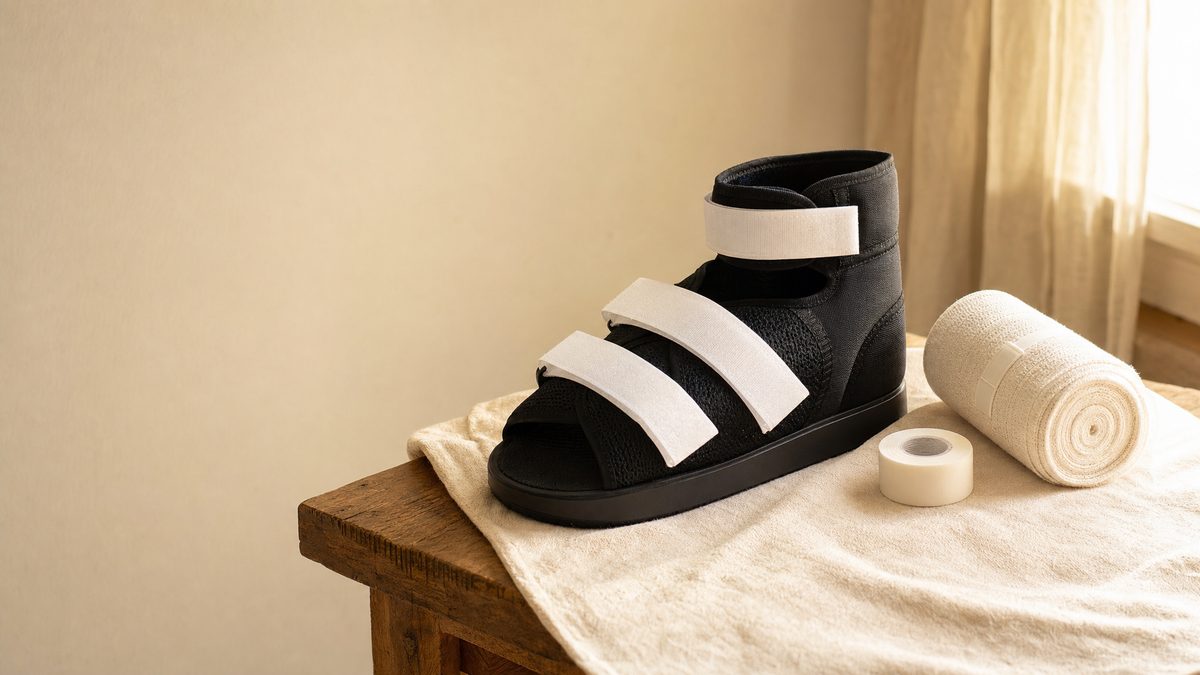
Hammertoe Surgery Recovery: The Week-by-Week Timeline
The bone heals in six weeks. The swelling takes months. And the pin sticking out of your toe is supposed to be there. Here is what each phase actually feels like.
Hammertoe correction is a small operation with an oddly demanding recovery, and the mismatch catches people off guard. The surgery itself often takes under an hour and you walk the same day. Then the toe stays swollen past the point where you expected to have forgotten about it, a metal pin may be poking out of the end of it for a month, and the corrected joint feels stiff in a way nobody clearly warned you was permanent.
Every one of those things is normal, and each has a mechanical reason behind it. This guide walks through the timeline week by week, what the pin is doing and when it comes out, why toe swelling outlasts every other kind, and the much shorter list of things that are genuinely not normal and deserve a call.
Medically reviewed by Dr. Timothy Horak and Julia Shauger, board-certified podiatric specialists serving Homewood, South Chicago Heights & Mokena. Last reviewed August 2026.
The short answer
You walk the same day in a stiff post-op shoe. A temporary pin, if used, comes out at 3 to 6 weeks. Bone is solid around 6 weeks and regular roomy shoes return between weeks 4 and 8. Swelling runs 3 to 6 months, worse by evening, and permanent stiffness in a fused joint is the correction, not a complication.
Call Promptly If You Notice
- •Redness spreading beyond the incision or pin site, or red streaks up the foot
- •Thick, yellow-green, or foul-smelling drainage, or a fever
- •Pain climbing after the first several days instead of easing
- •The pin bending, migrating outward, or the toe rotating out of position
- •The toe turning white, dusky blue-grey, or cold (bruised-purple is expected; pale and cold is not)
- •Sudden calf swelling, calf pain, or shortness of breath
- •Swelling that had settled and then clearly increases again
- •A dressing that slips off or soaks through in the first week
The Recovery, Stage by Stage
Protect the Work
- Bulky dressing and a stiff post-op shoe; the dressing is part of the splinting, leave it alone
- Walk short distances on the heel as permitted; foot elevated above heart level most of the day
- Expect throbbing the first two nights; ice behind the knee and elevation beat extra pills
- Numbness from the local anesthetic block wears off in 12 to 36 hours
Settling In
- First office visit, dressing change, and a look at the incision and pin site if you have one
- Bruising spreads along the toe and forefoot; alarming to look at, normal to have
- Pain should be clearly easing; most people are off strong pain medication within days
- Still heel-walking in the post-op shoe; short, boring walks only
Pin Out, Bone Knitting
- K-wire removed in the office somewhere in this window; quick, strange, and then over
- Bone fusion is progressing but not finished; the stiff shoe still does the protecting
- Swelling visibly better in the morning, worse by evening; that daily cycle is normal
- Stitches out if not dissolvable; the incision line stays pink and firm for months
Back Into Real Shoes
- Transition into a roomy, wide-toe-box shoe once your podiatrist confirms healing
- The toe is often too swollen for narrow shoes yet; buy for the foot you have today
- Walking distance builds; gentle toe mobility work if your procedure preserves motion
- Desk work has usually resumed long ago; on-your-feet jobs commonly return around now
The Long Tail
- Evening swelling continues shrinking month by month; rings of tightness are normal
- Scar softens; massage once fully closed helps it flatten and desensitize
- Impact exercise returns gradually, usually from month 2 to 3 onward
- The corrected toe starts feeling like yours again rather than a patient
The Result
- Swelling resolved or nearly so; shoe size usually returns to normal
- Fused joints stay stiff permanently, and that is the correction working
- Address what caused the hammertoe: footwear, calf tightness, or a neighboring bunion
- A toe re-curling or drifting at this stage earns a follow-up, not a wait
Which Procedure You Had Changes the Details
"Hammertoe surgery" covers several different operations, and the recovery details differ enough to be worth matching to your paperwork.
| Procedure | What it does | Hardware | Recovery notes |
|---|---|---|---|
| Arthroplasty | Removes part of the buckled joint so the toe lies flat | Often a temporary K-wire | Keeps some flexibility; slightly higher chance of the toe drifting over years |
| Fusion (arthrodesis) | Joint surfaces removed, toe heals straight and solid | K-wire or buried implant | Most durable correction; the joint is permanently stiff by design |
| Buried implant fusion | Same as fusion, held by an internal implant | Nothing visible, nothing removed | No pin-site care and no removal visit; otherwise similar timeline |
| Tendon procedures | Releases or transfers the tight tendon pulling the toe | Usually none | For flexible hammertoes; quickest recovery, motion preserved |
| Multiple toes at once | Any of the above, on several toes | Often several wires | Same weekly milestones, more total swelling and a slower feel |
A frequent companion detail: hammertoes often travel with a bunion, because a drifting big toe crowds its neighbor into the buckled position. When both are corrected in one operation, the bunion side of the surgery sets the recovery pace, which is slower than a hammertoe alone.
Why a Small Toe Swells for Half a Year
Toes are the hardest place in the body for swelling to leave. They hang at the absolute bottom of a standing person, so gravity opposes drainage every hour you are upright, and the tiny veins and lymphatic channels that do the draining were directly in the surgical field. Rebuilding that plumbing takes months, not weeks.
The result is a predictable and almost universally underexplained pattern: the toe looks reasonable in the morning, swells through the day, and by evening feels tight and looks rounder. That daily cycle repeating while slowly shrinking week over week is what normal looks like for 3 to 6 months.
What helps is unglamorous: elevation whenever you are seated, staying ahead of long standing days early on, and patience with shoe choices. What signals a problem is direction change: swelling that had been trending down and then clearly increases, especially alongside redness, warmth, or new pain, is the pattern that earns a call.
Where should I be today? Enter your surgery date
Enter the date and get what is normal for today, what is next, and what to watch for.
Need to offload the pressure points a hammertoe creates? Custom Orthotics vs Store Insoles →
Not sure surgery is the right call yet? What causes hammertoes, and the non-surgical options that come first. Hammer Toe: Causes and Treatment →
Having a bunion corrected too? The bunion recovery sets the pace when both are done together. Bunion Surgery Recovery Timeline →
Worried about the incision? The signs that separate normal healing from an infection that needs same-day care. Foot Infection: Which Signs Mean the ER →
Frequently Asked Questions
How long does it take to recover from hammertoe surgery?
The structural healing takes about 6 weeks, which is how long bone needs to fuse in the corrected position. If a temporary pin was used, it typically comes out in the office at 3 to 6 weeks. Most people are in a regular, roomy shoe somewhere between weeks 4 and 8. But full recovery, meaning the toe no longer swells by evening and feels like part of your foot rather than a project, realistically takes 3 to 6 months, and residual stiffness in the corrected joint is permanent by design in fusion-type procedures. Knowing that last part in advance is the difference between a satisfied patient and a worried one, because the stiffness is the correction, not a complication of it.
Can I walk after hammertoe surgery?
Usually yes, and usually right away, in a stiff-soled post-operative shoe that keeps the front of the foot from bending. Hammertoe surgery is one of the more walkable foot operations because the corrected toe does not carry much body weight directly. The rules that come with that walking matter, though: weight goes through the heel and the shoe's stiff sole rather than pushing off the toes, distances stay short for the first couple of weeks, and the foot goes up on a pillow whenever you are not on it. People who treat early walking permission as permission to resume normal life tend to buy themselves weeks of extra swelling. Driving depends on which foot and your surgeon's guidance, commonly around 2 to 4 weeks for a right foot once you are out of the post-op shoe and off pain medication.
Is it normal to have a pin sticking out of my toe?
Yes. Many hammertoe corrections use a temporary K-wire, a thin metal pin that runs down the center of the toe to hold the corrected position while bone knits. Its end sits outside the tip of the toe, usually with a small protective cap or ball on it, and it looks far more alarming than it is. Keep it clean and dry, do not snag it on bedding or socks, and do not let anything push on the end of it. It is removed in the office at roughly 3 to 6 weeks, which takes seconds, feels like a strange quick sting, and rarely needs any anesthetic. Some corrections instead use a small implant buried inside the bone, in which case nothing shows and nothing needs removing. Call promptly if the pin site turns red, drains, or the pin visibly bends or migrates.
Why is my toe still swollen months after hammertoe surgery?
Because toes are the worst place on the body for swelling to drain from. They are the lowest point of a standing human, gravity fights drainage all day, and the small veins and lymphatics disturbed by surgery take months to fully rebuild. Swelling that persists 3 to 6 months, worsening by evening and improving overnight, is the single most common source of worry after this operation and is almost always normal. The pattern that matters is direction: normal swelling slowly trends down week over week. Swelling that increases after having settled, especially with new redness, warmth, or pain, is not the normal pattern and deserves a call, since it can signal infection or a problem with the fixation.
Will my toe be stiff or not touch the ground after surgery?
Some permanent stiffness is expected and, in fusion procedures, is literally the goal: the buckled joint is removed and the toe heals straight and solid, trading motion you were not really using for a toe that no longer curls, rubs, and hurts. A corrected toe can also sit slightly elevated at first, not quite touching the floor, particularly while swelling holds it up; this usually settles over months as swelling resolves and the toe seats. A toe that remains notably floating after 6 months, drifts sideways, or begins to curl again is worth a follow-up visit. Recurrence is uncommon but real, and it is more likely when the underlying drivers, tight calf muscles, a long second toe, an uncorrected bunion, or unsupportive footwear, are still in play.
When should I call the doctor after hammertoe surgery?
Call promptly for redness spreading beyond the incision or pin site, thick or foul-smelling drainage, a fever, pain that escalates after the first several days instead of easing, a pin that bends, migrates, or the toe rotating out of position, sudden new swelling in the calf, or a toe that turns pale, dusky, or cold. That last one matters at the extremes: a toe that looks bruised is expected, a toe that is white or blue-grey and cold is a circulation problem and is urgent. Also call for the boring-sounding stuff that turns out to matter, like a dressing that has slipped off in the first week or got soaked, because the dressing is part of what holds the correction early on.
Wondering when you can drive?
Which foot, which gearbox, and the emergency stop test that actually settles it.
Driving After Foot Surgery →Soft lump on top of the foot?
Why draining a ganglion cyst brings it back, and what excision recovery actually looks like.
Ganglion Cyst Removal Recovery →See a Podiatrist Near You
ASG Foot & Ankle has offices in Homewood, South Chicago Heights and Mokena. Our board-certified podiatrists accept most insurance. Find the office closest to you:
Considering Hammertoe Surgery?
Our board-certified podiatrists correct hammertoes and handle every stage of the recovery, from the first evaluation through pin removal and footwear guidance, across our Homewood, South Chicago Heights, and Mokena clinics.