Ganglion Cyst on the Foot: Removal and Recovery
The lump is the easy part. The joint that keeps refilling it is the actual problem, and that is why draining it so often fails.
A ganglion is a sac of thick clear jelly that has leaked out of a joint capsule or tendon sheath and collected under the skin, usually on the top of the midfoot or around the ankle. It is benign, it is common, and its most characteristic behaviour is that it changes size, getting bigger with activity and smaller with rest, because it is still connected to the joint by a narrow stalk.
That stalk explains most of what patients find confusing. It is why the lump comes back after being drained, why hitting it with a book is both a real folk remedy and a bad idea, and why the operation that actually works removes not just the sac but the stalk and a cuff of the joint capsule it grew from. On the foot there is one extra wrinkle: shoes press on it, so a cyst that would be ignored anywhere else becomes a daily nuisance.
Medically reviewed by Dr. Timothy Horak and Julia Shauger, board-certified podiatric specialists serving Homewood, South Chicago Heights & Mokena. Last reviewed August 2026.
The short answer
Benign, often watchable if it does not hurt or rub. Draining it recurs roughly half to two thirds of the time because the stalk stays. Surgical excision takes the sac, the stalk, and a cuff of capsule, with recurrence generally under 10 percent. Recovery: boot or surgical shoe about two weeks, normal shoe at two to four weeks, sport around six to eight weeks, and swelling on the top of the foot that lingers two to three months.
Have Any Foot Lump Assessed If It
- •Is hard and fixed rather than soft and mobile
- •Is growing steadily instead of fluctuating in size
- •Hurts at rest or wakes you at night
- •Causes numbness, tingling, or weakness in the foot or toes
- •Comes with skin colour change, ulceration, or unexplained weight loss
- •Appeared after an injury and is warm, red, and tender
The overwhelming majority of foot lumps are benign. An ultrasound settles most questions in a single visit, which is a better use of the worry than months of watching it.
Your Three Options
| Option | What it involves | Comes back? |
|---|---|---|
| Leave it alone | Footwear changes, padding, periodic review | A fair number resolve on their own over months to years |
| Aspiration | Needle drainage in the office, sometimes with a steroid injection | Commonly, around 50 to 70 percent of the time |
| Surgical excision | Day case, removes the sac, stalk, and a cuff of joint capsule | Uncommonly, generally under 10 percent |
A reasonable sequence for a painful foot ganglion is to try aspiration first, since it costs a single visit, and to move to excision if it refills. The exception is a cyst pressing on a nerve, where the compression rather than the lump is the problem, and definitive removal earlier is often the better call.
Recovery After Excision, Week by Week
Elevation Is the Job
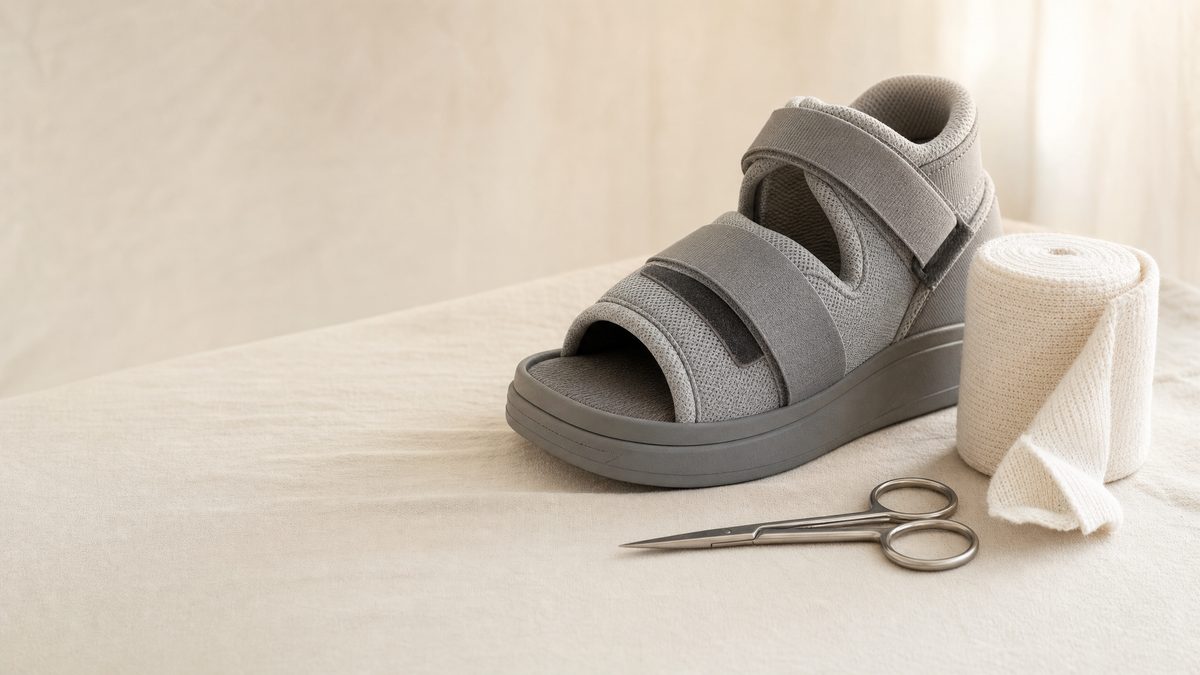
- Home the same day, in a bandage and a surgical shoe or boot
- Foot above heart level as much as you can manage; swelling here is gravity driven
- Keep the dressing dry, and expect a small amount of ooze on the first dressing
- Weight bearing is usually allowed but kept to essential trips only
Wound Healing
- Stitches typically come out around two weeks
- Desk work is usually manageable within one to two weeks with elevation
- Driving depends on which foot and on being out of the boot; check first
- Numbness or tingling around the scar is common and usually temporary
Back Into a Shoe
- A roomy, soft, lace up shoe first; the scar is sensitive to pressure for a while
- Swelling still increases through the day and settles overnight
- Gentle range of motion work keeps the midfoot and ankle from stiffening
- Scar massage once fully healed reduces adherence and sensitivity
Normal Activity
- Most people are back to physical work and sport in this window
- Residual swelling for two to three months is expected, not a complication
- Recurrence risk after proper excision is low, generally under 10 percent
- A returning lump should be reviewed rather than watched for a year
Why the Top of the Foot Stays Swollen for Months
The most common concern after this operation is not pain, it is that the foot still looks swollen at six weeks when the incision healed at two. This is normal and it has an anatomical explanation rather than a worrying one.
The dorsum of the foot has very little soft tissue and a dense superficial lymphatic network that surgery inevitably disturbs. Fluid clears from the lowest point of the body slowly, and every day spent upright refills it. So the pattern people notice, a foot that looks nearly normal in the morning and swollen by evening, is exactly what you would expect, and it continues for two to three months in most people.
What helps is unglamorous: elevate whenever you are sitting for a stretch, keep the ankle moving through its range so the calf pump works, and use a supportive lace up shoe rather than a slip on that has to be sized around the swelling. What should prompt a call is different in kind, not degree: swelling with increasing redness, warmth, spreading pain, discharge from the wound, or fever.
Hard immovable bump at the back of the heel instead? Haglund's Deformity: The Pump Bump →
Painful lump on the sole rather than the top? Callus, wart, and pressure sore are the usual three. Is That a Callus or a Pressure Sore? →
Wondering what foot surgery recovery is like generally? When Can I Drive After Foot Surgery? →
Frequently Asked Questions
What is a ganglion cyst on the foot?
A ganglion is a sac of thick, clear, jelly like fluid that arises from a joint capsule or a tendon sheath. It is not a tumour and it is not cancerous. The fluid inside is essentially the same lubricating fluid that lives inside the joint, which has escaped through a small weak point in the capsule and collected under the skin, and the sac usually stays connected to that joint by a narrow stalk. On the foot they appear most commonly on the top of the midfoot, around the ankle, and near the toes. That stalk is the key to understanding everything else about them, including why they fluctuate in size with activity and why removing the visible lump without addressing the stalk tends to fail.
Do ganglion cysts on the foot go away on their own?
A meaningful number do, and watchful waiting is a perfectly legitimate first choice when the cyst is not painful and not interfering with shoes. Studies on ganglions generally, most of them on the wrist, show a substantial proportion resolving without any treatment over months to years. On the foot the picture is a little different in practice, because shoes press on them, so a foot ganglion that would have been ignored on a wrist often becomes symptomatic through simple friction. The reasonable approach is that a painless cyst that does not rub can be left alone and watched. A cyst that hurts, that cannot be accommodated by footwear, that presses on a nerve and causes tingling or numbness, or that is enlarging, is worth treating. Size alone is not an emergency, and no ganglion needs urgent removal.
Why does a ganglion cyst come back after being drained?
Because draining it removes the fluid but leaves the sac and, more importantly, leaves the stalk connecting it to the joint. The joint keeps producing fluid and the fluid keeps taking the same path, so the cyst refills. Recurrence rates after aspiration are high, commonly quoted in the range of 50 to 70 percent, and higher in the foot than the wrist because the area is repeatedly loaded and compressed by footwear. That does not make aspiration useless. It is quick, done in the office, avoids surgery, and sometimes it does hold, particularly when combined with a steroid injection and a period of protection. It is best understood as a low cost attempt with a moderate chance of working, rather than a definitive fix. Surgical excision, which removes the sac along with its stalk and a cuff of the joint capsule it arises from, has a much lower recurrence rate, generally under 10 percent in good series.
What is recovery like after ganglion cyst removal from the foot?
It is usually a day case under local or regional anaesthetic, and you go home the same day. Expect a bandage and a surgical shoe or boot for roughly two weeks, with elevation as much as possible in the first few days, because swelling on the top of the foot is the main early complaint and gravity is what drives it. Stitches typically come out at around two weeks. Most people are back into a roomy normal shoe somewhere between two and four weeks, back to desk work within one to two weeks, and back to physical work or sport at around six to eight weeks. The whole foot commonly stays swollen well past the point the wound has healed, often for two to three months, and that swelling is the reason people think recovery is going badly when it is going normally. Where the cyst was deep or close to a nerve, numbness or tingling around the scar is common and usually settles over months.
Should I hit a ganglion cyst with a book?
No. The old folk remedy, sometimes called the Bible bump treatment, involves striking the cyst hard enough to rupture the sac. It sometimes works in the sense that the lump disappears, which is why the story persists. It is a bad idea on a foot for several reasons: you can fracture a bone or bruise the structures underneath, the cyst usually returns because the stalk is untouched, and rupturing the sac under the skin can cause a more diffuse inflammatory reaction. The foot also has tendons, nerves, and blood vessels sitting immediately under the usual location on the top of the midfoot. If a cyst is bothering you enough to consider hitting it, that is the point at which a proper assessment is worth having, since aspiration in a clinic accomplishes the same goal far more safely.
How do I know the lump on my foot is a ganglion and not something else?
You often cannot be certain from the outside, which is the reason to have a new lump looked at rather than assuming. Features that point toward a ganglion are a soft to firm, smooth, mobile lump that changes size over weeks, transilluminates when a light is held against it because it is fluid filled, and sits over a joint or tendon. Features that argue against it and warrant prompt assessment include a lump that is hard and fixed to the deeper tissues, one that is growing steadily rather than fluctuating, one that is painful at rest or at night, one associated with skin changes, or any lump that is enlarging quickly. The alternatives include bone spurs and osteophytes, which are hard and immobile, plantar fibromas in the arch, lipomas, bursae, and, uncommonly but importantly, soft tissue tumours. An ultrasound settles most cases quickly and is the usual next step.
See a Podiatrist Near You
ASG Foot & Ankle has offices in Homewood, South Chicago Heights and Mokena. Our board-certified podiatrists accept most insurance. Find the office closest to you:
Lump on Your Foot You Would Rather Have Checked?
ASG Foot & Ankle diagnoses foot and ankle lumps, offers in office aspiration, and performs excision when it is warranted, across Homewood, South Chicago Heights, and Mokena. Most insurance accepted, no referral required.