Plantar Fascia Tear Recovery Time: Partial Tear or Rupture?
Most tears heal without surgery. How long yours takes depends on whether the band tore partly or all the way through, and on how well the first weeks are protected.
A plantar fascia tear usually heals without surgery: expect about 2 to 6 weeks of protected walking in a boot, then on average about 2 to 3.5 months before running and jumping sports, although published recovery times range from a few weeks to more than a year.
A tear is not plantar fasciitis, even though it often happens in a foot that already had it. It is an acute injury with a moment you can usually name, and it typically settles over weeks to a few months rather than many months.
ASG Foot & Ankle patient education. Updated October 18, 2026. General information, not a diagnosis.
The short answer
Protected walking in a boot, sometimes with crutches at first: about 2 to 6 weeks. Comfortable walking in shoes: often 3 to 6 weeks for a partial tear. Return to sport: averages of about 9 to 15 weeks in published case series, with individual cases from 2 weeks to over a year. Complete ruptures and tears after cortisone injections tend to take longer. Surgery is rarely needed.
Get It Seen Promptly If
- •You felt a pop or tearing under the heel or arch and cannot put full weight on the foot
- •Bruising is spreading across the sole, or the foot is badly swollen
- •The pain is at the back of the heel, or you cannot push up onto your toes, which can mean an Achilles injury
- •It happened in the weeks after a cortisone injection into the heel
- •Numbness or tingling, or a foot that looks pale or dusky or feels cold
- •New calf pain or swelling while in a boot or on crutches (same day), or chest pain or sudden breathlessness (emergency care)
- •You have diabetes, neuropathy or poor circulation, where pain is not a reliable guide to how serious an injury is
A pop at the back of the heel is a different injury: Achilles tendon rupture recovery.
How a Plantar Fascia Tear Happens
The plantar fascia runs from the heel bone to the toes and holds up the arch like a bowstring. It tears when a sudden load is more than it can take, which is far more likely once it is weakened.
A sudden push-off or landing
Most tears happen in one moment: a sprint, a jump, a hard landing. Basketball, soccer, running and tennis are common settings, but a short dash can do it in someone who is not an athlete.
A fascia that was already sore
Existing plantar fasciitis is one of the main risk factors. Many people describe months of heel pain, then one bad step.
After cortisone injections
Rupture is a recognized complication of steroid injection for heel pain. Published estimates run from about 2.4 to 10 percent, the lower figure from people who had several injections. Most shots do not cause a tear.
Foot shape and training load
A high arch, a crowded schedule of games and minimalist running shoes have all been linked to tears. A tear in a healthy foot with none of these factors is rare.
After a cortisone shot, the pain is quieter than the tissue is strong, so keep loading modest. See our cortisone shot in the foot guide.
What a Tear Feels Like, Compared With Fasciitis
The classic tear is a pop, snap or tearing feeling under the heel or arch, then immediate sharp pain, usually at the inner side of the heel. Bruising and swelling on the sole often follow. A tear on top of long-standing fasciitis can be quieter, and in one study about a third of injection-related ruptures came on gradually.
| Feature | Plantar fasciitis | Plantar fascia tear | Heel stress fracture |
|---|---|---|---|
| How it starts | Gradually, over weeks | Usually one moment: sprint, jump, landing or push-off | Builds over days to weeks, often after a jump in activity |
| Typical feeling | Sharp first steps in the morning that ease with walking | A pop or tearing, then immediate pain at the inner heel or arch | Deep ache with impact; sore when the heel bone is squeezed |
| Bruising | None | Common on the sole, with swelling | Usually none |
| Imaging that helps | Often none at first; ultrasound if it persists | X-ray to rule out fracture, then ultrasound or MRI | X-ray can look normal early; MRI or a repeat X-ray |
| Recovery | Usually months | Weeks to a few months; occasionally over a year | Usually weeks, depending on the bone |
Pain that came on slowly with no single moment fits the plantar fasciitis healing timeline better. Pain that built with activity, with one sore spot on the bone, points toward a stress fracture.
How a Tear Is Diagnosed
The story and exam come first; imaging confirms the tear and shows whether it is partial or complete.
History and examination
The pop, the activity and any past injections tell most of the story. The exam checks bruising, tenderness, how tight the fascia feels with the toes pulled back, and the Achilles tendon.
X-ray
It does not show the fascia, but it rules out a fracture. A heel spur often shows up and is usually an incidental finding.
Ultrasound
Quick, often available in the clinic, and good at telling torn fibers apart from simple swelling. It is also a practical way to follow healing.
MRI
Used when the picture is unclear. It shows whether the band is partly or completely interrupted and can rule out a heel stress fracture.
Partial Tear vs Complete Rupture
Partial tear
Some fibers are torn but the band is still continuous, so it keeps much of its arch support. In case reports followed with ultrasound, a partial tear at the heel had healed with continuous scar tissue at two months, and that patient walked long distances and climbed stairs without pain.
Complete rupture
The band is torn through and the ends can pull apart. It is still usually treated without surgery, often with a longer protected phase. In the same report, a complete tear in the middle of the arch had only partly recovered at two months: walking was good in a supportive shoe, but stairs still hurt.
An honest caveat: the research is mostly small case series that rarely separate partial from complete tears, so the averages here mix both. Your own imaging and progress should set the pace.
Plantar Fascia Tear Healing Time, Stage by Stage
Typical timings for a tear treated without surgery. Partial tears usually move through them faster. Where your clinician's plan differs, follow it.
The Injury
- A pop or tearing feeling, then sharp pain at the inner heel or along the arch
- Bruising and swelling on the sole often follow, though not always
- Limit walking, elevate the foot, and get it assessed: X-ray first, then ultrasound or MRI if needed
Protected Walking
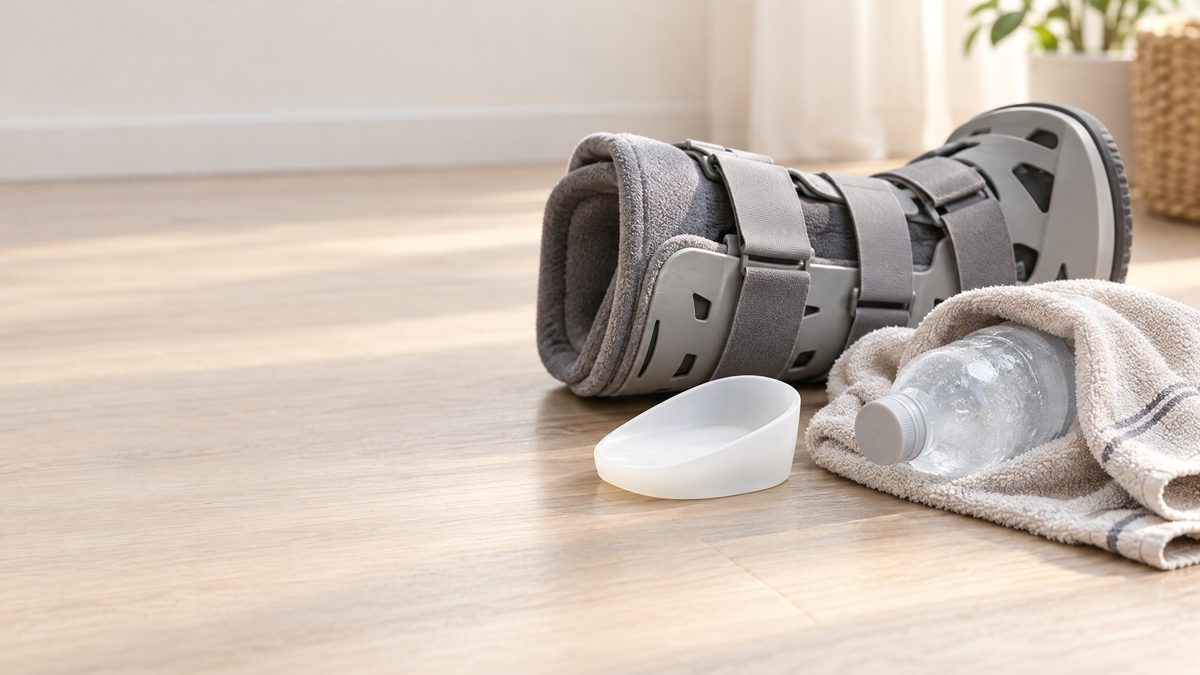
- A rigid walking boot, sometimes with crutches
- Some plans keep weight off for 2 to 3 weeks; others allow weight in the boot as pain allows
- Pain should ease week on week, even if walking is still awkward
Back Into Shoes
- Weaning from the boot to a supportive shoe with an arch-support insole
- No barefoot walking on hard floors, which loads the healing band with every step
- Physical therapy moves from gentle stretching toward strengthening and balance
Rebuilding Load
- Everyday walking close to normal for most partial tears
- Hopping and jumping drills added once strength and balance are back
- In one series of 18 athletes, return to activity averaged about 9 weeks
The Long Tail
- Across published cases, return to sport averaged about 15 weeks, roughly three and a half months
- Complete ruptures and tears after injections often need this window or longer
- New arch, midfoot or outer-foot aching here deserves a check, not just more time
Treatment: What Actually Helps
There is no single agreed protocol, but most plans protect the band while it knits, then load it back up gradually.
- 1Protected weight bearing. A rigid walking boot, with crutches if walking in it still hurts or your clinician wants weight kept off at first.
- 2Cold and elevation early. A cold pack over a thin towel in short spells, and the foot raised when sitting. Skip the ice if you have neuropathy or poor circulation.
- 3Pain relief. Over-the-counter acetaminophen, or an anti-inflammatory such as ibuprofen or naproxen, as the label directs if they are safe for you. Check with your doctor or pharmacist first if you have kidney disease, stomach ulcers or heart disease, are pregnant, or take a blood thinner.
- 4Supportive shoes and insoles. After the boot, an arch-support insole and a firm or rocker-soled shoe take strain off the healing band.
- 5Physical therapy. Gentle stretching first, then foot and calf strengthening, balance work, and finally hopping and jumping drills.
Worth doing
- Wearing the boot whenever you are on your feet during the protected phase
- Telling your clinician about any past cortisone shots in the heel
Worth avoiding
- Barefoot walking on hard floors, even a quick trip to the kitchen
- Aggressive stretching or rolling the arch in the first weeks
- Testing it with a run because it felt good one morning
The Odd Part: Your Old Heel Pain May Change
People with long-standing plantar fasciitis sometimes notice that once the acute pain settles, the familiar heel pain is less, or gone. In an older study of ruptures that followed cortisone injections, the rupture relieved the original heel pain in most patients. The tight, irritated band had, in effect, released itself.
The catch is that the same band holds up the arch. In that study, many patients developed new problems instead:
- •Strain along the arch and across the top and outer side of the midfoot
- •Irritation of a nerve across the sole, causing burning or tingling
- •Stress fractures, hammertoes, swelling or a painful limp in some
- •An arch that measured slightly lower on X-ray than the other foot
About half had good or excellent results roughly two years later, and half fair or poor. That group may not reflect every tear: in a separate series of 18 athletes treated with a boot and physical therapy, all returned to activity without lasting problems or surgery.
Outer-foot aching after a tear resembles the lateral column pain that can follow a surgical release, and arch support helps manage both. Our plantar fascia release recovery guide explains that trade-off.
The Return-to-Running Test
Pass these in order. If one hurts, stay at the stage before for another week.
Walking
Brisk walking in ordinary supportive shoes, as much as a normal day asks, with no limp and no flare the next morning.
Strength
Repeated single-leg heel raises on the injured side, about as many and as smoothly as on the other side, without arch pain.
Hopping
Gentle hops in place on the injured foot with no sharp pain under the heel or arch.
Walk-jog
Short jogging intervals mixed with walking on flat ground, every other day, adding time before speed. Sprints, jumping and cutting come last.
Mild soreness that is gone by the next morning is acceptable. Sharp arch pain during a run, or a new outer-foot ache, means step back a stage and check in with your clinician.
When a Tear Is Not Healing
At around 6 weeks, most people are out of the boot or nearly so. If walking in a supportive shoe is still clearly painful, or progress has stopped, book a follow-up rather than adding more weeks of the same plan. At around 3 months, many people are back to sport; still being unable to run deserves a fresh look at the imaging and the rehab.
- The protected phase was cut short, or barefoot time kept reloading the band
- The tear was larger or more complete than first thought
- A second problem: midfoot strain, a stress fracture, or nerve irritation
- The arch needs more support than an off-the-shelf insole gives
Surgery is reserved for the few whose tear stays painful despite long, good conservative care. Worsening pain, a hot swollen foot or new numbness should be seen sooner.
Heel pain that built slowly, with no pop? Plantar fasciitis runs on months, counted from when the load changed. Plantar Fasciitis Healing Timeline →
Had a cortisone shot for heel pain? The sore-then-better days afterward, and why the relief window needs gentle loading. Cortisone Shot in the Foot →
Outer-foot ache since the tear? The same lateral column trade-off follows a surgical release. Plantar Fascia Release Recovery →
One sore spot on the heel bone, and no injury moment? Stress Fracture in the Foot →
Choosing arch support for the months after? Custom Orthotics vs Store Insoles →
Felt the pop at the back of the heel instead? Achilles Tendon Rupture Recovery →
Frequently Asked Questions
How long does a plantar fascia tear take to heal?
Most plantar fascia tears heal without surgery. Expect about 2 to 6 weeks of protected walking in a boot, then a gradual return to normal shoes. In published case series, return to sport averaged about 9 weeks in one group of athletes and about 15 weeks across the wider literature, with individual cases from 2 weeks to more than a year.
What is the recovery time for a partial plantar fascia tear?
Many people with a partial tear walk comfortably in a supportive shoe within about 3 to 6 weeks and return to running or sport around 2 to 3 months after the injury. Studies rarely report partial tears separately, so treat that as a guide. In case reports followed with ultrasound, a partial tear at the heel had healed with continuous scar tissue by two months.
How long does a ruptured plantar fascia take to heal?
A complete rupture is still usually treated without surgery, but it tends to take longer than a partial tear. Expect several weeks in a boot, then shoes with arch support, and commonly 3 months or more before hard running or jumping. Some people take longer than 6 months, and a minority have lasting arch or midfoot aching, especially after ruptures that followed cortisone injections.
Can you walk on a torn plantar fascia?
Often you can, painfully, and some people finish the game in which it happened. That does not mean you should. Most plans protect the foot with a walking boot, sometimes crutches, for roughly the first 2 to 6 weeks. Some clinicians keep weight off entirely for 2 to 3 weeks; others allow weight in the boot as pain allows. Avoid going barefoot.
Did I tear my plantar fascia, or is it plantar fasciitis?
Plantar fasciitis builds gradually and is worst with the first steps in the morning. A tear usually has a moment: a pop or tearing during a sprint, jump or push-off, immediate pain in the heel or arch, and often bruising on the sole. They overlap, because many tears happen in feet that already had fasciitis. An X-ray rules out a fracture, and ultrasound or MRI confirms a tear.
Does a torn plantar fascia need surgery?
Rarely. Almost all tears, partial and complete, are treated with a boot, gradual loading, supportive shoes or insoles and physical therapy. Surgery is generally kept for a tear that stays painful despite a long period of good conservative care, most often a chronic partial tear.
Sources and further reading
- American Family Physician: Plantar fasciitis (2019), including rupture after corticosteroid injection
- Journal of the American Board of Family Medicine: Plantar fascia rupture, ultrasound to facilitate recognition (2018)
- Cureus: Acute rupture of the plantar fascia in a soccer player (2023), with published return-to-play times
- Medicine: Ultrasound follow-up of spontaneous plantar fascia tears treated conservatively (2019)
- American Journal of Sports Medicine: Plantar fascia ruptures in athletes (2004)
- Foot & Ankle International: Complications of plantar fascia rupture associated with corticosteroid injection (1998)
General patient education. Your examination and individual treatment instructions take priority.
See a Podiatrist Near You
ASG Foot & Ankle has offices in Homewood, South Chicago Heights and Mokena. Our board-certified podiatrists accept most insurance. Find the office closest to you:
Felt a Pop Under Your Heel?
Sudden heel or arch pain deserves a clear diagnosis before you start counting weeks. Our team can examine the foot, X-ray it to rule out a fracture, arrange an ultrasound or MRI when needed, and set you up with a boot, the right insoles and a return-to-activity plan matched to your tear.