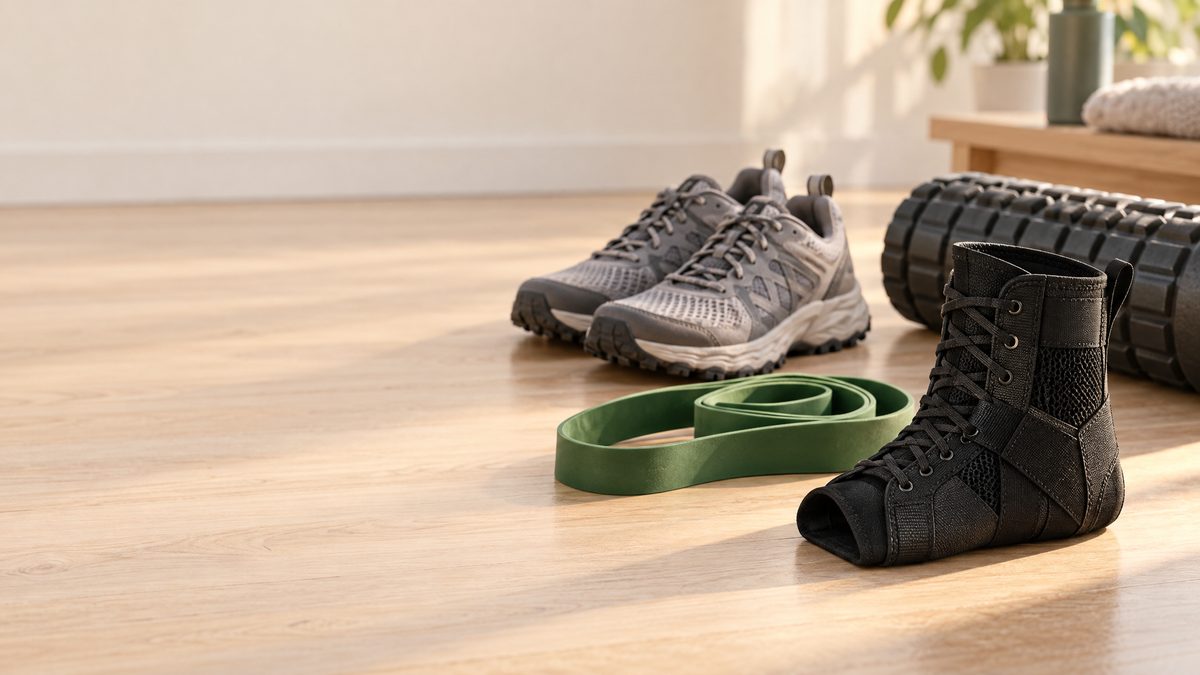
Peroneal Tendonitis Recovery Time: How Long It Takes to Heal
Pain on the outside of the ankle, stage by stage: how long tendonitis lasts, what a tear or a slipping tendon changes, and when you can run again.
The peroneal tendons run down the outside of the lower leg, curve behind the knobby outer ankle bone and attach to the foot. When they are overloaded, the result is an ache behind or just below that bone that gets worse the more you walk, run or jump. It is very treatable, but slow, and easy to mistake for a sprain that will not settle.
ASG Foot & Ankle patient education. Updated October 27, 2026. General information, not a diagnosis.
The short answer
Peroneal tendonitis recovery time is usually about 3 to 4 weeks for a mild flare treated early, and most people improve within about 12 weeks of cutting back the activities that aggravate it and strengthening the tendon. Long-standing cases can take 6 to 9 months. A peroneal tendon tear takes about 1 to 3 months without surgery and at least several months with it, with running usually back somewhere between 3 and 6 months after an operation.
Get It Seen Promptly If
Have the ankle examined rather than waiting it out if:
- •You felt a sudden pop or snap on the outside of the ankle, with severe pain or weakness
- •You can feel a tendon snapping over the outer ankle bone
- •You cannot put weight on the foot, or cannot move the ankle in some direction
- •The ankle is discolored, or hot, swollen and tender
- •The ankle keeps giving way, or you are going over on it more often
- •The pain has not started to improve after about 12 weeks of sensible care
- •You have diabetes or neuropathy and the foot or ankle is swollen and warm, even if it hardly hurts
Pain on the Outside of the Ankle: Is It the Peroneal Tendons?
There are two peroneal tendons. The peroneus brevis attaches to the bump at the base of the fifth metatarsal, on the outer edge of the foot. The peroneus longus runs under the foot to the inner side, near the base of the big toe. Behind the ankle bone they share a sheath and sit in a groove, held in place by a band of tissue called the superior peroneal retinaculum. They steady the ankle, help protect it from sprains, and turn the sole outward.
Where peroneal pain usually sits
- •Above, behind or just below the outer ankle bone, and along the outer side of the heel
- •Worse with walking, running and jumping, easier with rest
- •Sore when you push the foot outward against resistance, or when it is turned inward
- •Sometimes a thickened tendon or a lump that moves with it
These problems are easy to miss. In one series, only 60% of peroneal tendon disorders were correctly diagnosed at the first visit, because the symptoms overlap with sprains, arthritis and fractures. A sprain that is still sore weeks later, especially behind the ankle bone, is worth a second look.
Other causes have their own guides: the ankle sprain recovery timeline for a rolled ankle, a high ankle sprain when the pain is above the ankle joint, and fifth metatarsal fracture recovery when the sore spot is right on that bump on the outer foot. Pain at the back of the heel is a different tendon: Achilles tendonitis recovery.
Tendonitis, Tear or Subluxation?
The same tendons can be irritated, torn or knocked out of their groove, and each recovers differently. They also overlap: untreated tendonitis can progress to a tear, and a tendon that keeps slipping is more likely to tear.
| Tendonitis | Tear | Subluxation | |
|---|---|---|---|
| What is going on | The tendon is irritated and overloaded, often swollen or thickened | A split or tear, most often in the peroneus brevis; partial or complete | The tendons slip out of their groove behind the ankle bone |
| How it feels | Ache behind or below the outer ankle bone, worse with activity, easier with rest | Pain, swelling and weakness; the ankle may feel like it will give out on bumpy ground | Snapping or popping behind the ankle bone, on-and-off pain, a weak or unstable ankle |
| Usual cause | Overuse, or a sprain or fall | A sudden roll of the ankle, or years of wear | A sprain that damages the band holding the tendons, or the shape of the groove |
| First treatment | Less aggravating activity, better shoes, strengthening | Boot or brace for 4 to 8 weeks, then therapy | Cast or boot for 6 weeks after a first episode |
| Typical recovery | 3 to 4 weeks if mild; most within 12 weeks; 6 to 9 months if stubborn | 1 to 3 months without surgery; at least several months with it | About half recur after a cast; surgery protects the tendons for 6 weeks, then rehab |
Diagnosis starts with an examination. X-rays rule out a fracture; ultrasound or MRI shows the tendons, and ultrasound was about 90% accurate for tears in one study. Scans have to match your symptoms, though: one study found peroneal changes on MRI in 35% of people with no ankle pain.
What Causes Peroneal Tendonitis
Usually overuse: small injuries to the tendon building up faster than it can repair them. A sprain or fall can also set it off suddenly.
Overuse
Sports with lots of repeated ankle movement, and sudden increases in standing, walking or running.
Ankle sprains
A rolled ankle can injure the tendons as well as the ligaments.
High arches
A high arch puts extra, long-term load on these tendons. One review reports this foot shape in 82% of surgical cases.
Tight calves and poor footwear
Very flat, hard, flexible or slip-on shoes, and sandals, give the tendons less help.
General health
Age over 40, diabetes, rheumatoid arthritis or gout, extra body weight and smoking all raise the risk.
Certain medicines
Long courses of steroid tablets and fluoroquinolone antibiotics are linked to tendon problems.
Repeated sprains and peroneal problems feed each other: injured tendons protect the ankle less, and a torn or slipping tendon can lead to more sprains and a feeling of instability. If your ankle has rolled several times, the torn ligament guide covers the ligament side.
Peroneal Tendonitis Recovery Time, Stage by Stage
There is no overnight fix. What moves the timeline most is managing the load on the tendon: less of what hurts at first, then a steady build of strength. The usual course without surgery:
Calm It Down
- Cut back whatever flares it, such as running, jumping and long walks; swap in cycling or swimming rather than stopping everything
- Ice wrapped in a damp towel for 10 to 20 minutes, 2 to 3 times a day; skip ice if your feet are numb
- Running-style shoes or hiking boots with a slight heel, not flat, hard or slip-on shoes
Gentle Loading
- Start the early exercises below: heel raises on both feet, a belt push and calf stretches
- Walk as comfort allows; a slight limp at first is common
- For a mild case caught early, pain and swelling often settle within 3 to 4 weeks
Building Strength
- Move on to single-leg heel raises, resistance band work and balance as the early set gets easy
- Most people with peroneal tendinopathy improve within 12 weeks of this kind of plan
- Brisk walking, then a run/walk program, once a 30 minute walk feels fine
The Stubborn Cases
- Long-standing tendinopathy can take 6 to 9 months of focused rehab for a pain-free return to full activity
- Flare-ups along the way are normal, and most settle within 6 weeks
- If symptoms persist beyond about 3 months, a European consensus suggests considering shockwave therapy
When it is not on schedule
If the pain has not started to improve after about 12 weeks, or sooner if the ankle starts giving way, get it re-examined. It may be a tear or a slipping tendon, a high arch that keeps overloading the tendons, or a different problem. Smoking can also slow recovery from problems like this.
Can You Walk With Peroneal Tendonitis?
Usually, yes. For ordinary tendonitis, NHS guidance is to keep putting weight on the foot and keep working if you can, accepting a slight limp at first, and to change activities rather than stop moving. Pain relief that cuts the pain by 30 to 50% counts as a good result if it lets you move more normally.
Usually fine
Everyday walking in supportive shoes, cycling and swimming, and long chores broken into shorter spells.
Cut back for now
Running and jumping, long walks or standing if they bring the pain on, flat shoes and sandals.
A tear, a first subluxation or a severe flare is different: these are often protected in a boot or brace for weeks, so get the diagnosis before trying to walk it off.
Peroneal Tendonitis Exercises: A Simple Progression
Strength, range of motion and balance work are the core of treatment. Move on only when the current set feels easy.
Early: weeks 1 to 4
- 1Two-leg heel raise. Hold a counter, rise slowly onto your toes, then lower. Stop when the ankle feels tired or shaky. Up to 10 times, 3 times a day.
- 2Belt push. Sit with a belt looped around the foot and push the outer edge of the foot out against it. Hold a few seconds. Up to 10 times, 3 times a day.
- 3Calf stretch. Face a wall, sore leg behind you with the heel down and toes turned slightly in, and press your hips toward the wall. Hold 30 seconds, relax 30 seconds, twice. Repeat with the back knee bent.
Later: once the early set is easy
- 1Single-leg heel raise. Lift the good foot and rise on the sore one, still holding on. Up to 10 times, 3 times a day.
- 2Band push outward. With a resistance band around the forefoot, turn the sole slightly outward against it, slowly, in a pain-free range.
- 3Single-leg balance. Stand on the injured leg near something to hold, building up the time as the ankle gets steadier.
Normal, keep going
Muscle soreness afterward, or mild discomfort that settles within 24 hours.
Too much, ease off
Sharp pain, pain that builds as you go, or pain lasting more than 48 hours.
Brace, Boot or Insole?
- •Ankle brace: for a short period, or during running, jumping and other repetitive activity.
- •Insole: an orthotic with a lateral forefoot post can take strain off the tendons. For high arches, Cleveland Clinic advises orthotics only when a clinician recommends them.
- •Walking boot or cast: kept for severe or stubborn cases, typically about 6 weeks. A European expert panel advises avoiding immobilization for plain tendinopathy.
- •For a tear: a boot or brace for 4 to 8 weeks is a common first step.
Shop insole or custom? See custom orthotics vs store insoles.
Cortisone Shot for Peroneal Tendonitis: The Rupture Caution
A steroid injection into the sheath around the tendons can calm stubborn pain, but specialists are divided. A European expert panel could not agree on it, and a 2017 review advises against it because of the risk of tendon rupture. The best peroneal-specific data come from one study of 96 patients given 109 ultrasound-guided sheath injections:
| Finding | Result |
|---|---|
| Relief lasting more than 12 weeks | About 37% of patients |
| Relief lasting a week or less | About 44% of patients |
| Went on to peroneal tendon surgery | 25% |
| Complications | 2 of 109 injections (1.8%): one nerve irritation that settled, one peroneus longus tear that got worse |
The study authors see the shot as one part of a wider nonsurgical plan, not a replacement for strengthening. The European panel does not support platelet-rich plasma (PRP) for lack of evidence, and suggests shockwave therapy when symptoms last beyond about 3 months.
What the first two weeks after a shot feel like, including the extra steps with diabetes, is in cortisone shot in the foot: what to expect after.
Peroneal Tendon Tear Recovery: With and Without Surgery
Tears usually affect the peroneus brevis, often as a lengthwise split. They can follow a sudden roll of the ankle or build up over years, sometimes with an arch that slowly rises. They are also common: cadaver studies find them in 11% to 37% of ankles, and European specialists reserve surgery for tears that cause symptoms.
Without surgery
Typically 4 to 8 weeks in a boot or brace, then physical therapy. Cleveland Clinic puts recovery at about 1 to 3 months, and mild tears are usually given several months before judging whether it has worked.
With surgery
Some weight at about 4 weeks, physical therapy from about 6 weeks, and at least several months to get back to work and sport. One published rehab plan allows running from 12 to 24 weeks.
Results are generally good but not guaranteed. In one series of 71 people after peroneus brevis repair, 76% returned to their pre-injury activities, 62% at their previous level, and 91% would have the operation again.
Peroneal Tendon Subluxation: When the Tendon Snaps Out of Place
Here the tendons slide out of their groove behind the ankle bone, most often after a sprain damages the retinaculum that holds them, sometimes because of the shape of the groove. It feels like a snap or pop behind the outer ankle bone, with on-and-off pain and a weak, unreliable ankle. Up to 40% of acute dislocations are missed at first.
- First episode: a cast, or a boot with a small heel wedge, for 6 weeks, then physical therapy, with about a 50% chance it dislocates again.
- Repeat episodes, or elite athletes: surgery to repair the retinaculum is usually advised, and in athletes the groove is routinely deepened too.
- Why not to ignore it: a tendon that keeps slipping is more likely to tear.
When Surgery Is Considered, and Its Recovery
Most peroneal tendonitis gets better without an operation. Surgery is considered for tendonitis that has not responded to a proper trial of nonsurgical care, severe or stubborn tears, and repeated subluxation. If a high arch keeps overloading the tendons, the heel bone is sometimes realigned too.
| Operation | Protection afterward | Getting going again |
|---|---|---|
| Tendonitis clean-up (removing inflamed lining and damaged tissue) | Short-leg cast; weight usually from about 2 weeks | Movement and strengthening from about 4 to 6 weeks |
| Tear repair (trimming and tubing the tendon) | About 6 weeks protected, typically 3 to 4 of them with no weight | Therapy from about 6 weeks; running from about 12 to 24 weeks |
| Tenodesis (stitching the torn tendon to its partner) | About 7 weeks protected (median across studies) | Return to activity at about 12 weeks in one review |
| Subluxation repair (retinaculum repair, often groove deepening) | 2 weeks no weight in a cast, then 4 weeks walking in a cast or boot | Tendons not loaded until 6 weeks; running guided by strength, not the calendar |
Protocols vary a lot between surgeons, and your own plan comes first. The most common problems afterward are ankle pain, lasting swelling and numbness near the scar; wound infection is possible and a blood clot is rare. For driving in a boot, see when you can drive after foot surgery.
Getting Back to Running
Running is one of the hardest loads for these tendons, so it comes back last, decided by strength and symptoms rather than the calendar. A sensible test first: you can walk briskly for 30 minutes with little or no pain and have built up to single-leg heel raises.
| Week | Each session, 2 to 3 times a week |
|---|---|
| 1 | Jog 1 minute, walk 1 minute, for 30 minutes |
| 2 | Jog 2 minutes, walk 1 minute, for 30 minutes |
| 3 | Jog 4 minutes, walk 1 minute, for 30 minutes |
| 4 | Jog 9 minutes, walk 1 minute, for 30 minutes |
| 5 | Jog 15 minutes, walk 1 minute |
| 6 | Jog 30 minutes continuously |
- Leave 24 hours between runs, and keep up strength work at least twice a week
- After week 6, add no more than about 10% a week, and not time and distance in the same week
- After surgery for a tear, running usually waits until 12 to 24 weeks
Diabetes, Neuropathy and Outer Ankle Pain
Diabetes is a recognized risk factor for peroneal tendon problems. If neuropathy has dulled the feeling in your feet, the pain-guided rules in this guide are less reliable. So:
- •Skip ice on a foot you cannot feel well
- •Check the skin under any brace, boot or insole daily for rubbing, redness or blisters
- •Ask about blood sugar before any steroid injection
- •Get a foot or ankle that turns warm and swollen checked promptly, even if it barely hurts
Why that last point matters is explained in Charcot foot recovery; everyday protection is under diabetic foot care.
Rolled the ankle and the front of it hurts? Ankle Sprain Recovery Timeline →
Tendon pain at the back of the heel instead? Achilles Tendonitis Recovery →
Wondering whether it will come to an operation? When Is Foot Surgery Needed →
Frequently Asked Questions
How long does peroneal tendonitis last?
A mild flare caught early often settles in about 3 to 4 weeks, and Cleveland Clinic says most people recover fully in about a month. Long-standing tendinopathy is slower: most people improve within 12 weeks of a structured plan of easing the load and strengthening, but some need 6 to 9 months. Pain that is not improving by about 12 weeks deserves a re-check for a tear or a slipping tendon.
Can you walk with peroneal tendonitis?
Usually, yes. NHS guidance for ordinary tendonitis is to keep walking and stay active, accepting a slight limp at first, while cutting back on running, long walks and uneven ground if they flare the pain. Supportive shoes with a slight heel help. If you cannot put weight on the foot, felt a pop, or the ankle keeps giving way, get it examined before trying to walk it off.
How long does a peroneal tendon tear take to heal?
Without surgery, Cleveland Clinic puts recovery at about 1 to 3 months, often starting with 4 to 8 weeks in a boot or brace. After surgical repair, people usually put some weight on the foot at about 4 weeks, start physical therapy at about 6 weeks, and need at least several months to get back to work and sport. Running often returns between 3 and 6 months after surgery.
What are the best exercises for peroneal tendonitis?
Start with two-leg heel raises holding a counter, a seated belt push with the outer edge of the foot, and calf stretches against a wall. Once those are easy, progress to single-leg heel raises, resistance band work pushing the foot outward, and balance on the injured leg. Soreness that settles by the next day is fine; pain lasting more than 48 hours means ease off.
Is a cortisone shot safe for peroneal tendonitis?
It helps some people, but it is a cautious option. In one study of 109 ultrasound-guided injections into the peroneal tendon sheath, relief lasted more than 12 weeks in about 37% of patients, and 2 injections (1.8%) had complications, including one tear that got worse. A 2017 review advises against steroid injections here because of the risk of tendon rupture.
What does peroneal tendon subluxation feel like?
Usually a snapping or popping sensation behind the outer ankle bone, with on-and-off pain and an ankle that feels weak or unstable. It can follow a sprain that damages the band holding the tendons in their groove. Get it assessed early: a tendon that keeps slipping is more likely to tear, and about half of first dislocations treated in a cast happen again.
When can I run again with peroneal tendonitis?
When you can walk briskly for 30 minutes with little or no pain and have built up to single-leg heel raises. Start with run/walk intervals, such as 1 minute jogging and 1 minute walking for 30 minutes, 2 to 3 times a week, building over about 6 weeks to 30 minutes of continuous jogging. After surgery for a tear, running usually waits 12 to 24 weeks.
Sources and further reading
- ACFAS FootHealthFacts: Peroneal tendon injuries
- Cleveland Clinic: Peroneal tendonitis
- Cleveland Clinic: Peroneal tendon tear
- NHS Borders: Information about peroneal tendinopathy (patient leaflet)
- Berkshire Healthcare NHS Foundation Trust: Return to running programme
- Peroneal tendon disorders. EFORT Open Reviews (2017)
- The ESSKA-AFAS international consensus statement on peroneal tendon pathologies. Knee Surgery, Sports Traumatology, Arthroscopy (2018)
- Diagnosis and operative treatment of peroneal tendon tears. Foot & Ankle Orthopaedics (2020)
- Rehabilitation after surgical treatment of peroneal tendon tears and ruptures: a systematic review (2016)
- Fram BR et al. Outcomes and complications of peroneal tendon sheath ultrasound-guided corticosteroid injection. Foot & Ankle International (2019)
General patient education. Your examination and individual treatment instructions take priority.
See a Podiatrist Near You
ASG Foot & Ankle has offices in Homewood, South Chicago Heights and Mokena. Our board-certified podiatrists accept most insurance. Find the office closest to you:
Outer Ankle Pain That Is Not Settling?
ASG Foot & Ankle can examine the tendons, tell tendonitis from a tear or a slipping tendon, arrange imaging when needed, fit a brace, boot or insole, and set out a rehab plan, with extra care when diabetes or neuropathy is part of the picture.