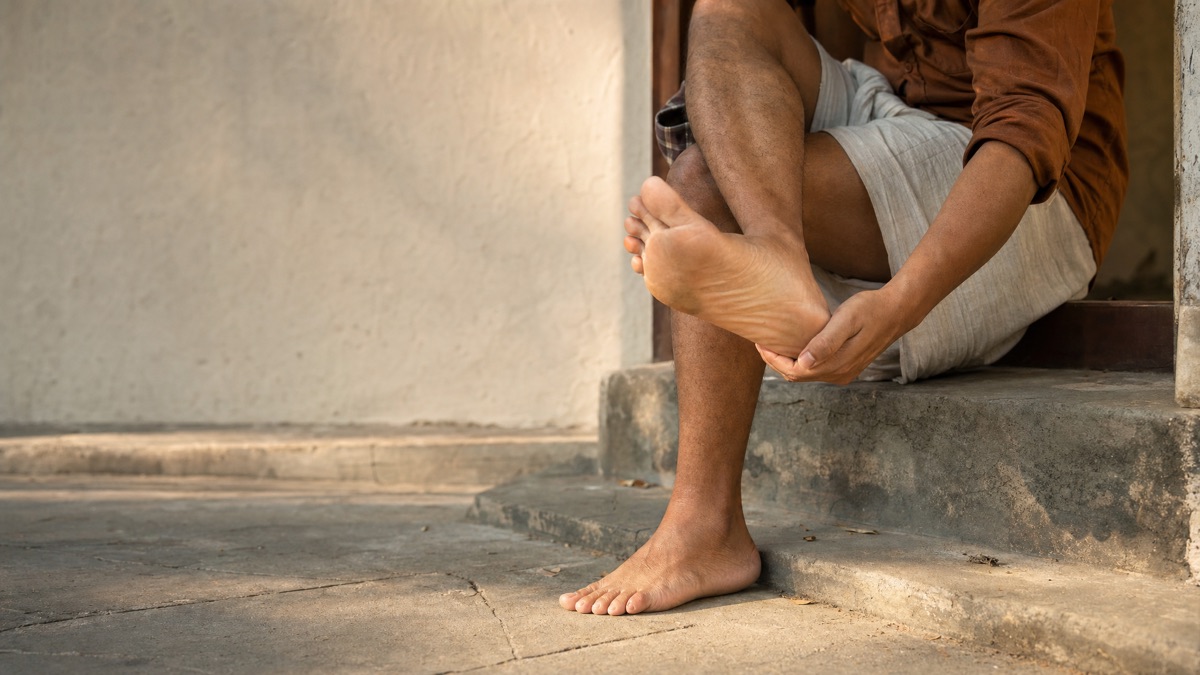
Living With Heel Pain: What to Do First
A practical starting point from our Homewood, Mokena and South Chicago Heights offices
Heel pain rarely starts with an injury you can point to. It usually creeps in. One morning the first step out of bed is sharp, it eases after a few minutes, and you tell yourself you slept on it wrong. Weeks later you are still thinking about your heel every time you stand up.
Most heel pain does settle without surgery and without anything dramatic, provided the right things are done early and done consistently. This page covers what actually helps in the first few weeks, what tends to waste your time, and the specific situations where you should stop self-treating and have the foot examined.
Medically reviewed by Dr. Timothy Horak and Julia Shauger, board-certified podiatric specialists serving Homewood, South Chicago Heights & Mokena. Last reviewed July 2026.
Start by Working Out Where It Hurts
Heel pain is a symptom, not a diagnosis, and the exact spot narrows it down quickly. Press around with your thumb and find the place that reproduces it.
Bottom of the heel
Tender at the inside front of the heel pad, worst with the first steps in the morning and after sitting. This is the classic plantar fasciitis pattern and by far the most common one we see.
Back of the heel
Tender where the Achilles tendon meets the heel bone, often with a bump there and pain from the back of a shoe rubbing. That points to the Achilles rather than the plantar fascia, and the stretching advice is not identical.
All around the heel
Pain when the heel is squeezed from both sides, or pain that is constant rather than worst in the morning, raises the question of a stress fracture or a nerve problem. That combination deserves an exam rather than more home treatment.
Check your calf while you are at it. Sit down, keep your knee straight, and pull your foot up toward your shin. If it barely goes past a right angle, your calf is tight, and a tight calf pulls on the heel with every single step you take. It is the most commonly missed driver of stubborn heel pain.
What Actually Helps in the First Few Weeks
Do these
- Put shoes on indoors. Barefoot on hardwood or tile is the most common reason a heel will not settle. A supportive slipper or sandal counts.
- Stretch the calf several times a day. Short and frequent beats one long session. Do one before your feet hit the floor in the morning.
- Roll a frozen water bottle under the arch. Ten to fifteen minutes in the evening gives both a stretch and cold at once.
- Reduce the aggravating load, not all activity. Cut back the long concrete shifts and the running, keep walking in decent shoes.
Skip these
- Complete rest. Sitting for two weeks stiffens the tissue and the first steps afterward hurt more, not less.
- Buying a fourth pair of gel inserts. If two soft insoles did nothing, a third will not either. The issue is support, not cushioning.
- Living on anti-inflammatories. They can take the edge off for a stretch, but taking them for months hides the problem rather than treating it.
- Aggressive massage of a very sore heel. Firm work on the calf is useful, digging into an acutely painful heel usually is not.
The Four Exercises Worth Your Time
Do these daily. Consistency over weeks matters far more than intensity on any given day, and this is the part patients most often abandon once things start feeling better.
Calf stretch, knee straight
Face a wall, step one foot back, keep that heel flat and the knee straight, lean in until you feel the pull in the upper calf. Hold 30 seconds, three times.
2 to 3 times dailyCalf stretch, knee bent
Same position, but bend the back knee slightly. This targets the deeper soleus muscle, which the straight-knee version misses. Hold 30 seconds, three times.
2 to 3 times dailyPlantar fascia stretch
Sitting, cross the sore foot over the opposite knee and pull the toes back toward the shin until you feel it in the arch. Hold 30 seconds. Do this one before standing up in the morning.
2 to 3 times dailyHeel raises off a step
Stand on a step with the heels off the edge, rise up slowly, then lower slowly below the level of the step. Build strength gradually. Skip this one if it sharply aggravates the heel.
10 to 15 repetitions, once dailyShoes Do More Than You Think
Support beats softness
A shoe you can fold in half offers the arch nothing. Hold the shoe at both ends and twist. If it wrings out like a towel, it is not going to help a painful heel.
A small heel is fine
Completely flat shoes and minimalist trainers put the calf and fascia on maximum stretch. A modest heel of about an inch takes tension off. Tall heels swing it too far the other way.
Old shoes stop working
Athletic shoes lose their support long before the tread looks worn, commonly somewhere around 300 to 500 miles. Work shoes worn on concrete all day wear out faster than you would guess.
What We Add in the Office
Diagnosis first
The first job is confirming what is causing it, because a stress fracture, a nerve entrapment and a thinning heel fat pad all masquerade as plantar fasciitis and none of them respond to the same treatment.
- • Mapping exactly where the tenderness sits
- • Testing calf flexibility and ankle motion
- • Watching how you walk
- • X-ray or ultrasound when the picture does not fit
Treatment we can add
Most patients never need anything beyond good mechanics done properly. When they do, these are the next steps, and we will tell you plainly what each one is likely to do for your foot.
- • Custom orthotics made from an impression of your own foot
- • A night splint to hold the fascia at length overnight
- • A steroid injection to break a severe pain cycle, used sparingly
- • Shockwave therapy for long-standing cases
When to Stop Self-Treating
Home care is a reasonable first move for straightforward heel pain. These situations are not that.
Have it looked at if
- • The pain has not budged after several weeks of consistent effort
- • It is changing how you walk, or the other foot is starting to hurt
- • You have diabetes, neuropathy or circulation problems
- • The pain is constant rather than worst in the morning
- • It is limiting work or the activities that matter to you
Be seen promptly if
- • The pain began suddenly with a pop or a specific injury
- • You cannot put weight on the foot
- • There is redness, warmth, swelling or fever
- • You have numbness, tingling or burning in the foot
- • There is any open sore or break in the skin on the heel
What to Realistically Expect
Heel pain does not usually end abruptly. What improvement looks like is a morning that hurts for five minutes instead of twenty, then a morning you forget to notice. That is the pattern to watch for rather than a day when the pain disappears.
Caught early and worked at consistently, most heel pain improves over weeks to a few months without injections or surgery. Pain that has already run six months or longer generally takes longer, because the tissue itself has changed. We will not give you a timeline before examining your foot, because the honest answer depends on what is driving it.
The most common reason heel pain comes back is stopping the stretching and the supportive shoes as soon as it feels better. Keep going for a good while after you stop thinking about it.
Common Questions
What is the fastest way to relieve heel pain?
Supportive shoes indoors as well as out, calf stretching several times a day, and rolling the arch over a frozen water bottle in the evening. Stopping barefoot walking on hard floors is the single change that most often makes a noticeable difference within the first week or two. None of it is instant, but together it is the fastest honest route.
How long does heel pain usually last?
Caught early and treated consistently, often several weeks to a few months. Pain that has already been present six months or more usually takes months rather than weeks, since the tissue has shifted from inflamed to degenerative. Anyone quoting you a fixed timeline without examining your foot is guessing.
Should I stay off my feet with heel pain?
Complete rest usually is not the answer and tends to leave the tissue stiffer. Keep walking in supportive shoes and cut back what spikes the pain, such as long shifts on concrete, running and barefoot walking at home. If you cannot bear weight at all, that is a different problem and needs examining.
Do heel spurs cause heel pain?
Usually not. Spurs turn up on X-rays of plenty of people with no pain, and plenty of painful heels have no spur at all. The spur is generally the result of long-standing tension on the heel rather than the cause of the pain, which is why removing one is rarely the answer. The soft tissue and a tight calf are the more common culprits.
Related Reading
See a Podiatrist Near You
ASG Foot & Ankle has offices in Homewood, South Chicago Heights and Mokena. Our board-certified podiatrists accept most insurance. Find the office closest to you:
Get Your Heel Examined
If several weeks of stretching and better shoes have not changed anything, the next useful step is finding out exactly what is causing it. We see patients at three offices in Homewood, Mokena and South Chicago Heights, and most major insurance is accepted.