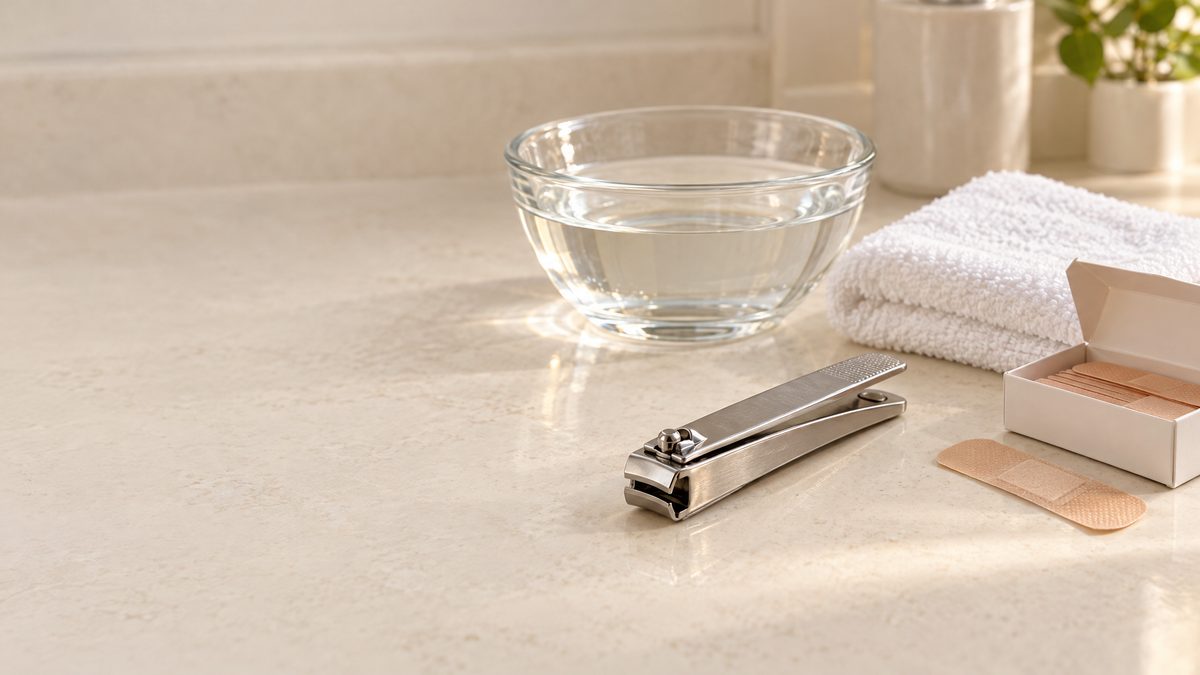
Some soreness for a few days after removing an ingrown toenail at home is common, because the skin fold the nail was pressing into stays inflamed and should ease a little each day. Pain that is not improving after 2 to 3 days or is getting worse, or any pus, spreading redness or red streaks, means the toe needs to be examined, and with diabetes, neuropathy or poor circulation it should be checked now.
If you are reading this with a sore toe and clippers nearby, you are in good company: pulling or cutting out the corner is a very common first move, and it often brings relief for a day or two. Here is how to tell normal soreness from a problem.
ASG Foot & Ankle patient education. Updated October 18, 2026. General information, not a diagnosis.
The short answer
Mild soreness for a few days is common and should be a little better every day. Not improving after 2 to 3 days, getting worse, pus, spreading redness, red streaks or a fever: get it seen. Diabetes, neuropathy or poor circulation: get it checked now. Meanwhile, stop working on the corner, soak and dry it, cover broken skin and wear roomy shoes. Expect the edge to grow back, because a home removal does not touch the nail root.
Get It Seen Promptly If
A sore corner that is easing day by day can usually be watched at home. These change the picture:
- •The pain is not improving after 2 to 3 days, is getting worse, or stays bad even after a pain reliever
- •Pus, or thick, cloudy, yellow or green drainage from the corner
- •Redness or swelling spreading across the toe or onto the foot, or red streaks running up the foot
- •A fever, chills, or feeling hot and shivery
- •Bleeding that will not stop with firm, steady pressure
- •You have diabetes, neuropathy or poor circulation. Stop home treatment and have it checked now: in these conditions a toe infection can become serious, and in severe cases it can spread into the bone
Fever with spreading redness is a same-day problem. For a sign-by-sign comparison, see infection vs. normal healing.
Why It Still Hurts After You Pulled or Cut It Out
Relief right after a home removal is common, because the pressure is off. When pain stays or comes back, it is usually one of these, sometimes more than one at once.
A spike of nail left under the skin
The most common reason. The ingrown edge runs back under the fold toward the root, and clippers usually stop short, leaving a sharp sliver (a spicule) pressing in. Retained pieces cause slow healing and pain, which is why clinicians check the groove for them.
The skin fold is still inflamed
The fold was pressed on for days or weeks and does not calm down instantly. This is the normal kind of soreness, and it should ease a little each day.
Infection got in
Digging breaks the skin, and the corner may already have been infected. Throbbing, warmth, swelling and pus are the signs, and the pain tends to build over a few days rather than ease.
A cut in the fold or nail bed
Clipper and scissor points slip. A small cut stings, may bleed, and needs the same clean, covered care as any other wound.
Pressure from shoes, or a torn edge
A sore fold squeezed in a closed shoe keeps hurting, and so does a jagged edge that snags on socks. Tight, pointed shoes are a main cause of ingrown nails in the first place.
The edge growing back, weeks later
If it settled and then started hurting again weeks later, the edge is likely growing forward into the same fold. The root was never treated, so this is expected.
What If You Pulled Out the Top Half of the Nail?
You most likely removed the visible, free part of the ingrown edge, while the part under the skin fold, connected to the root, is still there. That is why it can feel better for a day and then sore again.
- Leave the remaining nail attached. Pulling or twisting out the rest risks tearing the nail bed and the fold.
- Cover a loose, jagged edge so it does not catch on socks, rather than ripping it off.
- Not settling after 2 to 3 days? The leftover piece is the likely reason, and removing it cleanly takes a numbing injection and proper instruments. The same goes if a nail salon did the pulling.
How to Look After It for the Next Week
The goal is to let the fold calm down, keep broken skin clean, and keep pressure off it. If any warning sign above applies, get it seen instead of waiting it out.
- 1Stop working on it. No more digging, cutting or lifting the corner to check. The American Academy of Dermatology warns against digging out ingrown toenails, especially infected, sore ones.
- 2Soak, then dry. Orthopedic and MedlinePlus guidance suggests warm soaks 3 to 4 times a day if you can; family medicine guidance describes 10 to 20 minutes in warm, soapy water. Warm, not hot. Then pat completely dry and keep the foot dry for the rest of the day.
- 3Cover it with a non-stick dressing. While the skin is broken or weeping, use a clean, non-stick pad, changed daily or when wet or dirty. Antibiotic cream is not required: family medicine guidance reserves antibiotics, by mouth or on the skin, for infection spreading into the surrounding skin.
- 4Give it room. Wide shoes or open-toed sandals with cotton socks, and nothing tight or pointed, until it is comfortable.
- 5Pain relief and elevation. Acetaminophen or ibuprofen as the label directs, if they are safe for you. Ask your doctor or pharmacist first if you have kidney disease, stomach ulcers or heart disease, are pregnant, or take a blood thinner. Raising the foot when you sit eases throbbing.
- 6Look at it every day. You want less red, less sore and drier each day. With reduced feeling in your feet, looking matters more than how it feels.
Skip these
- More "bathroom surgery" with clippers, scissors, blades or tweezers, sterilized or not
- Cutting a V in the middle of the nail: a folk remedy no major guide recommends, since the nail grows forward from the root whatever shape the tip is
- Trimming the rest of the nail short or rounding its corners
- Pulling off nail that is still attached
- Hydrogen peroxide or rubbing alcohol on raw skin, or leftover antibiotics
- Pools, hot tubs and tight shoes while the skin is broken
Normal vs. Not Normal, Day by Day
There is no fixed schedule after a home removal, because nobody knows what was left behind. Judge the trend, and treat this as a guide, not a deadline.
| When | Usually normal | Not normal: get it checked |
|---|---|---|
| Day 1 to 2 | Soreness and throbbing at the corner, worse with the foot down; a little bleeding that stops with pressure; redness along the edge of the fold | Bleeding that will not stop with firm pressure; severe pain; pus |
| Day 2 to 3 | Soreness starting to ease; redness staying in a narrow band at the fold; a little thin, clear or pale yellow fluid | No improvement, or worse than day 1; swelling spreading into the toe |
| Day 4 to 7 | Tender mainly when pressed or in a closed shoe; the corner drying and looking calmer | Pain that eased and came back; thick or cloudy drainage; redness spreading onto the toe or foot; red streaks; fever or chills |
| Week 2 | Comfortable in roomy shoes; corner mostly dry; slight tenderness if bumped | Still sore every day; still weeping; a red, raised lump at the corner that bleeds easily |
| Weeks to months later | The nail edge growing forward past the fold without pressing into it | The same corner turning sharp, red and sore again as the edge regrows |
After a clean partial removal in a clinic, family medicine guidance notes a little sterile drainage for 2 to 3 weeks; a home removal can run quite differently. Seeing yellow fluid at the corner or a red, bleeding lump of granulation tissue? Those guides explain each one.
Still Hurts After a Week or Two?
At one week, a corner still tender in shoes but clearly better than on day two is within the normal range. One that is as sore as at the start, keeps weeping, or flares in every shoe usually has something still pressing on it: a leftover spike, a low-grade infection, or overgrown tissue.
Soaks help the skin but cannot remove a piece of nail, and another attempt at home means more broken skin. A podiatrist can look under the fold and deal with the cause in one visit.
Why It Often Comes Back
A nail is made by the matrix, a band of nail-producing cells under the skin at the base of the nail. A home removal takes some of the nail plate and leaves the matrix exactly as it was, so the edge grows back into the same fold.
MedlinePlus notes the problem is likely to return without good foot care, and cutting a corner out leaves that side short and rounded, the trimming pattern most linked to ingrown nails. Prevention comes down to a few habits:
Trimming
- Cut straight across with clean, sharp clippers
- Do not taper or round the corners into the fold
- Leave nails no shorter than the end of the toe
- Do not pick or tear at the corners
Shoes and feet
- Shoes and socks with room for your toes
- Feet kept clean and dry
- Toes protected from stubbing and being stepped on
- With diabetes, routine foot exams and professional nail care
When the regrowing edge feels sharp or sore, book a quick visit rather than reaching for the clippers, and if the corner has been ingrown before, ask about the permanent option. For timing, see the toenail regrowth timeline.
What a Podiatrist Does Instead
The office procedure is quick, and it differs from a home removal in exactly the details that cause trouble. The toe is numbed first with a local anesthetic injection at its base, called a digital block (how that feels is in the toenail removal pain timeline). For a nail that has been ingrown before, phenol can be applied to the matrix under the removed strip so it stops making nail there, an approach family medicine reviews report succeeds more than 95 percent of the time.
| Step | Home removal | Removal by a podiatrist |
|---|---|---|
| Numbing | None | A local anesthetic injection at the base of the toe |
| Nail removed | Whatever can be reached, usually the tip | The full ingrown strip, back to the base of the nail |
| Leftover spike | Often left, because the buried end is out of reach | The groove is checked so no fragment is left |
| Nail root | Untouched, so the edge regrows | Left alone for a first episode, or treated with phenol so that strip stops regrowing |
| Infection | Up to you to spot | Assessed and drained if needed; antibiotics only when indicated |
Recovery after the office procedure has its own timeline, covered in ingrown toenail removal recovery, phenol matrixectomy recovery and partial vs. total nail avulsion.
Had it done in a clinic, not at home? Bandage, soaking and healing stages. Ingrown Toenail Removal Recovery →
Worried it is infected? Drainage, redness, pain and odor, sign by sign. Infection After Toenail Removal →
A red lump that bleeds easily? Granulation Tissue After an Ingrown Toenail →
Did cost make the clippers look appealing? How to get a number in advance. How Much Does Toenail Removal Cost? →
Frequently Asked Questions
Why does my toe hurt after removing an ingrown toenail at home?
Usually because the skin fold is still inflamed, a spike of nail is still buried under it, or infection has started in the broken skin. Inflammation is the normal kind and eases a little every day. Pain that is not better after 2 to 3 days, is getting worse, or comes with pus, spreading redness or red streaks should be examined. With diabetes, neuropathy or poor circulation, get it checked now.
I cut my ingrown toenail and it still hurts. What does that mean?
Most often the cut did not reach the end of the ingrown edge, which runs under the skin fold toward the root, so a sharp sliver is still pressing in. Soaks help the skin but cannot remove that piece. If the corner is not clearly settling after 2 to 3 days, a podiatrist can numb the toe and take the remaining edge out cleanly.
What if I pulled out the top half of my ingrown toenail?
Then the hidden half is likely still in place, along with the root that keeps making nail. Leave the remaining nail attached rather than pulling out the rest, which risks tearing the nail bed. Cover any jagged edge and keep the toe clean and dry. If it is still sore after 2 to 3 days, or shows pus or spreading redness, have the rest removed properly.
What should I do after removing an ingrown toenail at home?
Stop working on the corner. Soak it in warm water 3 to 4 times a day if you can, dry it thoroughly, cover broken skin with a non-stick dressing, and wear wide or open shoes. Acetaminophen or ibuprofen can help, as the label directs if safe for you. If it is not improving after 2 to 3 days, or you have diabetes, neuropathy or poor circulation, have it examined.
If I cut my ingrown toenail, will it grow back?
Yes. A home removal leaves the nail root, the matrix, untouched, so the edge grows forward again over the following months, often into the same fold. Cutting straight across, not too short, and without rounding the corners lowers the odds of a repeat. For a corner that keeps coming back, a podiatrist can treat the root with phenol, which family medicine reviews report succeeds in more than 95 percent of cases.
I pulled out my ingrown toenail and now it is infected. What should I do?
Have it examined rather than waiting, and do not dig at it again. A podiatrist can drain it, remove any leftover edge and decide whether you need antibiotics; do not start leftover pills. Go the same day, or to urgent care, for fever, chills, red streaks or quickly spreading redness, and treat any change as urgent with diabetes or poor circulation. The same applies if a nail salon did the removal.
Can I just pull it out again if it comes back?
It is better not to. Each home removal leaves the root untouched, often leaves a spike behind, and breaks already irritated skin. The American Academy of Dermatology advises against digging out ingrown toenails, and MedlinePlus against cutting out the ingrown part yourself. A sore regrowing edge caught early is a quick office visit.
Sources and further reading
- NHS: Ingrown toenail
- AAOS OrthoInfo: Ingrown toenail
- MedlinePlus: Ingrown toenail
- MedlinePlus: Ingrown toenail removal, discharge
- American Family Physician (AAFP): Ingrown toenail management
- American Academy of Dermatology: Tips for healthy nails
General patient education. Your examination and individual treatment instructions take priority.
See a Podiatrist Near You
ASG Foot & Ankle has offices in Homewood, South Chicago Heights and Mokena. Our board-certified podiatrists accept most insurance. Find the office closest to you:
Corner Still Sore After a Home Removal?
One visit usually finds the reason: a spike left under the skin, an infection, or an edge already growing back. ASG Foot & Ankle can examine the toe, numb it before doing anything, remove what is left cleanly, treat infection, and talk through a permanent option if the same corner keeps coming back.