Is My Toe Infected After Toenail Removal? Infection vs. Normal Healing
Yellow drainage, redness, and a bit of odor are usually normal. Here is how a podiatrist tells the difference, sign by sign, and exactly when to stop waiting and call.
A few days after a toenail removal, you take off the dressing and find a wet, yellowish, faintly smelly toe. It is genuinely hard not to panic. Most people at that moment have never seen an open nail bed before, and everything about it looks like infection.
In reality, the great majority of these toes are healing exactly as they should. True infection after a nail procedure is uncommon, and it does not actually look much like normal healing once you know what separates them. The trick is that no single sign settles it. Drainage alone means nothing. Redness alone means nothing. What matters is the combination, and above all the direction things are moving. This guide from the podiatrists at ASG Foot & Ankle goes through it sign by sign.
Medically reviewed by Dr. Timothy Horak and Julia Shauger, board-certified podiatric specialists serving Homewood, South Chicago Heights & Mokena. Last reviewed July 2026.
Get seen the same day if you have any of these
- •Fever or chills
- •Red streaks running up the foot or leg
- •Redness spreading noticeably over a few hours
- •Severe or rapidly worsening pain
- •Any meaningful change if you have diabetes, poor circulation, or a weakened immune system
Otherwise, read on. Most toes that look alarming on day 4 are fine.
The one-line version
Normal healing gets better every day. Infection gets worse, and it usually starts between day 3 and day 7. Thin yellow drainage, a yellow-white film on the nail bed, and a thin rim of pink at the wound edge are all normal. Thick green or gray pus, redness spreading out onto the toe, pain that is climbing after day 3, and any fever are not.
Sign by Sign: Normal vs. Infected
Normal healing
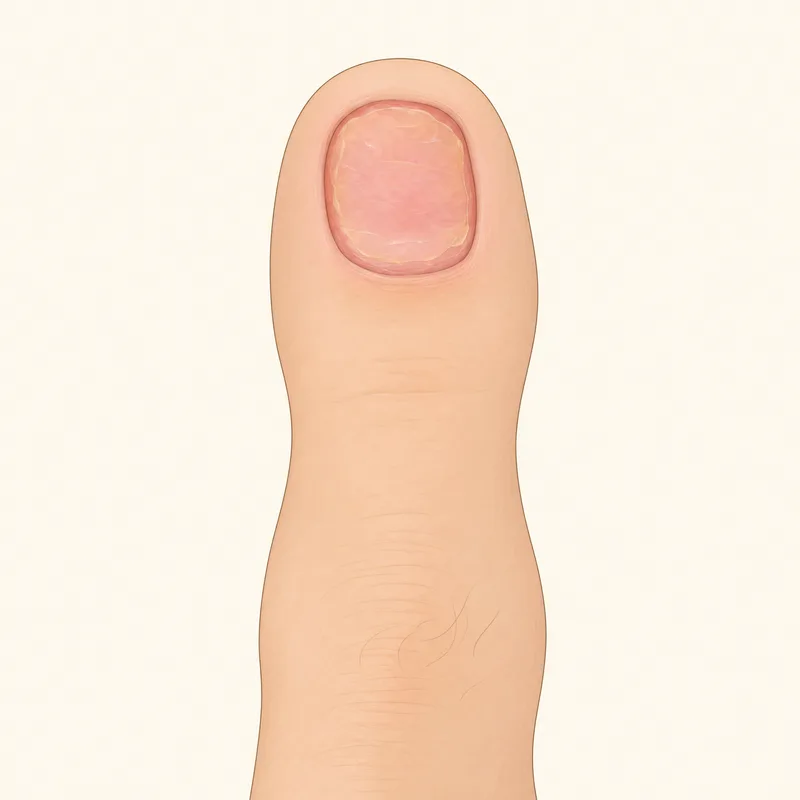
Thin, clear, straw-colored, or lightly blood-tinged. A soft yellow-white film on the nail bed is healing tissue, not pus. Common for weeks after phenol.
Suspicious for infection
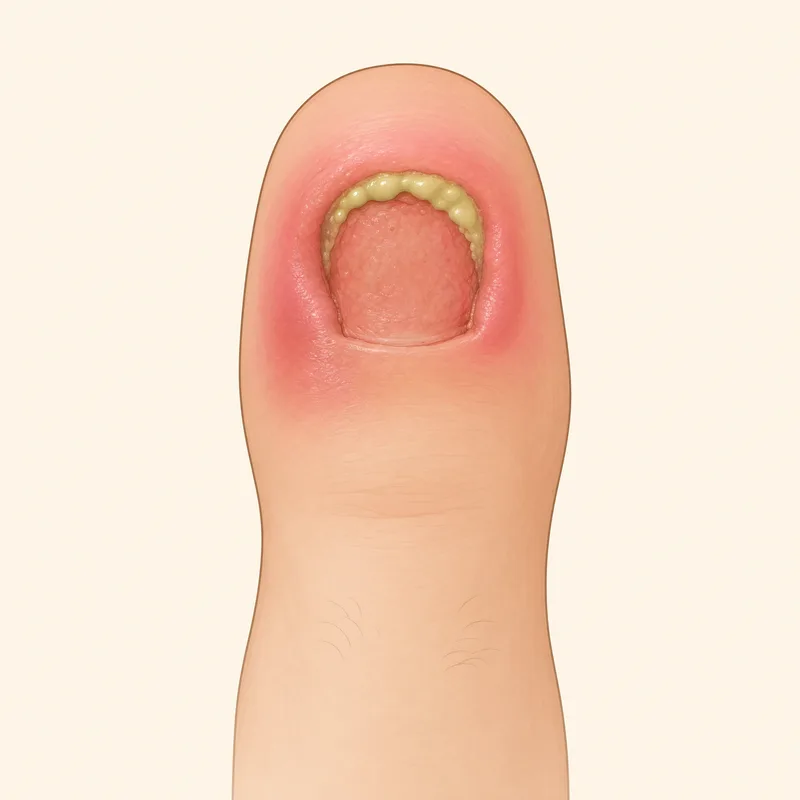
Thick and opaque, green, gray, or brown. Increasing in volume after the first week rather than tapering off.
Normal healing
Peaks the first evening, then decreases a little every day. Sore only with pressure by day 4 or 5.
Suspicious for infection
Increasing after day 3, or gone and then returning. Throbbing that no longer improves when you elevate the foot.
Normal healing
A few millimeters of pink at the wound edge, stable or shrinking over time.
Suspicious for infection
Spreading out onto the toe or foot, warm to the touch, and visibly larger than it was yesterday.
Normal healing
Mild puffiness of the toe tip in the first few days, better with elevation.
Suspicious for infection
The whole toe becomes tense, shiny, and sausage-like, and elevation does not help much.
Normal healing
Faint or slightly musty when the dressing comes off, and gone after a soak.
Suspicious for infection
Foul or sour, noticeable from a distance, and returns quickly after cleaning.
Normal healing
None. You feel completely well.
Suspicious for infection
Fever, chills, feeling generally unwell, or red streaks running up the foot or leg.
Why the Yellow Stuff Is Usually Not Pus
 Illustration
 Illustration
An open nail bed is a wound without skin over it. Wounds like that weep. The fluid is serum, the clear part of blood, and as it dries on the surface it forms a soft yellow-white layer of fibrin and healing tissue. It can look thick and unpleasant, and it is a normal part of a wound rebuilding itself.
The confusion is much worse after a phenol matrixectomy, the chemical treatment used to stop a recurring ingrown nail from growing back. Phenol deliberately creates a controlled chemical burn at the nail root, and burns drain. Patients routinely soak through a bandage every day for two to four weeks, and sometimes six, and it is all completely expected. Our phenol matrixectomy guide covers that drainage in detail →
Real pus is different in character rather than just in amount. It is opaque and thick, it tends toward green, gray, or brown rather than pale yellow, it smells clearly foul, and it comes with a toe that hurts more than it did yesterday.
A Four-Step Self-Check You Can Do Tonight
Mark the redness
Draw a pen line around the edge of the red area. Check in 6 hours and again tomorrow. Advancing past the line means call.
Rate the pain
Score it 0 to 10 morning and night. Any two-day upward trend after day 3 is the single most reliable warning sign.
Take the temperature
A real fever moves this from a wait-and-watch situation to a same-day visit.
Photograph daily
Same light, same angle. Memory is unreliable over four days; photos are not, and they help your podiatrist too.
Home Care That Makes Things Worse
Avoid
- •Hydrogen peroxide and rubbing alcohol, which kill the new cells rebuilding the wound
- •Leaving a wet or soaked dressing on all day
- •Picking at the yellow film or the wound edges
- •Leftover antibiotics from a previous illness
- •Tight shoes, and public pools or hot tubs until the wound is closed
Do Instead
- •Daily warm water soak for 10 to 15 minutes, plain water is fine
- •Pat completely dry, including between the toes
- •Thin layer of antibiotic ointment, then a clean non-stick dressing
- •Change the dressing whenever it becomes wet, not just once a day
- •Keep the foot elevated when you are sitting
If You Have Diabetes or Poor Circulation, Change the Rules
Everything above assumes a healthy foot with normal sensation and normal blood flow. If you have diabetes, peripheral neuropathy, or peripheral artery disease, the usual warning system is not reliable. Reduced sensation means an infected toe may feel only mildly sore, and reduced blood flow means both healing and antibiotics work less well. A small nail bed wound is one of the most common starting points for a serious diabetic foot infection.
In those situations, do not run the four-day self-check. Call at the first change, and inspect the toe visually every day rather than going by how it feels. Diabetic foot and wound care at ASG →
Want the normal baseline to compare against? Here is what the toe should look like at each stage. Toenail Removal Recovery Timeline →
Mostly worried about the pain? See how much and how long is normal. Toenail Removal Pain Timeline →
Worried it has spread beyond the toe? Know the whole-body warning signs. Sepsis From a Foot Infection →
Frequently Asked Questions
Is yellow drainage after toenail removal a sign of infection?
Usually not. Thin, clear-to-yellow fluid and a soft yellowish film over the nail bed are normal healing tissue, not pus. This is especially expected after a phenol matrixectomy, where drainage commonly continues for 2 to 6 weeks. Infected drainage looks and behaves differently: it is thick and opaque, often green or gray-brown, it smells foul rather than faintly musty, and it comes with pain and redness that are increasing rather than settling.
How soon after toenail removal would an infection show up?
Most post-procedure infections appear on day 3 through day 7. That timing is a useful clue. Discomfort, redness, and drainage on day 1 and day 2 are almost always the normal inflammatory response to the procedure itself. Symptoms that start fresh, or that improve and then clearly worsen, in the middle of the first or second week are the pattern that suggests infection.
How much redness is normal after toenail removal?
A thin rim of pink or red skin right at the edge of the wound, a few millimeters wide, is normal and can persist for a couple of weeks. Redness that spreads beyond the nail fold and out onto the body of the toe or the foot is not. A practical home test is to draw a line around the edge of the redness with a pen and check it several hours later. Redness that has advanced past your line needs to be seen.
What should I do if I think my toe is infected after nail removal?
Call your podiatrist and describe the changes rather than waiting for your next scheduled visit. Take a clear, well-lit photo each day so the trend is documented. Keep doing your normal soaks and dressing changes in the meantime, and do not start leftover antibiotics from a previous illness, because partial or wrong treatment makes the infection harder to identify and treat. Go the same day, or to urgent care, if you have fever, chills, red streaking up the foot, or spreading redness.
Should I use hydrogen peroxide or rubbing alcohol on the toe?
No. Both damage the new cells that are trying to rebuild the wound surface, so repeated use slows healing rather than preventing infection. Plain warm water soaks, thorough drying, a thin layer of antibiotic ointment, and a clean dressing do a better job. The other common mistake is leaving a damp dressing on all day, which softens the surrounding skin and encourages exactly the infection you are trying to avoid.
When is an infected toe an emergency?
Seek care the same day for fever or chills, red streaks running up the foot or leg, redness spreading quickly over hours, severe or rapidly increasing pain, or any significant change in a person with diabetes, peripheral artery disease, or a weakened immune system. In those higher-risk groups a toe infection can move into the deeper tissue and bone faster than most people expect, and early treatment is what prevents that.
Specialized Wound Care at ASG Foot & Ankle
Our board-certified podiatrists treat slow-healing wounds, diabetic foot ulcers, and post-surgical wounds at our three clinics in Homewood, South Chicago Heights, and Mokena.
Worried what a second visit will cost? How Much Does Toenail Removal Cost? →
See a Podiatrist Near You
ASG Foot & Ankle has offices in Homewood, South Chicago Heights and Mokena. Our board-certified podiatrists accept most insurance. Find the office closest to you:
Not Sure? Have It Looked At.
A toe infection caught on day 4 is a simple problem. Caught on day 10 it often is not. Our board-certified podiatrists can evaluate the toe at any of our South Chicago suburbs locations, usually the same week.