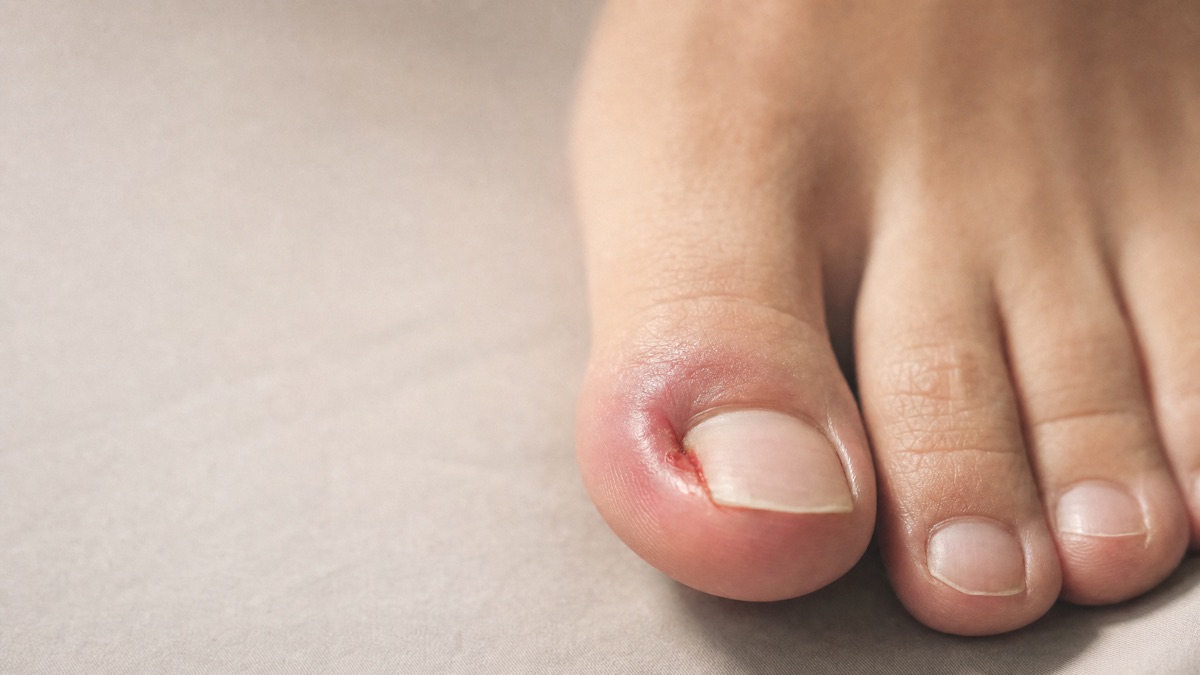
Ingrown Toenail Surgery: Is It Right for You?
What the procedure involves, at our Homewood, Mokena and South Chicago Heights offices
Most people who come in for an ingrown toenail have already tried to handle it themselves. They soaked it, they dug at the corner, they cut a notch in the middle of the nail because someone told them that helps. It did not help. By the time the toe is red, swollen and throbbing when a bedsheet touches it, the question is no longer whether to treat it but how.
The word surgery makes this sound bigger than it is. An ingrown toenail procedure is done in an exam chair with a local anesthetic, takes about fifteen minutes, and you walk out afterward. What follows is how we decide whether you need one, which version of the procedure fits your toe, and what the weeks after actually look like.
Medically reviewed by Dr. Timothy Horak and Julia Shauger, board-certified podiatric specialists serving Homewood, South Chicago Heights & Mokena. Last reviewed July 2026.
When a Procedure Is Actually the Right Call
A first-time ingrown toenail that is only mildly sore can often be managed without a procedure. A toe that keeps getting infected, or one that has been ingrown for months, usually will not settle until the offending strip of nail is removed. The nail edge is acting like a splinter under the skin. Antibiotics treat the infection around the splinter, not the splinter.
Reasons we recommend a procedure
- The same toe has gone ingrown more than once
- Infection that comes back as soon as the antibiotics finish
- Pain that changes how you walk or what shoes you can wear
- Puffy red tissue building at the nail edge, called granulation tissue
- Diabetes or poor circulation, where an ingrown toe is a wound risk and we act sooner
Worth trying first for a mild case
- Warm soaks and clean, dry dressings
- Cutting nails straight across, not curved down at the corners
- Shoes with real room at the front, since narrow toe boxes drive this
- Having a podiatrist trim the border properly rather than doing bathroom surgery
One thing to stop doing. Cutting a V-shaped notch in the center of the nail does nothing. The nail grows forward as a sheet, so a notch in the middle does not pull the edges in. Digging at the corner with clippers usually leaves a spike of nail behind, which is why the toe feels better for a week and then gets worse.
The Procedures We Use
Partial nail avulsion
This is what most patients have. The toe is numbed at its base, and only the narrow ingrown strip along one side is removed, all the way back to the root. The rest of the nail is left alone. Looking at the toe afterward, most people are surprised how little is missing.
What happens
- • Local anesthetic block at the base of the toe
- • The ingrown border is lifted out in one strip
- • Roughly fifteen minutes in the chair
- • Dressing applied, you walk out
Worth knowing
- • Relief from the pressure is usually immediate
- • Without matrix treatment, that strip regrows
- • If it has been ingrown before, it may go ingrown again
Partial avulsion with matrixectomy
For a nail that has gone ingrown repeatedly, removing the border alone tends to buy time rather than solve the problem. In that situation we also treat the small section of nail root, the matrix, that produces the offending strip, most often with phenol applied for a controlled period. That strip is then meant not to grow back.
Why we suggest it
- • Aimed at ending a repeating cycle, not just this flare
- • Same visit, same anesthetic, only slightly longer
- • The nail ends up permanently a bit narrower
The tradeoff
- • The site drains clear fluid for two to three weeks
- • The permanent change is not reversible
- • A small number of nails still regrow a spicule of nail
Total nail avulsion
Removing the whole nail is uncommon and we do not reach for it casually. It is reserved for nails that are severely thickened or deformed, badly infected across the whole nail, or ingrown on both borders at once. A full nail takes many months to grow back, so we would rather take the border than the whole plate whenever that will do the job.
- • Considered when both sides are involved or the nail is grossly deformed
- • Regrowth of a full toenail is measured in months, not weeks
- • The nail that grows back is sometimes thicker or irregular
What the Appointment Is Like
The day of
- Numbing first: two small injections at the base of the toe. This is the part that stings, and it is over in under a minute.
- You stay awake: no sedation, no fasting, no IV. You can look away or watch, whichever you prefer.
- Short: the procedure itself is usually done in about fifteen minutes.
- Bring a roomy shoe: the dressing is bulky, so a sandal or an old sneaker is easier than a dress shoe.
The first week
- When it wears off: expect throbbing for the first evening. Elevating the foot helps more than most people expect.
- Pain control: over-the-counter medication is enough for most patients. Tell us if it is not.
- Soaks and dressing changes: we send you home with written instructions and you follow them daily.
- Follow up: we look at the toe again to confirm it is healing the way it should.
Risks Worth Knowing About
This is a small procedure, but it is still a procedure, and you should hear the downsides before you agree to it rather than after.
Common and expected
- • Soreness and swelling for a few days
- • Clear drainage for two to three weeks after phenol
- • A period where closed shoes are uncomfortable
- • A permanently narrower nail if the matrix was treated
Less common
- • Infection at the site, which we treat if it happens
- • Regrowth of a spike of nail requiring a second visit
- • Bleeding beyond the first day
- • Slower healing if you have diabetes or reduced circulation
What to Realistically Expect
The pressure pain from the nail edge is usually gone the moment the border is out, and that part is genuinely dramatic. What takes longer is the tissue at the nail fold settling down. Give it a few weeks before judging the result, and longer if the matrix was treated, because the drainage phase looks worse than it is.
We will not tell you a nail will never go ingrown again. Matrixectomy is done specifically to make recurrence unlikely, and for most patients that holds, but nails are living tissue and a small number regrow a spicule that needs a second, quicker visit. If that happens it is not a failure of the procedure, it is a known outcome we can fix.
If you have diabetes, neuropathy or poor circulation, treat an ingrown toenail as more urgent, not less. What is a nuisance in a healthy foot can become an open wound in a compromised one, and that is a much bigger problem than the nail.
Common Questions
Does ingrown toenail surgery hurt?
The numbing injection is the part patients notice. It stings for under a minute. After that the toe is fully numb and the procedure itself should not hurt. Once the anesthetic wears off later that day, most people describe soreness rather than pain, and over-the-counter medication handles it.
How long does it take to heal after ingrown toenail surgery?
Soreness generally settles within a few days. The nail border takes a few weeks to close over, and when phenol is used the area drains clear fluid for two to three weeks, which is expected rather than a sign of infection. Healing runs slower if you have diabetes or reduced circulation, so we follow those patients more closely.
Will my toenail grow back after ingrown toenail removal?
It depends which procedure you have. Remove the border only and that strip grows back over several months, along with the chance of the problem returning. Treat the matrix under that border and the strip is meant not to return, leaving the nail permanently a little narrower. We tell you which we are doing, and why, before we start.
Can I walk or go to work after ingrown toenail surgery?
You walk out the same day. Most people with desk jobs are back the next day in a roomy or open-toed shoe. If you are on your feet all day, plan on taking it easy for a couple of days. Running and sports usually wait one to two weeks, depending on how the toe looks at follow-up.
Related Reading
See a Podiatrist Near You
ASG Foot & Ankle has offices in Homewood, South Chicago Heights and Mokena. Our board-certified podiatrists accept most insurance. Find the office closest to you:
Get the Toe Looked At
If a toenail has been ingrown more than once, or the toe is red and draining now, it is worth having it examined rather than working on it yourself. We see patients at three offices in Homewood, Mokena and South Chicago Heights, and most major insurance is accepted.