How Long After Toenail Removal Can I Wear Shoes, Walk, Shower or Swim?
The one thing nobody covers at the appointment: when you can actually get back to shoes, socks, work, the pool and the gym. Here is the timetable, activity by activity.
Nobody leaves a toenail removal worrying about the toe in the abstract. They leave worrying about Monday. Whether they can get a work shoe on, whether they have to cancel the trip, whether the pool on Saturday is out of the question, whether they need to tell their boss anything.
The good news is that this procedure restricts far less than people assume. You can walk out of the office and keep walking. What actually needs managing is pressure on the toe and water sitting against an open wound, and those two things are what every timing rule below comes down to. This guide from the podiatrists at ASG Foot & Ankle gives you the timetable activity by activity, plus the signs that you have pushed it too early.
Medically reviewed by Dr. Timothy Horak and Julia Shauger, board-certified podiatric specialists serving Homewood, South Chicago Heights & Mokena. Last reviewed August 2026.
The short answer
Walk immediately. Shower from day 2. Loose socks from day 2 to 3. A wide sneaker with the laces slack around day 5 to 7, and normal closed shoes by week 2. Running and sports at about 2 weeks. Swimming, baths and hot tubs only once the site has closed and stopped draining, which is roughly 2 weeks after a simple removal and can be 4 to 6 weeks if phenol was used on the nail root. Everything on that list moves earlier or later based on one test: does it press on the toe, and does it hold water against it?
The Activity Timetable
Walking around the house
ImmediatelyWalk on the heel or outer foot for a day or two. No crutches or rest period needed.
Driving
Same day, usuallyOnly if it is not your braking foot, or if the toe is comfortable enough to brake hard without hesitating.
Desk work
Next dayProp the foot up under the desk. Many patients go back the same afternoon.
Showering
Day 2Original dressing stays dry for 24 hours. After that, shower, dry fully, re-dress.
Salt or Epsom soaks
Day 210 to 15 minutes once or twice a day. This is prescribed, not just permitted.
Socks
Day 2 to 3Loose cotton over the dressing is fine. Compression socks and tight athletic socks are not.
Standing or walking job
Day 2 to 3In a roomy shoe, with the foot elevated on breaks. Expect more throbbing that first shift.
Wide sneakers, laces loose
Day 5 to 7The first closed shoe should be the roomiest one you own, worn for short stretches at first.
Normal closed shoes
Week 2If it presses on the toe, it is too early, no matter what week it is.
Running, sports, jumping
About 2 weeksImpact on an exposed nail bed causes bleeding and sets healing back a week.
Swimming, baths, hot tubs
2 weeks, or once dryNot until the site has closed and stopped draining. After phenol this can be 4 to 6 weeks.
Steel-toe or safety boots
1 to 3 weeksThe rigid cap sits exactly where the toe is tender. Ask about a temporary work note.
These are typical timings after a routine nail avulsion or ingrown toenail procedure in an otherwise healthy adult. Your podiatrist's specific instructions always win over a general timetable, and patients with diabetes, neuropathy, or poor circulation should expect a more conservative schedule.
Your dates: enter the procedure date
Enter the date and get what is normal for today, what is next, and what to watch for.
Shoes: The One Most People Get Wrong
Shoes are the single most common reason a toe that was healing fine suddenly hurts again on day 6.
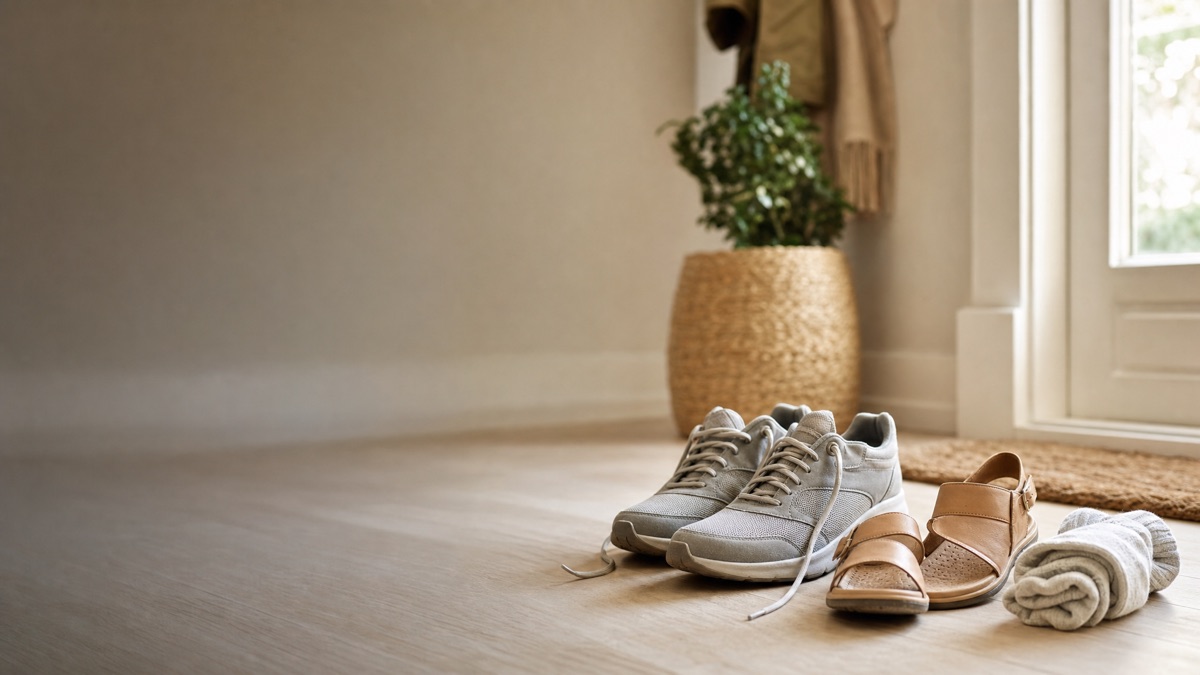
For the first few days, wear the most open thing you own. A surgical shoe if you were given one, or a sandal, a slide, or a wide slipper. From roughly day 5 to 7 most patients can get into a sneaker if they leave the laces slack across the forefoot and start with an hour or two rather than a full day. By week 2 a normal closed shoe is usually comfortable.
What stays off the list longer: pointed or narrow dress shoes, anything with a stiff toe box, heels that push the foot forward into the front of the shoe, and steel-toe or composite-toe safety boots. The protective cap in a work boot sits exactly over the healing nail bed, which is why boots are often the last thing to become comfortable and sometimes take 3 weeks.
If you have to be in a real shoe before the toe is ready, the practical trick is to cut a small relief window in an old sneaker, or to buy one size up temporarily. It is less drastic than it sounds and it is a lot cheaper than a week of setbacks.
Water: Showering, Soaking and Swimming Are Three Different Things
Showering
Fine from day 2. Water runs over the toe and drains away, so contact time is short. Do not scrub the site, dry it thoroughly afterward, and put a clean dressing on right away.
Soaking
Encouraged from day 2. Ten to fifteen minutes of warm salt or Epsom water, once or twice a day, in a clean basin. It loosens the old dressing and keeps the nail fold clean. Longer is not better.
Submerging
Pools, hot tubs, baths, lakes and the ocean wait until the site is closed and dry. Hot tubs are the riskiest: warm standing water is where pseudomonas and other organisms thrive.
The distinction that matters is contact time with an open wound, not whether the toe gets wet. Two minutes of shower water is nothing. Thirty minutes in a hot tub with an open nail groove is a genuine infection risk, and it is the version of this question we get asked about most in the summer.
Work, the Gym, and How Much Is Too Much
For work, the deciding factor is the shoe and the hours on your feet, not the procedure itself. Desk work needs no time off. Retail, nursing, teaching, warehouse and trade work are usually fine within 2 to 3 days in a roomy shoe, with the caveat that the first full shift will throb more than a day at home would. If your job requires safety boots, plan for about a week and ask for a note at the appointment rather than after it.
For exercise, split it by impact. Upper-body lifting, seated machines, and stationary cycling in a stiff-soled shoe are generally fine within a few days. Running, basketball, tennis, hiking, and anything that repeatedly loads the front of the foot should wait about 2 weeks, because the impact drives blood back into a nail bed that has not resurfaced yet. Lap swimming waits on the wound closing, not on the pain.
Yoga and barefoot studio classes are worth a specific mention: shared floors plus a bare, healing toe is a bad combination for the first couple of weeks even though the activity itself is gentle.
Signs You Went Too Far, Too Fast
Back Off for a Few Days
- •Fresh pink staining on the dressing after a long day standing
- •Throbbing that returns in the evening after being fine all week
- •The toe is more swollen at night than it was the night before
- •Soreness right after a closed shoe that eases once you take it off
Call Your Podiatrist If…
- •Pain is increasing day over day rather than decreasing
- •Drainage turns thick, yellow-green, or foul smelling
- •Redness spreads beyond the nail fold or streaks up the foot
- •Actual bleeding rather than spotting after activity
- •You have diabetes or neuropathy and anything has changed
Most day-6 setbacks are mechanical, not infectious. A shoe pressed on the toe, or a shift on your feet pushed blood into a wound that was nearly closed. Elevate it, go back to the open shoe for two days, and it settles. What does not settle on its own is infection, and that shows up as pain and redness that climb rather than fade. See infection vs. normal healing after toenail removal if you are not sure which one you are looking at.
If you have diabetes, peripheral neuropathy, or poor circulation, treat every timing above as a conservative starting point rather than a target. Reduced sensation means you will not feel a shoe doing damage until it has already done it. Learn about our diabetic wound care →
Want the full healing picture? Here is what the wound itself does week by week. Toenail Removal Recovery Timeline →
Was this for an ingrown nail? The border-specific aftercare and bandage schedule. Ingrown Toenail Removal Recovery →
Still hurting more than you expected? The pain curve, hour by hour. Toenail Removal Pain Timeline →
Frequently Asked Questions
How long after toenail removal can I wear closed shoes?
Plan on roomy or open shoes for the first 3 to 5 days, a comfortable wide sneaker with the laces loose from about day 5 to 7, and normal closed shoes by the end of week 2 for most patients. Tight dress shoes, pointed shoes, and steel-toe safety boots usually need 2 to 3 weeks, because they press directly on the healing nail bed. The rule is simpler than any calendar: if the shoe puts pressure on the toe, it is too early for that shoe.
How long after toenail removal can I walk?
You can walk immediately, and you are meant to. There is no period of staying off the foot after a nail procedure. Walk on the heel or the outside of the foot for the first day or two so you are not pushing off the big toe, and keep the walking short and purposeful rather than spending the afternoon on your feet. Long periods standing with the foot hanging down are what makes the toe throb, so get the foot elevated whenever you sit.
Can I shower after toenail removal?
Keep the original dressing completely dry for the first 24 hours, so no shower on day 1 unless you can cover the foot with a plastic bag. From day 2 onward a normal shower is fine. Let the water run over the toe rather than scrubbing it, then dry the toe thoroughly and put on a fresh dressing right away. Showering is different from soaking and very different from submerging the foot in a bath, pool, or hot tub, which has to wait much longer.
When can I swim or use a hot tub after toenail removal?
Wait until the site has closed over and stopped draining, which is about 2 weeks after a simple removal and can be 4 to 6 weeks if phenol was used on the nail root. Pools, hot tubs, lakes, and the ocean all put an open wound in contact with bacteria for a sustained period, and hot tubs are the worst of the group because warm standing water grows organisms like pseudomonas that love a moist toe. A quick shower is not the same thing and is fine from day 2.
How much time off work do I need after toenail removal?
Most people need no time off at all for a desk job, and many go back the same afternoon if they can keep the foot up under the desk. A job that keeps you standing or walking all day is usually manageable by day 2 or 3 with a roomy shoe. Work that requires steel-toe boots, ladders, or heavy lifting typically needs about a week, sometimes two. If you need a note, ask at the appointment rather than calling afterward.
When can I run or go back to the gym after toenail removal?
Give it about 2 weeks before running, jumping, or any sport that pounds the front of the foot, and hold off on swimming and shared gym showers until the site is closed. Upper-body lifting, stationary cycling with a stiff-soled shoe, and seated machines are generally fine within a few days as long as nothing presses on the toe. The reason for the 2-week pause is not pain, it is that repeated impact on an exposed nail bed causes bleeding and sets healing back.
Specialized Wound Care at ASG Foot & Ankle
Our board-certified podiatrists treat slow-healing wounds, diabetic foot ulcers, and post-surgical wounds at our three clinics in Homewood, South Chicago Heights, and Mokena.
See a Podiatrist Near You
ASG Foot & Ankle has offices in Homewood, South Chicago Heights and Mokena. Our board-certified podiatrists accept most insurance. Find the office closest to you:
Toe Not Keeping Up With the Timeline?
If you still cannot get a shoe on at week 3, or the site is draining longer than expected, it is worth having looked at. Our board-certified podiatrists can check it at any of our South Chicago suburbs locations. Call us or book online today.