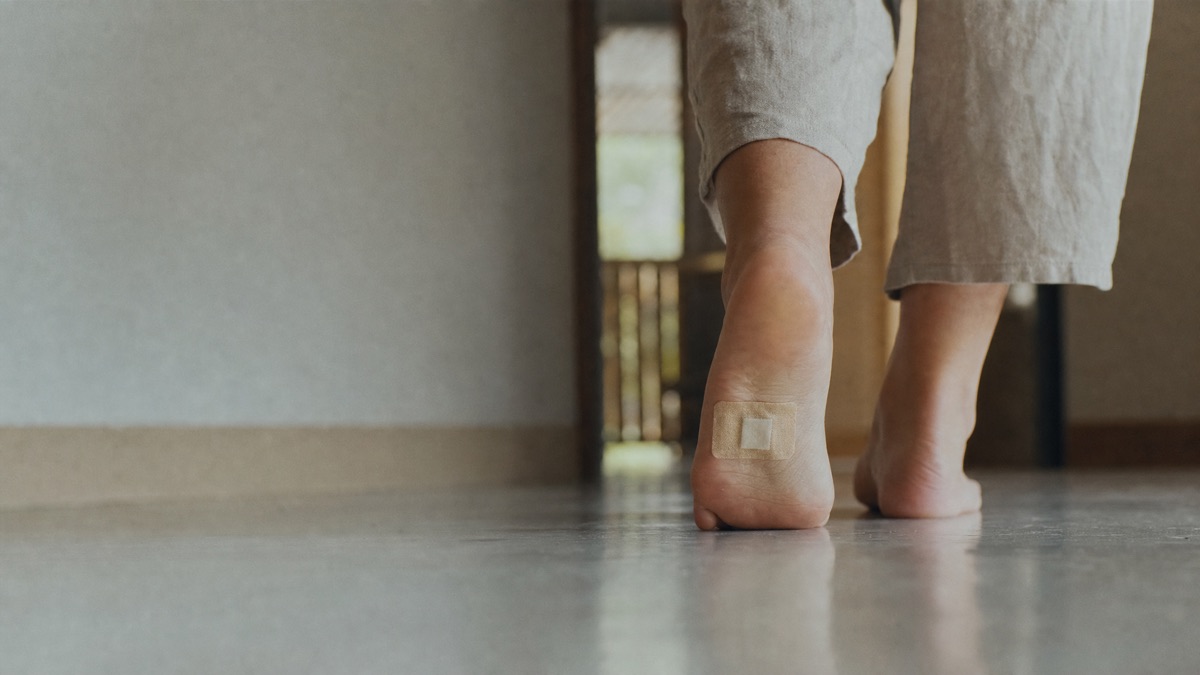
Can You Walk on a Healing Foot Wound?
What to know before you put weight on it, from our Homewood, Mokena and South Chicago Heights offices
This is the question we get asked most in the wound clinic, usually about ten seconds after we finish putting the dressing on. People are not being difficult when they ask it. They have jobs, stairs, grandchildren and a dog that needs letting out.
So here is the useful version of the answer. The question is almost never whether you can walk. It is whether the wound gets stepped on when you do. A wound on the bottom of the foot that keeps taking your body weight every few seconds is being reinjured all day long, and that is the single most common reason a foot wound sits open for months. Getting the load somewhere else is usually what turns it around.
Medically reviewed by Dr. Timothy Horak and Julia Shauger, board-certified podiatric specialists serving Homewood, South Chicago Heights & Mokena. Last reviewed July 2026.
The Short Answer
You can usually keep moving. You generally cannot keep stepping on the wound. What changes the answer for any individual patient is:
- Where the wound sits. A wound on the ball of the foot or the heel takes load with every step. A wound on the top of the foot or the side of a toe often does not.
- How deep it goes. Anything down to tendon, joint or bone is a different category from a superficial break in the skin.
- Your circulation and your sensation. Poor blood flow slows healing. Neuropathy removes the warning signal that would normally stop you.
- Whether there is infection. An infected foot changes the plan immediately.
- What you are wearing. The right device makes walking safe. A regular sneaker usually does not.
Why Pressure Is What Keeps a Wound Open
New tissue at the base of a wound is fragile. It is essentially a construction site, and every step across it flattens the work. Repeated load also squeezes the small vessels feeding the area, so the tissue that is trying to rebuild gets less blood at exactly the moment it needs more.
That is why a wound can look better on Friday and worse on Monday after a weekend of doing normal things. Nothing dramatic happened. It just got stepped on a few thousand times.
The short trips are what undo it. Most people are careful about the long walks and casual about the twenty steps to the kitchen in bare feet. Pressure is cumulative, so those trips count. If the device is off, the foot should not be on the floor.
When You Should Not Be Bearing Weight on It
Because of the wound itself
- It is on a weight-bearing surface, such as the ball of the foot or the heel
- Tendon, joint capsule or bone is visible or can be probed
- It is a fresh surgical wound, a skin graft, or a recent debridement
- There is active infection, drainage or odor
Because of the foot it is on
- Diabetes with neuropathy, so the foot cannot warn you
- Peripheral artery disease or weak pulses at the ankle
- A deformity such as a claw toe or a collapsed midfoot that concentrates pressure
- A wound in the same spot as a previous one, which tends to mean the load was never fixed
When Walking Is Reasonable, With Protection
Situations that are usually fine
- The wound is on a non weight-bearing surface, such as the top of the foot
- It is superficial, shrinking visit to visit, and not draining much
- Circulation and sensation are intact
- A device is carrying the load and you are wearing it every time you stand up
Rules that come with it
- No barefoot walking, at all, including the bathroom at night
- Look at the dressing whenever it is changed and compare it to yesterday
- Keep the total amount of standing down, even in a device
- Stop and call if anything on the warning list below shows up
One correction worth making, because it comes up constantly. A hard scab is not a sign that a foot wound has healed and is safe to walk on. Dried, thickened tissue and the rim of callus that builds around a chronic ulcer usually hide the real wound underneath and need to be removed rather than protected. Judging readiness by the scab is one of the more common ways people get caught out.
How We Take the Load Off
These are not equally protective, and the choice is a trade-off between how much pressure the device removes and how well people actually stick with it. That second part matters more than most patients expect.
Non-removable casts and boots
A total contact cast or a boot rendered non-removable spreads pressure across the whole lower leg and foot. It protects the wound best, largely because it cannot be taken off for the trip to the kitchen. It is not suitable for everyone, particularly with infection or poor circulation.
Removable walking boots
Comfortable, easy to inspect the wound, and much better than a normal shoe. The weakness is obvious. It only works while it is on, and it is off exactly when people are least careful. Wear it for every step, not just the ones outside the house.
Surgical shoes and felted padding
A stiff-soled postoperative shoe, sometimes combined with felt padding built up around the wound so the surrounding foot takes the load instead. Useful for toe and forefoot wounds and for patients who cannot manage a boot safely.
Crutches, walkers, knee scooters
Good for keeping weight off entirely, but only if you can use them safely. We would rather fit a device you will actually use than hand over crutches that end up in the hall closet after a week, or that put you at risk of a fall.
Tell us the truth about your day. If you are a nurse on twelve-hour shifts, or you have stairs and no downstairs bathroom, say so at the first visit. We would rather build a plan around your actual life than write one that gets abandoned in week two.
Signs Walking Is Setting the Wound Back
Stay off it and call us:
- • More drainage on the dressing than the day before
- • Fresh bleeding, or the wound getting wider
- • A hard white or yellow rim building at the edges
- • A red mark near the wound that has not faded twenty minutes after the shoe comes off
- • New pain in a foot that normally does not feel much
Call the same day for:
- • Fever, chills, or feeling generally unwell
- • Redness or a streak spreading up the foot or leg
- • Warmth and swelling across the whole foot
- • Odor, or drainage that has turned thick or cloudy
- • Blood sugars climbing for no clear reason
- • Skin around the wound turning dark or black
When Can You Go Back to Normal Walking?
The wound is fully closed
New skin covers the whole surface, with no soft or open area left at the edges.
The new skin has had time to toughen
Freshly closed skin is thin and tears easily. It keeps strengthening for weeks after it looks healed, which is why we step activity up gradually rather than all at once.
The reason it happened has been dealt with
The shoe, the deformity, the callus or the circulation problem that caused the wound is addressed, and you have footwear that keeps pressure off that spot for good.
What to Realistically Expect
We will not give you a healing date at the first visit. What we can tell you is that foot wounds measured week by week either shrink or they do not, and that a wound which has not moved over several weeks of good care is telling us something, usually about blood supply, infection, or pressure that is still getting through.
Offloading is the part of the plan patients underestimate most. Dressings get the attention because you can see them, but for a wound on the bottom of the foot, what you stand on matters more than what is taped over it.
Closing the wound is also not the end of it. Wounds commonly come back in the same place, because the pressure that opened it is still there unless something changed. That is why the visit after healing is about footwear and offloading rather than dressings.
Common Questions
Can I walk on a diabetic foot ulcer?
Not on the ulcer itself. An ulcer on the bottom of the foot stays open largely because it keeps being stepped on, so the weight has to be moved somewhere else before it will close. That does not mean bed rest. It means walking in a device that carries the load away from the wound, which your podiatrist fits and checks.
How long do I need to stay off my foot after a foot wound?
There is no single number, and anyone who gives you one without looking at the wound is guessing. It depends on where the wound is, how deep it goes, whether bone or tendon is involved, how good your circulation is, and whether infection is present. Expect the plan to be reviewed at every visit as the wound changes rather than set once at the start.
Is a walking boot enough to protect a foot ulcer?
A properly fitted boot takes a great deal of pressure off, but it only works while it is on. The main weakness of any removable device is the trips to the bathroom at two in the morning. If a wound is not improving in a removable boot, we often move to a device that cannot be taken off, because that removes the decision from the equation.
What are the signs that walking is making my wound worse?
More drainage on the dressing than the day before, fresh bleeding, the wound getting wider, a rim of hard white or yellow callus building at the edges, new redness spreading up the foot, warmth, odor, or a red mark near the wound that has not faded twenty minutes after taking the shoe off. Fever, chills or a sudden rise in blood sugar means call the same day.
Related Reading
Specialized Wound Care at ASG Foot & Ankle
Our board-certified podiatrists treat slow-healing wounds, diabetic foot ulcers, and post-surgical wounds at our three clinics in Homewood, South Chicago Heights, and Mokena.
See a Podiatrist Near You
ASG Foot & Ankle has offices in Homewood, South Chicago Heights and Mokena. Our board-certified podiatrists accept most insurance. Find the office closest to you:
Do Not Guess About Weight-Bearing
If you have an open wound on your foot, whether you can walk on it is a question that needs someone looking at the wound, your circulation and your shoes. We see wound patients at three offices in Homewood, Mokena and South Chicago Heights, and most major insurance is accepted.