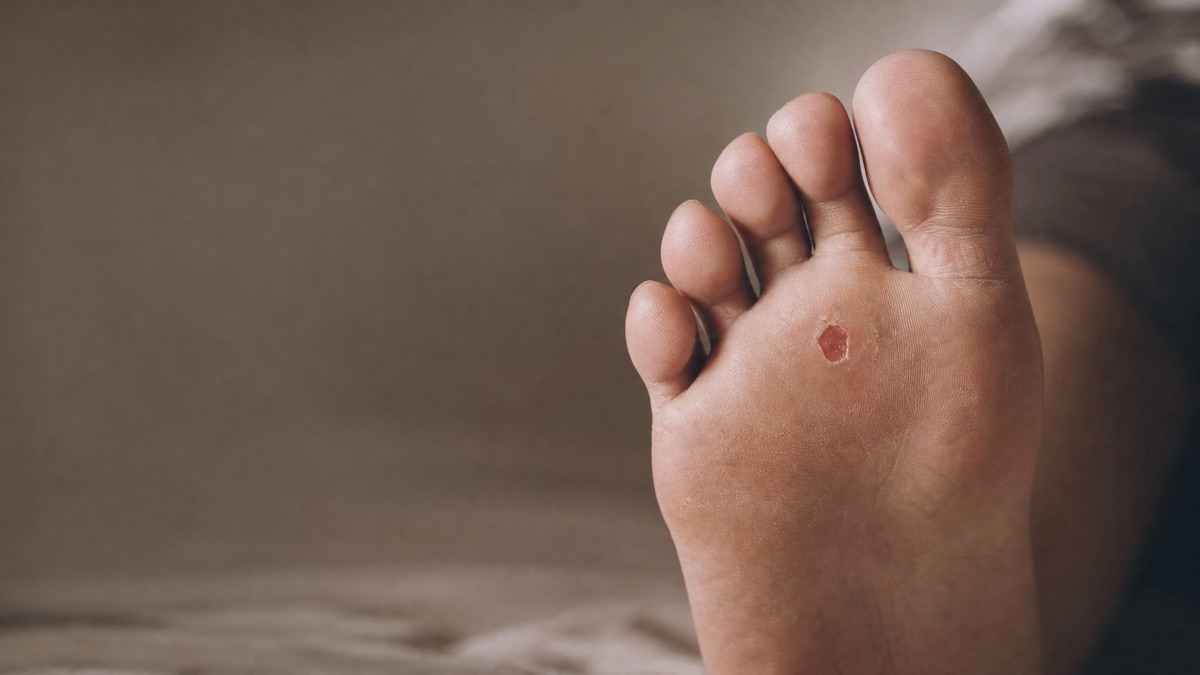
When a Wound Won't Heal
Finding what is blocking it, at our Homewood, Mokena and South Chicago Heights offices
Healthy skin closes a wound on a fairly predictable schedule. It gets smaller each week, the edges pull in, and it stops draining. When that does not happen, the wound is not simply slow. Something is actively holding it open, and until we find out what, changing the dressing every few days will not fix it.
The practical rule we use is four weeks. If a wound below the knee has not measurably shrunk in four weeks of reasonable care, it needs a real workup rather than another month of the same thing. This page explains what we look for and what treatment actually involves at our offices in Homewood, Mokena and South Chicago Heights.
Medically reviewed by Dr. Timothy Horak and Julia Shauger, board-certified podiatric specialists serving Homewood, South Chicago Heights & Mokena. Last reviewed July 2026.
Why a Wound Stalls
A wound needs four things to close: blood flow to deliver oxygen, a bacterial load low enough that the tissue can build rather than defend, freedom from repeated pressure, and reasonable nutrition and blood sugar. Take away any one of those and healing stops. In most stalled wounds we see, at least two are missing at the same time.
What is going on in the body
- • Diabetes, which slows immune response and dulls the sensation that would warn you
- • Peripheral arterial disease reducing blood supply to the foot
- • Venous insufficiency, where blood pools in the leg and the pressure keeps the skin open
- • Poor protein intake or low albumin, which quietly stalls tissue repair
- • Medications and conditions that suppress the immune system
- • Smoking, which constricts the vessels the wound depends on
What is going on at the wound
- • Pressure from walking, which tears the new tissue every single day
- • Dead tissue at the base that new cells cannot grow across
- • Biofilm, a bacterial layer that survives ordinary cleaning and antibiotics
- • Swelling that keeps oxygen from reaching the wound edges
- • A dressing that keeps the wound too wet or too dry for the stage it is in
- • Rolled, thickened edges that have effectively stopped trying to close
Pressure is the one most often missed. A wound on the ball of the foot gets loaded with every step you take, all day. No dressing overcomes that. If nobody has offloaded your wound, that is frequently the whole story.
When to Stop Waiting and Be Seen
Make an appointment if you see:
- • No measurable improvement after two weeks of home care
- • A wound that is getting larger rather than smaller
- • Increasing pain, redness or swelling around the edges
- • Drainage that has become thicker, cloudy or foul-smelling
- • Skin around the wound turning dark or hard
- • Any open wound on the foot if you have diabetes
Be seen the same day for:
- • Exposed bone or tendon at the base of the wound
- • Black tissue anywhere in or around the wound
- • Fever, chills or feeling generally unwell with a foot wound
- • Redness spreading up the foot or leg
- • A foot that has become cold, pale or dusky
- • Sudden increase in pain in a wound that was not painful
How We Work Through It
First, find out why it is not healing
Before changing a single dressing, we want to know whether blood is reaching the foot and whether anything systemic is working against you. Treating a wound without checking circulation is the most common mistake we see in wounds that have already failed somewhere else.
Circulation
- • Pulse examination of the foot and ankle
- • Ankle-brachial index testing
- • Doppler ultrasound when the ABI is unclear
- • Vascular referral when flow is the limiting factor
Bloodwork and imaging
- • A1C and glucose control review
- • Nutritional markers including albumin
- • Inflammatory markers if infection is suspected
- • X-ray when bone involvement is a concern
Take the pressure off
This is usually the highest-value step and the one patients dislike most, because it means wearing something inconvenient. It is also the step that most often turns a stalled wound around. Offloading is not the same as rest, and it is not optional.
Total contact casting
Spreads load across the whole foot and leg. Effective in part because it cannot be taken off between appointments.
Walking boots
Removable and more practical for many patients, but only work if they are actually worn every time the foot touches the floor.
Custom offloading
Accommodative inserts and therapeutic footwear built around the wound location, especially for long-term prevention once it closes.
Clean the wound bed and keep it clean
New tissue cannot grow across dead tissue or through a biofilm layer. Debridement is done in the office, repeated at most visits rather than once, and it is the reason wound care appointments are weekly rather than monthly.
- • Sharp debridement of nonviable tissue and rolled wound edges
- • Antimicrobial dressings when bacterial burden is the limiting factor
- • Culture-directed antibiotics rather than blind antibiotic courses
- • Dressing choice matched to how wet or dry the wound currently is
Add advanced therapy when it is warranted
Advanced treatments work best on a wound that already has good blood flow, controlled infection and real offloading. Used before those basics are in place, they tend to disappoint. Insurance also generally requires documented conservative care first, and we will explain that coverage before starting anything.
- • Negative pressure wound therapy for deeper wounds with good tissue at the base
- • Skin substitutes and cellular tissue products for wounds that have plateaued
- • Compression therapy for venous ulcers, once arterial flow has been confirmed adequate
- • Surgical management when bone is involved or the wound needs formal closure
What to Realistically Expect
We will not give you a healing date at the first visit. What we can do is measure the wound, treat what we find, and measure again. A wound that is shrinking week over week is on track even if it is slow. A wound that is the same size after a month of treatment tells us we have missed something and need to change course, and that is a useful answer too.
Expect weekly visits at the start. Expect to wear the offloading device. Expect that if circulation turns out to be the limiting factor, the most important thing we do may be sending you to a vascular specialist rather than treating the wound ourselves.
Once a wound closes, the work shifts to keeping it closed. Skin that has healed over a pressure point is thinner and more fragile than the skin around it, which is why footwear, daily foot checks and regular follow-up matter as much after healing as during it.
Common Questions
How long should a foot wound take to heal?
A straightforward wound on a healthy foot should show visible progress week to week and close within a few weeks. The useful benchmark is the trend, not a fixed date. If a wound has not measurably shrunk after four weeks of appropriate care, something is blocking it and it should be evaluated rather than dressed for another month.
Why is my diabetic foot ulcer not healing?
Usually pressure, blood flow, infection or blood sugar, and often more than one at once. Walking on an ulcer tears the new tissue daily, so it never gets a chance to close. Reduced circulation starves it of oxygen. Deep or biofilm infection consumes what the tissue needs. Sorting out which applies to you is the point of the first visit.
Do I need to stay off my foot for a wound to heal?
You need the wound offloaded, which is not the same as staying in bed. Pressure relief is often the single most important part of treatment, and it usually comes from a total contact cast, a walking boot or a custom offloading device. Many wounds that failed elsewhere failed because nothing took the pressure off them.
When should I see a wound care specialist instead of my regular doctor?
When a wound below the knee has not improved in four weeks, when you have diabetes or known circulation problems and have any open wound on the foot, or at any point if there is spreading redness, drainage with odor, fever, exposed bone or black tissue. Those last signs are not wait-and-see, they should be looked at the same day.
Related Reading
Specialized Wound Care at ASG Foot & Ankle
Our board-certified podiatrists treat slow-healing wounds, diabetic foot ulcers, and post-surgical wounds at our three clinics in Homewood, South Chicago Heights, and Mokena.
See a Podiatrist Near You
ASG Foot & Ankle has offices in Homewood, South Chicago Heights and Mokena. Our board-certified podiatrists accept most insurance. Find the office closest to you:
Get a Stalled Wound Evaluated
If a wound on your foot or leg has not improved in a month, the next step is finding out what is blocking it rather than changing the dressing again. We see wound patients at three offices in Homewood, Mokena and South Chicago Heights, and most major insurance is accepted.