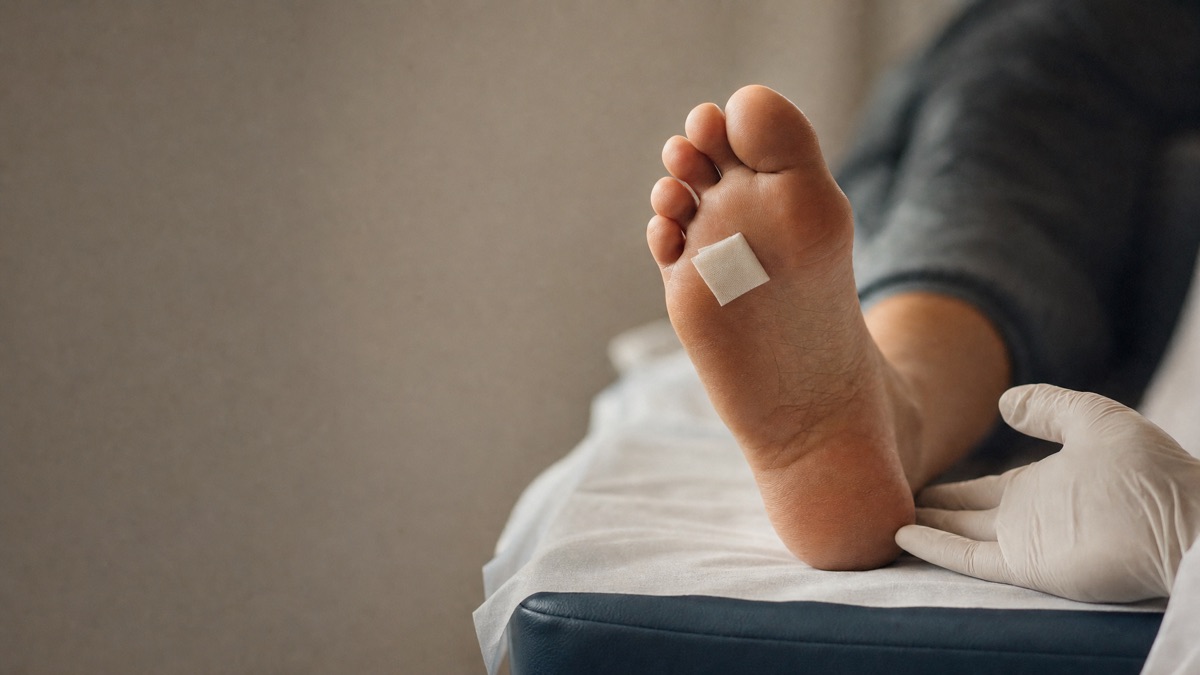
When a Foot Wound Will Not Close
How we find what is holding it back, at our Homewood, Mokena and South Chicago Heights offices
A wound on the foot that has been open for more than about a month is not simply healing slowly. It is stuck, and it is stuck for a reason. Cleaning it more carefully and changing the dressing more often will not move it, which is why so many people arrive here having done exactly that for months.
The useful question is not which dressing to use. It is what is blocking the healing. There are only a handful of common answers, and each one has a specific fix. Here is how we work through them at our offices in Homewood, Mokena and South Chicago Heights.
Medically reviewed by Dr. Timothy Horak and Julia Shauger, board-certified podiatric specialists serving Homewood, South Chicago Heights & Mokena. Last reviewed July 2026.
Some of this needs a same-day call, not an article
If any of the following apply, call the office today rather than reading further:
- • Redness spreading outward, or a red streak running up the foot or leg
- • Pain or swelling that is increasing rather than settling
- • Thick or foul-smelling drainage
- • Any black or grey tissue appearing
- • Fever, chills, or feeling generally unwell
- • You have diabetes and the wound changed noticeably in the last day or two
The Three Reasons Foot Wounds Stall
Almost every chronic foot wound is being held open by inadequate blood supply, repeated pressure, infection, or some combination of the three. Everything else, including nutrition and blood sugar control, sits on top of those.
Blood flow
Tissue cannot rebuild itself without oxygen. If the arteries feeding the foot are narrowed, no dressing and no ointment will overcome that, and this is the reason most often missed before patients get to us. It is also the reason we test circulation early rather than assume it is fine because the foot looks pink.
Where the testing shows meaningful arterial disease, the priority becomes restoring blood flow, and we coordinate with a vascular specialist. Wound care alone on a foot with poor inflow is treating the wrong problem.
Pressure
New tissue is fragile. Standing on it every day tears it apart faster than the body can build it. This is the single most common reason an ulcer on the ball of the foot or the heel stays exactly the same size month after month while everything else is done correctly.
If you have reduced sensation from neuropathy, this is harder than it sounds, because you will not feel the damage happening. That is exactly why we take offloading seriously rather than leaving it to how the foot feels.
Infection
Infection in a chronic wound does not always look dramatic. Often there is no fever and little pain, particularly with neuropathy. What we look for instead is a wound that has stopped progressing, has fragile or discolored tissue, or smells different than it did.
If the wound is deep, has been present a long time, or probes down to bone, we need to know whether the bone underneath is involved. That changes the treatment completely and it is not something to guess about.
What Happens at Your First Visit
The first appointment is mostly about finding the blockage, not about applying a product. We measure and photograph the wound so there is an objective baseline, because judging progress from memory is unreliable and it is how months get lost.
Circulation and structure
- • Pulses in the foot and ankle
- • Non-invasive vascular testing such as ABI or Doppler
- • Sensation testing for neuropathy
- • X-ray when bone involvement is a concern
The wound and the whole picture
- • Depth, edges, and what the wound base looks like
- • Culture if infection is suspected, taken properly from the tissue
- • Blood work including glucose control and nutrition markers
- • A look at the shoes you actually wear and how you walk
We also want to know what has already been tried and for how long. A wound that failed six weeks of one approach does not need a seventh week of it.
What Treatment Involves
Taking the pressure off
For a wound on the weight-bearing part of the foot, this is usually the change that matters most. Depending on where the wound sits and how much you need to be on your feet, that means a total contact cast, a removable walking boot, or a modified shoe with padding built to redistribute load away from the wound.
Removable devices only work when they are worn. We would rather have an honest conversation about what you will realistically keep on than fit something that ends up by the front door.
Debridement and dressings
Chronic wounds accumulate dead tissue and a bacterial film at the surface that blocks healing. Removing that in the office, repeatedly, is one of the better-established parts of wound care. It is usually not painful in a neuropathic wound, and we numb the area when it is.
Dressings then keep the wound at the right moisture level, neither dried out nor waterlogged. Which dressing depends on how much the wound is draining and whether infection is a concern, and it changes as the wound changes.
Additional therapies when a wound is genuinely stuck
If circulation is adequate, pressure is controlled, infection is handled, and the wound still is not closing, there are further options. These are used selectively, when the basics are already in place, not as a shortcut past them.
Negative pressure therapy
A sealed dressing under gentle suction that draws out excess fluid and encourages tissue to fill in. Useful for deeper wounds with significant drainage.
Skin substitutes and grafts
Biologic tissue applied to a clean, well-prepared wound bed to give healing a starting point. Coverage criteria are specific, so we confirm eligibility before proceeding.
Regular review, and honest review
We see most wounds weekly at first, remeasure every visit, and compare against the baseline. If a wound is not meaningfully smaller after several weeks on a given plan, the plan is wrong and we change it or we investigate further. Repeating an ineffective treatment because it is the one already started is how wounds end up open for a year.
The Part We Cannot Do
Between appointments
- • Wear the offloading device every time you are up, including short trips
- • Keep the dressing dry and change it as instructed
- • Check both feet daily, using a mirror for the soles
- • Never walk barefoot, indoors included
- • Keep glucose control as tight as your physician advises
Things that quietly slow healing
- • Smoking, which directly reduces blood flow to the wound
- • Not enough protein in the diet during healing
- • Swelling in the leg that is never elevated or compressed
- • Skipping visits once the wound starts looking better
What to Realistically Expect
We will not give you a healing date before examining the foot and checking the circulation. Two wounds that look identical can behave completely differently depending on blood supply, and promising a timeline we cannot support would not help you.
What we can say is that a wound with adequate blood flow, kept free of pressure and free of infection, generally does start closing, and that progress shows as steadily shrinking measurements rather than a dramatic change you notice one morning. Wounds that have been open a long time, or that sit on a foot with poor circulation, take longer and sometimes need vascular treatment before they will move at all.
The other honest point: closing the wound is only half of it. Once healed, that spot stays vulnerable, so protective footwear, regular checks and continued care are how you avoid doing this again next year.
Common Questions
How long should a foot wound take to heal?
A simple wound on a healthy foot generally shows clear progress within two to three weeks. A wound that is no smaller after four weeks is considered stuck, and something is holding it back. That is the point to have it evaluated rather than to keep changing the dressing and waiting.
Why will my diabetic foot ulcer not heal?
Usually one of three things. Blood flow to the foot is too low to support healing, pressure keeps being applied to the wound with every step, or there is infection in the tissue or bone underneath. High blood sugar slows repair on top of all three. Finding which one applies to you is the whole point of the first visit.
Can I walk on a foot ulcer?
Walking normally on an ulcer is one of the most common reasons it stays open. Pressure repeatedly damages the new tissue trying to form. That is why offloading with a total contact cast, a removable boot or a modified shoe is not an optional extra, it is often the single change that lets the wound close.
When is a foot wound an emergency?
Call the same day if you see spreading redness or a red streak moving up the foot or leg, increasing pain or swelling, foul-smelling or thick drainage, a black or grey area appearing, or if you have a fever or feel generally unwell. On a foot with diabetes or poor circulation, do not wait for the next available routine appointment.
Related Reading
Specialized Wound Care at ASG Foot & Ankle
Our board-certified podiatrists treat slow-healing wounds, diabetic foot ulcers, and post-surgical wounds at our three clinics in Homewood, South Chicago Heights, and Mokena.
See a Podiatrist Near You
ASG Foot & Ankle has offices in Homewood, South Chicago Heights and Mokena. Our board-certified podiatrists accept most insurance. Find the office closest to you:
Do Not Give a Stuck Wound More Time
If a wound on your foot has been open for a month, another month of the same dressing will not change it. Getting the circulation checked and the pressure taken off is what changes it. We see wound patients at three offices in Homewood, Mokena and South Chicago Heights, and most major insurance is accepted.