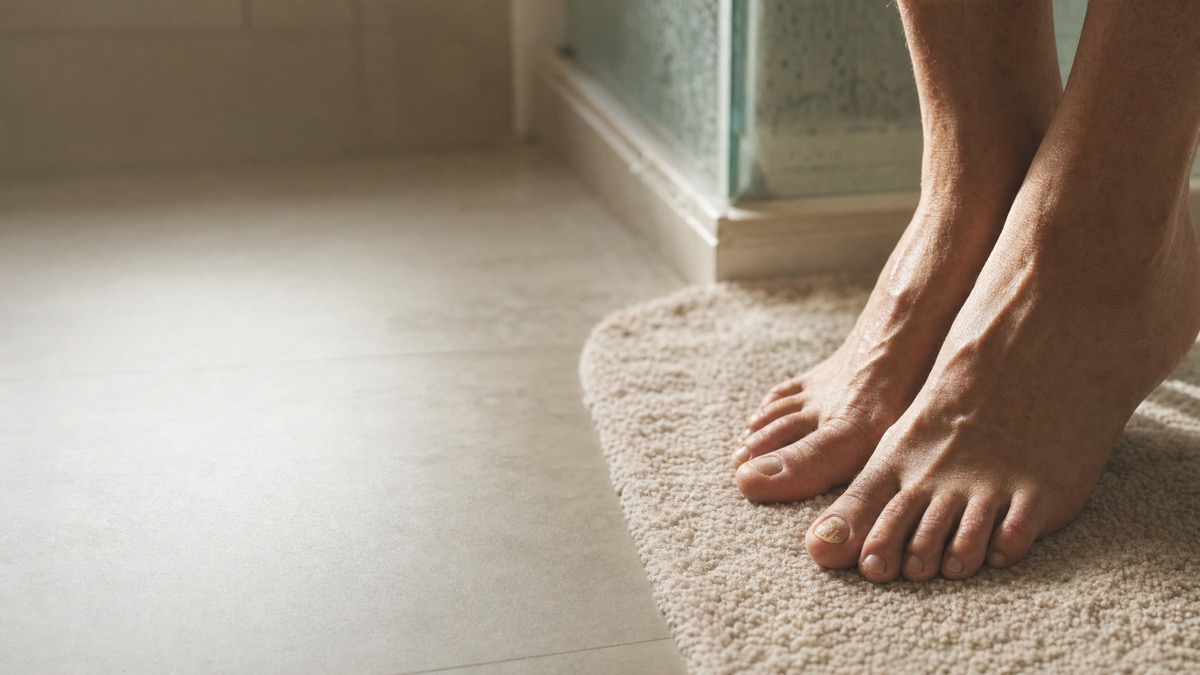
Why Toenail Fungus Keeps Coming Back
And what actually stops it, from our Homewood, Mokena and South Chicago Heights offices
A patient will come in, hold up a foot, and say some version of the same sentence: I already treated this and it came back. Sometimes twice. Sometimes with a prescription that cost real money and required blood work. That frustration is fair, and it is worth explaining what is actually happening, because fungal nails are one of the few foot problems where recurrence is the norm rather than a sign something went wrong.
Toenail fungus (onychomycosis) lives in the nail plate, under the nail, and often in the skin around it. Clearing the visible nail is not the same as clearing the infection. If we treat the nail and ignore everything the nail touches, we are treating half the problem. Here is how we think about it at our offices in Homewood, Mokena and South Chicago Heights.
ASG Foot & Ankle patient education. Updated August 30, 2026. General information, not a diagnosis.
The Five Reasons It Comes Back
Treatment stopped too early
This is the single most common reason. The nail starts looking better, the visible discoloration moves toward the tip, and it feels reasonable to stop. But an improving nail is not a cured nail. The fungus is still in the nail bed under the part that has not grown out yet.
What full courses actually look like:
- • Oral antifungals: roughly three months for toenails, taken without gaps
- • Topical solutions: daily application for close to a year, on a properly thinned nail
- • Laser: a series of sessions spaced over months, not one visit
- • In every case, the nail keeps looking abnormal long after treatment ends
The athlete's foot was never treated
This is the one people miss most. The same organisms that infect nails infect the skin between the toes and along the sole. If the skin is still colonized, it will re-seed the new nail as it grows in. You can run a perfect nail treatment and still lose, because the reservoir was never cleared.
Signs the skin is involved:
- • Peeling or cracking between the fourth and fifth toes
- • Dry, scaly skin along the sole that never quite clears with lotion
- • Itching that comes and goes with the seasons
- • Nothing visible at all, which is common and still means treating the skin
The shoes were never dealt with
Fungal spores survive inside shoes for a long time. Putting a treated foot back into the same work boot every morning is a reliable way to get reinfected. This does not mean throwing away your shoe collection, but it does mean the shoes need attention while the nail is growing out.
What we ask patients to do:
- • Antifungal powder or spray in every pair, not occasionally but routinely
- • Rotate two or three pairs so each dries fully for a day between wearings
- • A UV shoe sanitizer if you are in boots all day for work
- • Replace the pair you wore daily through the worst of the infection
Something is making you a good host
Some people clear an infection and never see it again. Others are set up to keep getting it. Circulation, blood sugar and immune status all change how well a nail can defend itself, and none of that is a hygiene failure on your part.
Factors that raise the odds:
- • Diabetes, which affects both circulation and immune response in the foot
- • Peripheral arterial disease or any cause of reduced blood flow to the toes
- • Immune suppression from medication, chemotherapy or autoimmune disease
- • Repeated nail trauma, which is why runners and anyone in steel-toe boots see it often
- • Smoking, which narrows the small vessels feeding the nail bed
It was never fungus to begin with
A thick, yellow, crumbling nail is not automatically fungal. Psoriasis of the nail, old trauma, and a few other conditions look nearly identical across a desk. If a nail has failed treatment once, confirming the diagnosis matters more than trying a different antifungal.
How we confirm it:
- • A nail clipping sent for laboratory testing rather than a visual guess
- • Checking whether the pattern fits trauma, such as one nail on a runner's longest toe
- • Looking at the skin, the other foot, and the fingernails for a fuller picture
- • Confirmation before starting an oral medication that requires blood work
What Actually Prevents Recurrence
The daily habits worth the effort
- Dry between the toes. Not a quick pass with a towel. The web spaces are where skin infection starts, and they stay damp long after the rest of the foot is dry.
- Change socks when they get damp. Moisture-wicking socks help, but changing them after a shift or a workout helps more.
- Shower shoes in shared spaces. Locker rooms, pool decks, hotel bathrooms and gym showers are the usual sources.
- Your own clippers. Nail tools carry fungus between people and between your own nails. Do not share them, and clean them.
The part most people skip
- Keep treating the skin after the nail clears. A topical antifungal on the soles and between the toes, continued for months, is the highest-value habit on this page.
- Have the nail thinned. Topicals cannot get through a thick nail. Reducing the nail in the office is what makes a topical worth applying at all.
- Come back once at six months. Catching a small streak of new discoloration is a much smaller problem than a fully reinfected nail.
- Check the household. Fungus moves between family members on shared bathroom floors. Treating one person in a house of four rarely holds.
If you take one thing from this page: treat the skin, not just the nail. The nail is what you can see, but the skin is usually where the next infection is waiting.
What to Realistically Expect
We will not promise you a clear nail on a schedule, because nail growth sets the timeline and we cannot speed it up. A big toenail generally takes about a year to eighteen months to fully replace itself, longer if you are older or circulation to the foot is reduced. That is not a treatment failure, that is biology.
What you should watch for is clear, healthy nail coming in at the cuticle. That is the real signal treatment is working. The discolored portion further out will not turn clear, it has to grow off the end of your toe.
Recurrence is genuinely common with fungal nails, more so than with most infections we treat. That is not a reason to skip treatment, it is a reason to plan for the maintenance phase from the beginning instead of being surprised by it a year later.
Common Questions
Why does my toenail fungus keep coming back after treatment?
Usually one of three things. Treatment stopped once the nail looked better but before the fungus was gone. The athlete's foot on the surrounding skin was never treated, so the new nail was re-seeded from the skin. Or the shoes were never decontaminated and reinfected the nail. Recurrence is common enough that we plan for it from the first visit rather than treating it as a surprise.
How long does it take for a fungal toenail to grow out?
A big toenail replaces itself slowly, generally over about a year to eighteen months in adults, and more slowly in older patients or anyone with reduced circulation. Even a treatment that works will not produce a normal-looking nail for many months. The first sign of success is clear new nail at the cuticle, not the discolored part growing clear.
Do I need to throw away my shoes if I have toenail fungus?
Not usually. Spores can survive in shoes, but antifungal powder or spray used consistently, rotating pairs so each dries fully, and a UV shoe sanitizer are generally enough. The shoes worth replacing are old athletic shoes you wear constantly and cannot dry out, and any pair you wore daily through a long infection.
Does laser treatment for toenail fungus work?
It can help, particularly for patients who cannot take oral antifungals because of liver concerns or drug interactions. It takes multiple sessions, it is generally not covered by insurance, and it is not the single-visit cure it is often advertised as. We will tell you honestly whether we think it fits your nail before you spend money on it.
Related Reading
Certain the skin rash feeding it is athlete's foot? Athlete's Foot or Something Else? →
See a Podiatrist Near You
ASG Foot & Ankle has offices in Homewood, South Chicago Heights and Mokena. Our board-certified podiatrists accept most insurance. Find the office closest to you:
Get the Nail Looked At Properly
If a nail has already failed one round of treatment, the next step is confirming what it actually is and building a plan that includes the skin and the shoes. We see patients at three offices in Homewood, Mokena and South Chicago Heights, and most major insurance is accepted.