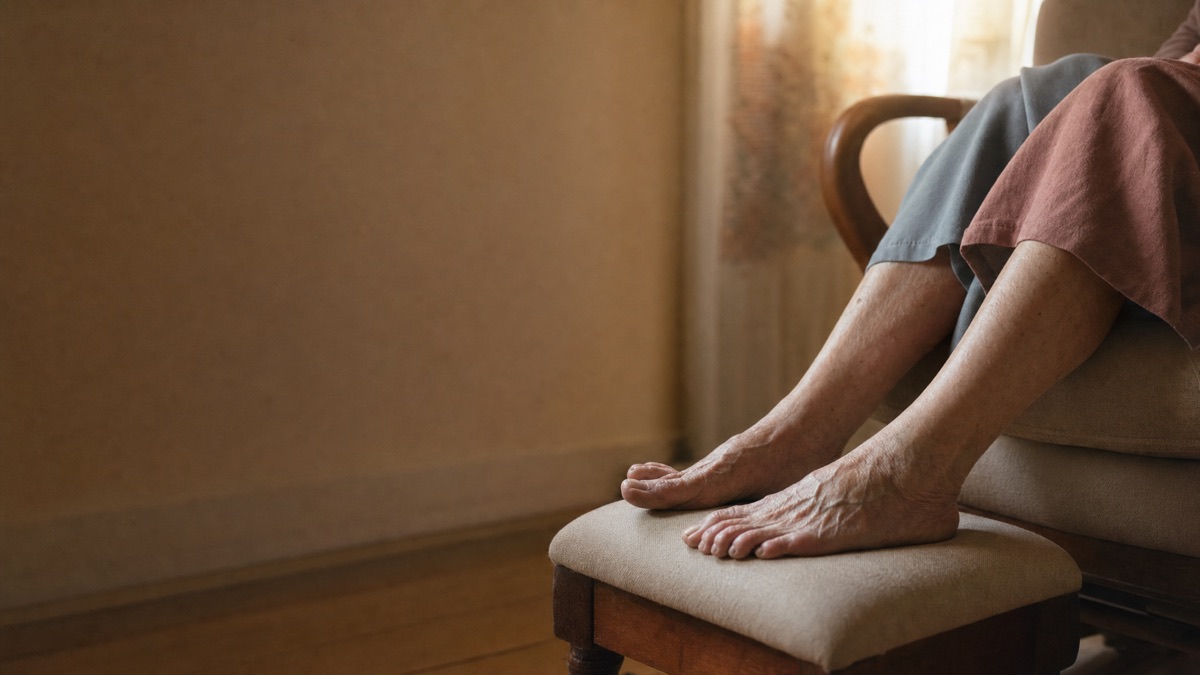
Leg Ulcers in Older Adults and Why Age Changes the Plan
Wound care for seniors at our Homewood, Mokena and South Chicago Heights offices
A leg ulcer is an open wound on the lower leg or foot that has not closed in about a month. In a healthy forty year old these are uncommon. Past seventy they become one of the more frequent reasons someone ends up in a podiatry office, and the reason is not one single thing going wrong. It is several ordinary changes of aging arriving at the same time.
This page is written as much for adult children and caregivers as for patients. Often the person with the wound is not the person managing it, and the difference between a wound that closes and one that drags on for a year usually comes down to what happens at home between appointments.
Medically reviewed by Dr. Timothy Horak and Julia Shauger, board-certified podiatric specialists serving Homewood, South Chicago Heights & Mokena. Last reviewed July 2026.
Why Older Skin Is More Vulnerable
The skin itself is thinner
Collagen and elastin production falls off with age, so skin tears from things that would not have marked it before. A bumped shin against a coffee table is a common starting point.
Circulation is slower
Vessel walls stiffen and narrow. Less blood arriving means less oxygen and fewer immune cells at the wound, which is the raw material healing runs on.
Immune response is blunted
Infection takes hold more easily and announces itself less clearly. Fever and obvious redness may be muted, so wounds get infected before anyone notices.
Chronic conditions have piled up
Diabetes, venous insufficiency, artery disease, heart failure and kidney disease each slow healing. By this age it is rarely just one of them.
There is less movement
The calf muscle is what pumps blood back up the leg. Less walking means more pooling, more swelling, and more hours spent with weight resting on the same heel.
Nutrition is often short
Healing needs protein, vitamin C and zinc. Smaller appetite, dental problems and limited variety mean many older patients are running a deficit without knowing it.
Nutrition is the one people skip. We can do everything right with the dressing and the offloading, but a wound cannot be built out of nothing. If an older patient has lost weight or is eating very little, that is a wound care problem, not a separate issue.
The Four Types We See Most
Venous leg ulcers
The most common type. Failing valves in the leg veins let blood pool around the ankle, pressure builds, and the skin eventually opens. Usually preceded by years of swelling and brown staining.
What it looks like
- • Inner ankle or lower shin
- • Shallow, irregular sloping edges
- • Wet, soaks through dressings
- • Brown discoloration and swelling around it
- • Aching leg that feels heavy by evening
How it is treated
Compression is the treatment, not an accessory to it. Alongside that, debridement, absorbent dressings, elevation, and a look at the underlying veins so it does not simply come back.
Arterial ulcers
Caused by narrowed arteries that cannot deliver enough blood to the far end of the leg. Less common than venous ulcers but more urgent, because tissue is starving rather than waterlogged.
What it looks like
- • Toes, heel, or outer ankle
- • Deep with sharp punched-out edges
- • Dry, pale or blackened wound bed
- • Severe pain, often worse at night
- • Cool foot with weak or absent pulses
How it is treated
Vascular assessment comes first. Wound care alone will not close an arterial ulcer if blood flow is not restored, and compression can make it worse. This is the type that should not wait.
Pressure ulcers
Sustained pressure shuts off blood supply to a patch of tissue. In older adults with limited mobility these show up fastest on the heels, where there is almost no padding between skin and bone.
What it looks like
- • Over bony spots, heels and ankles especially
- • Starts as a red or purple patch that does not blanch
- • Can be painless if there is neuropathy
- • Common after a hospital stay or bed rest
How it is treated
Getting the pressure off is the whole treatment. Heel offloading boots, repositioning schedules, proper cushions, plus dressings and nutrition support while the tissue recovers.
Diabetic foot ulcers
Neuropathy removes the pain that would normally make you stop walking on a sore spot, and reduced circulation slows healing. A callus or blister can become an open wound within days.
What it looks like
- • Usually on the sole at a pressure point
- • Often painless, which is why it goes unnoticed
- • May start as a callus with a dark center
- • Higher risk of infection reaching the bone
How it is treated
Offloading, blood sugar control, close infection monitoring, and regular professional callus care. These wounds warrant a same-week appointment rather than watchful waiting.
What We Do Differently
The goals of wound care do not change with age. The execution does, in four specific ways.
Gentler debridement
Dead tissue still has to come off, but fragile skin does not tolerate aggressive sharp debridement. We often use slower autolytic or enzymatic methods, and take several visits to do what might take one in a younger patient.
Dressings chosen for removal
A standard adhesive dressing can strip skin off on removal and create a second wound next to the first. Silicone-bordered and non-adherent dressings avoid that, and they hurt less at every change.
Medication review
Steroids, some immune-suppressing drugs and long-term anti-inflammatories all interfere with healing. We do not change anyone's prescriptions, but we do flag them to the prescribing physician when a wound is stalled.
Teaching the caregiver
Most of a wound's life happens at home. We would rather spend ten extra minutes showing a spouse or daughter how to change the dressing properly than have it done wrong for a week.
Prevention That Actually Works
Look at the legs daily
Every day, not weekly. Check heels, between the toes, and the inner ankle. If bending or eyesight makes that hard, ask a family member or use a mirror on the floor.
Moisturize
Dry, cracked skin is where most of these wounds start. A plain fragrance-free lotion on the legs and the tops of the feet, daily. Skip between the toes.
Wear the compression
For known venous disease, fitted compression stockings do more to prevent ulcers than anything else on this list. They only work if they are actually worn.
Shoes that fit, always
No barefoot walking, not even to the bathroom at night. Check inside shoes for pebbles or worn seams before putting them on, especially with reduced sensation.
Keep moving
Walking is best, but ankle pumps and calf raises from a chair still drive the muscle pump that empties the leg veins. Ten repetitions a few times a day is worth doing.
Regular foot care visits
Professional nail and callus trimming avoids the self-inflicted cuts we see often, and gives someone trained a look at the skin every few months.
What to Realistically Expect
Wounds in older adults generally take longer to close than the same wound would in a younger person, and we will not put a date on it before examining the leg. What we will do is measure the wound at each visit so progress is a number rather than an impression, and tell you plainly if it is not moving.
Some wounds in frail patients are not going to fully close, and in those cases the honest goal changes to keeping the wound stable, comfortable and free of infection rather than chasing complete healing. We would rather say that out loud than let a family spend a year assuming otherwise.
Call Us Right Away If
- • Redness is spreading out from the wound
- • Drainage has increased, changed color or started to smell
- • There is a fever, or new confusion in an older patient
- • A dark or black patch appears on a heel or toe
- • Pain suddenly increases in a wound that was not painful
- • The wound has grown rather than shrunk over two weeks
New confusion in an older adult with a wound deserves particular attention. It is sometimes the first visible sign of a serious infection, ahead of fever or obvious redness.
Common Questions
Why are leg ulcers more common in older adults?
Several things stack up at once. Skin gets thinner and tears more easily. Circulation slows, so oxygen and immune cells reach a wound less readily. Conditions that damage healing, like diabetes, venous insufficiency and artery disease, have had decades to accumulate. Mobility drops, which weakens the calf pump that returns blood from the legs and increases time spent in one position. Any one of these alone is manageable. Together they make a wound both easier to start and slower to close.
How are leg ulcers treated in elderly patients?
The principles are the same as at any age, which means finding out why the wound is there, removing dead tissue, choosing a dressing that matches how wet the wound is, and taking pressure off it. What changes is the execution. Debridement is gentler, dressings are chosen with silicone or non-adhesive borders so removal does not tear skin, medications that block healing get reviewed with the primary doctor, and the plan has to be something a spouse or caregiver can realistically carry out at home.
Can leg ulcers in seniors be prevented?
Many can. The most effective steps are unglamorous. Wear the compression stockings if venous disease is known. Moisturize the legs daily so the skin does not crack. Look at the legs and feet every day, or have someone look. Wear shoes that fit and never go barefoot. Move as much as the body allows, even ankle pumps while seated. Keep blood sugar and blood pressure managed. Most leg ulcers we see gave weeks of warning before they opened.
Should an older adult with a leg ulcer see a podiatrist or their primary doctor?
Both, working together. The primary care physician manages the diabetes, heart failure, kidney function and medications that shape whether a wound can heal at all. A podiatrist manages the wound itself, the offloading, and the circulation testing that determines what treatment is safe. Do not wait for a scheduled primary care visit if a wound is already open. Wounds in older adults get worse faster than most families expect.
Related Reading
Specialized Wound Care at ASG Foot & Ankle
Our board-certified podiatrists treat slow-healing wounds, diabetic foot ulcers, and post-surgical wounds at our three clinics in Homewood, South Chicago Heights, and Mokena.
Swelling that stops going down?
Ordinary swelling clears overnight. When it does not, the skin becomes the problem to solve.
Lymphedema in the Legs and Feet →On a wound VAC at home?
What each alarm actually means, why the dressing changes hurt, and what to ask for instead of enduring it.
Wound VAC at Home →See a Podiatrist Near You
ASG Foot & Ankle has offices in Homewood, South Chicago Heights and Mokena. Our board-certified podiatrists accept most insurance. Find the office closest to you:
Bring the Whole Family to the Appointment
Wound care in older adults works best when the person doing the dressing changes at home is in the room too. We see patients at three offices in Homewood, Mokena and South Chicago Heights, and most major insurance is accepted.