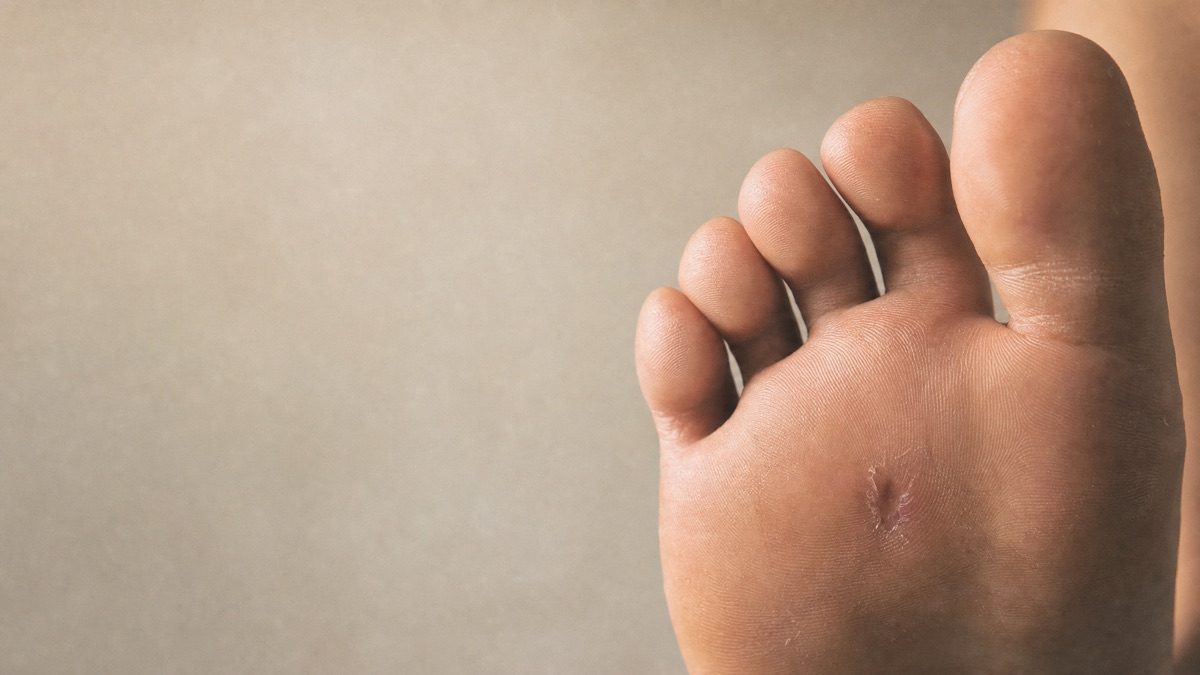
How Circulation Problems Affect Wound Healing
Blood flow is the one thing you cannot work around. If it is not reaching the wound, nothing else you do will close it.
When a foot wound will not close, there is a short list of things worth checking, and blood flow is at the top of it. Healing is metabolically expensive work. Building new tissue takes oxygen, protein and immune cells, and all three arrive through the arteries. If those arteries are narrowed, the wound does not fail because the dressing was wrong. It fails because the supply line is not adequate.
This comes up constantly in our wound clinic. Patients arrive after months of careful dressing changes, frustrated that nothing has worked, and nobody has checked their pulses. This page explains why circulation matters, what the warning signs are, how it is tested, and what can be done about it.
Medically reviewed by Dr. Timothy Horak and Julia Shauger, board-certified podiatric specialists serving Homewood, South Chicago Heights & Mokena. Last reviewed July 2026.
What Blood Flow Is Actually Delivering
In
- Oxygen. Every step of tissue repair runs on it, and the tissue at the base of a wound is the furthest thing from the nearest artery.
- Protein and nutrients. The raw material for new collagen has to be carried in.
- Antibiotics. A drug you swallow can only reach a wound the blood can reach. This is why oral antibiotics sometimes appear to do nothing.
Out
- Cellular debris. A wound that cannot clear its own waste stays stuck in the inflammatory stage.
- Excess fluid. Swelling around a wound increases the distance oxygen has to travel to reach the tissue that needs it.
- White cells doing their job. Immune cells have to get in, work, and be replaced continuously.
The Three Circulation Problems We See Most
Peripheral artery disease
Plaque narrows the arteries carrying blood down the leg. It is common, it is underdiagnosed, and it is the single most important thing to rule out in a wound that is not moving.
What you might notice
- • Calf cramping when walking that stops when you stop
- • Feet that are cold compared with the rest of you
- • Aching in the foot at night that eases when you hang it off the bed
- • Hair loss on the lower leg, thin shiny skin
What it does to a wound
- • Healing slows or stops entirely
- • Infection is harder to clear
- • Tissue at the edge can die rather than close
- • Advanced wound therapies stop working as intended
Diabetes-related vessel changes
Diabetes affects the large arteries and the smallest capillaries at the same time, which is why a diabetic foot can have decent pulses and still heal badly.
What changes in the vessels
- • Stiffer, thickened artery walls
- • Fewer working capillaries in the skin
- • Vessels that do not dilate normally on demand
- • Blood that flows less easily
What it does to a wound
- • A blunted early inflammatory response
- • Weaker collagen laid down in repair
- • Higher infection rates
- • Test numbers that can look falsely reassuring
Venous insufficiency
Here the problem is drainage rather than supply. Vein valves fail, blood pools in the lower leg, and the pressure damages the skin from the inside out. This is the usual cause of ulcers around the ankle.
What you might notice
- • Swelling that is worse by evening
- • Varicose veins
- • Brown staining of the skin above the ankle
- • Shallow, weeping ulcers with irregular edges
What it takes to treat
- • Compression, which is the actual treatment
- • Elevation whenever you are sitting
- • Confirming the arteries are good enough for compression first
- • Long-term compression stockings to stop recurrence
Warning Signs Worth Mentioning to Us
None of these on its own proves anything. Several of them together is a reason to test.
At rest
- • Cold feet or toes
- • Numbness or tingling
- • A wound that has not changed in weeks
- • Hair loss on the feet or lower legs
- • Pale, dusky or bluish skin
- • Toenails that grow slowly and thicken
With activity
- • Calf or thigh pain that starts after a predictable distance
- • Pain that reliably stops within a few minutes of resting
- • Cramping in the arch or calf
- • Heavy, tired legs on stairs
- • Foot pain at night that improves when the leg hangs down
What Actually Helps
Stopping smoking
Nothing else on this page moves the needle as much. Smoking constricts the vessels you are relying on and works directly against every treatment we can offer. If you do one thing, do this one.
Walking, and elevation
A structured walking program encourages small collateral vessels to develop in arterial disease. For vein problems it is the opposite priority: elevate the leg above heart level whenever you sit. Ask us which applies to you before you start.
Restoring the flow
When testing shows the arteries are the limiting factor, medication and lifestyle changes are not going to be enough on their own. Angioplasty or bypass through a vascular specialist may be what finally lets the wound close.
How We Test Circulation
In the office
- Pulses and skin exam. Simple, fast, and skipped far too often.
- Ankle-brachial index. Compares ankle pressure to arm pressure. Painless, takes a few minutes.
- Doppler ultrasound. Lets us listen to and look at flow in specific vessels.
Why we bother
- It tells us whether a wound is realistically able to heal where it is
- It decides whether compression is safe, which matters enormously in leg ulcers
- It tells us when to bring a vascular specialist in rather than keep trying dressings
- It gives a baseline so we can tell later whether anything has changed
What to Realistically Expect
We will not tell you how long your wound will take before we know what your circulation looks like. With good blood flow, a straightforward foot wound that is properly offloaded generally closes in weeks. With significant arterial disease, the honest answer is that the wound may not close at all until the blood flow is improved, and that improvement is a vascular procedure, not a dressing.
That is not a reason to be discouraged. It is the reason we test early. Knowing which situation you are in is the difference between a plan that can work and months spent on one that cannot.
Common Questions
How do I know if poor circulation is why my wound will not heal?
You often cannot tell by looking. The clues are cold feet, cramping in the calf when you walk that eases when you stop, thin shiny skin, loss of hair on the lower leg, and a wound that has not changed in weeks despite good dressings and offloading. The only way to know is to have the pulses checked and, if there is any doubt, an ankle-brachial index or ultrasound.
What is an ankle-brachial index?
It is a simple, painless test that compares the blood pressure at your ankle to the blood pressure in your arm. It takes a few minutes in the office and gives us a number that tells us roughly how much blood is reaching your foot. In people with long-standing diabetes the arteries can be stiff enough to make the number falsely high, so we sometimes add a toe pressure or ultrasound.
Can walking improve circulation in my feet?
For arterial disease, yes, a structured walking program can improve how far you walk before pain starts, because it encourages small collateral vessels to develop. It is not a substitute for treating a wound and it does not replace a vascular evaluation. If you have an open wound, ask before starting, because the offloading plan comes first.
Can a wound heal if I have peripheral artery disease?
Often yes, but the blood flow usually has to be improved first. There is no dressing, cream or advanced therapy that works on tissue that is not receiving enough oxygen. If testing shows the arteries are the limiting factor, the right next step is a vascular specialist to decide whether an angioplasty or bypass would restore enough flow to let the wound close.
Related Reading
Specialized Wound Care at ASG Foot & Ankle
Our board-certified podiatrists treat slow-healing wounds, diabetic foot ulcers, and post-surgical wounds at our three clinics in Homewood, South Chicago Heights, and Mokena.
See a Podiatrist Near You
ASG Foot & Ankle has offices in Homewood, South Chicago Heights and Mokena. Our board-certified podiatrists accept most insurance. Find the office closest to you:
Have Your Circulation Checked
If a foot wound has stalled, or your feet are cold and your calves cramp when you walk, it is worth finding out what your blood flow actually is before spending another month on dressings. We test and treat at three offices, in Homewood, Mokena and South Chicago Heights.